Venture into the Lost World…One Minute at a Time

Tyrannosaur Skulls & Evolution: Welcome to The Palaeo Minute your fossil dispatch from the Mesozoic frontier. In this edition I delve into the bone-crunching bite of tyrannosaurs, from their teeth to their skull adaptations. Get ready for the latest palaeobiology insights and jaw dropping discoveries, all packed into one mighty read.
This edition explores:
- Tyrannosaur Feeding: The feeding strategies of the tyrant lizard kings.
- Stress Tested Evolution: Explore the biomechanics of skull & jaw power.
- Predators in Progress: How tyrannosaur skulls & jaw mechanics evolved across species & growth stages.
Did you know?
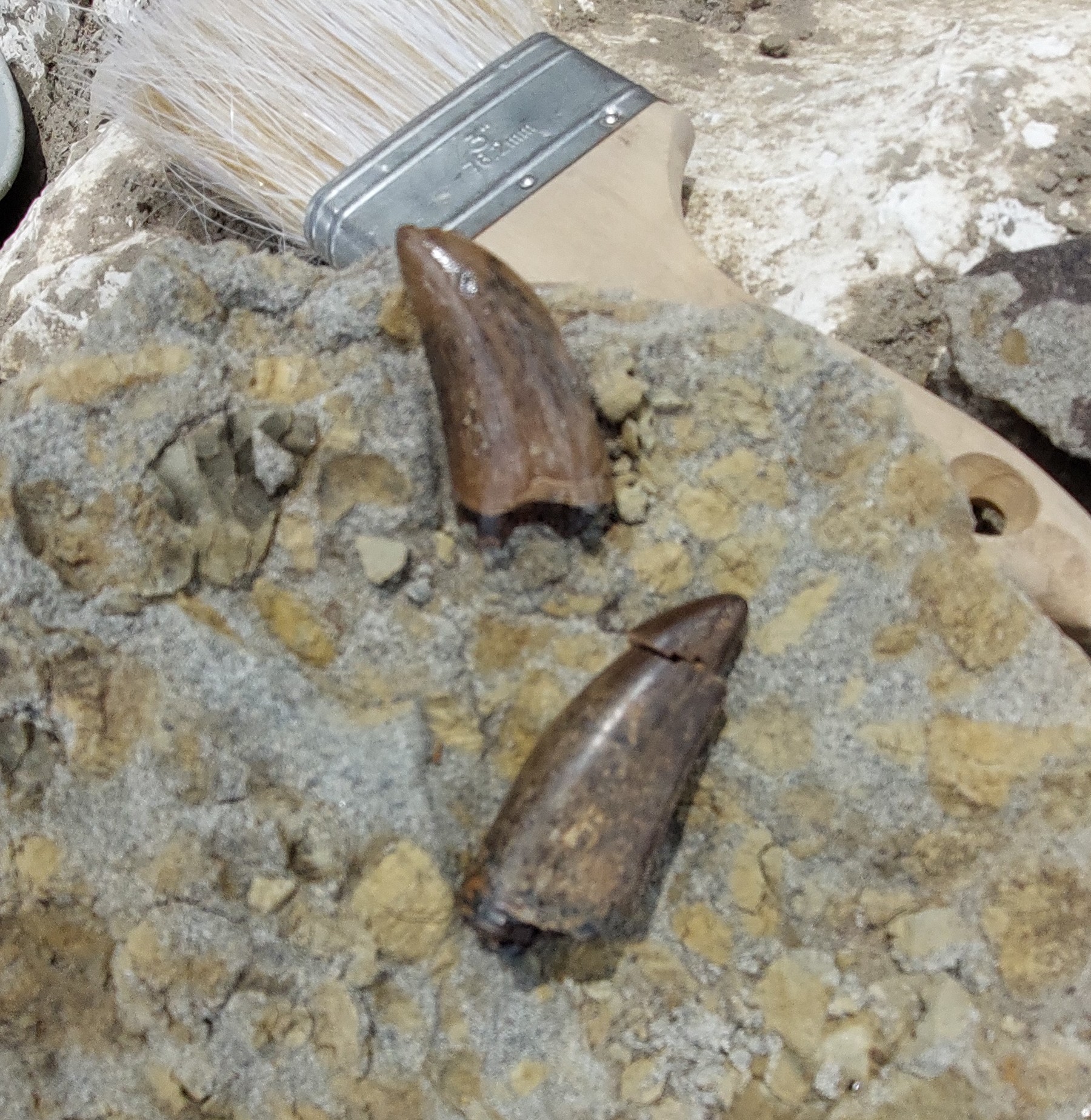
Tyrannosaur teeth are common in Montana’s fossil beds. Because these predators shed and regrew their teeth throughout life, fossils turn up in all conditions, from snapped and worn to perfectly preserved.
Tyrannosaur Feeding
Tyrannosaur feeding strategies have long been the focus of extensive research. One prominent hypothesis is “puncture-pull” feeding, in which tyrannosaurs used their massive body weight to pin down prey while delivering powerful, flesh-tearing bites.
Their teeth serrated like steak knives were well suited to this method. In cross-section, these teeth were D-shaped, ideal for resisting lateral forces. Like all theropods, tyrannosaurs continually replaced lost teeth, maintaining a relentless arsenal throughout life.
From meteoric growth to monstrous might, their bones tell a tale of thunderous ascent, but it was the jaw that crowned the king.
Fossil evidence supports this: numerous specimens show missing teeth, and isolated tyrannosaur teeth are commonly recovered from sites such as the Hell Creek and Judith River formations in Montana.
But feeding was not just about ripping flesh, structural adaptations within the skull to withstand destructive loads made it all possible. To understand how such extreme feeding behaviours were even possible, we need to look deeper into the biomechanics that powered their skulls and jaws. Let’s examine the biomechanics of tyrannosaur skulls now.
Stress-Tested Evolution
More than weapons, tyrannosaur skulls were evolutionary architecture, engineered for dominance in a Cretaceous arms race.
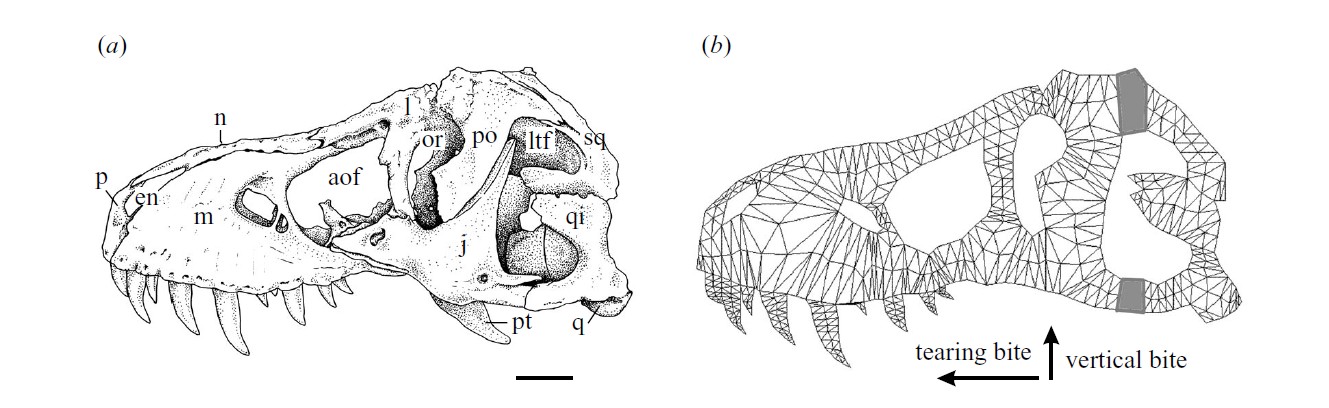
Finite Element Analysis (FEA), a digital engineering technique, shows tyrannosaurid skulls were built to endure the punishing stresses of biting and tearing. In particular, the maxilla-jugal suture functioned as a shock absorber by reducing tension during feeding. However, this adaptation came at a cost slightly compromising overall skull integrity (Rayfield, 2004).
Predators in Progress
Recent research has increasingly spotlighted the comparative cranial biomechanics of tyrannosaurids. In 2023, Johnson-Ransom and colleagues conducted a comprehensive analysis across a broad range of tyrannosauroid sizes and developmental stages, revealing how jaw structure evolved to meet the demands of these fearsome predators.
Their dataset included tyrannosauroids spanning a range of body sizes from small (Proceratosaurus, Dilong), medium (Teratophoneus), and large taxa (Tarbosaurus, Daspletosaurus, Gorgosaurus, Yutyrannus).
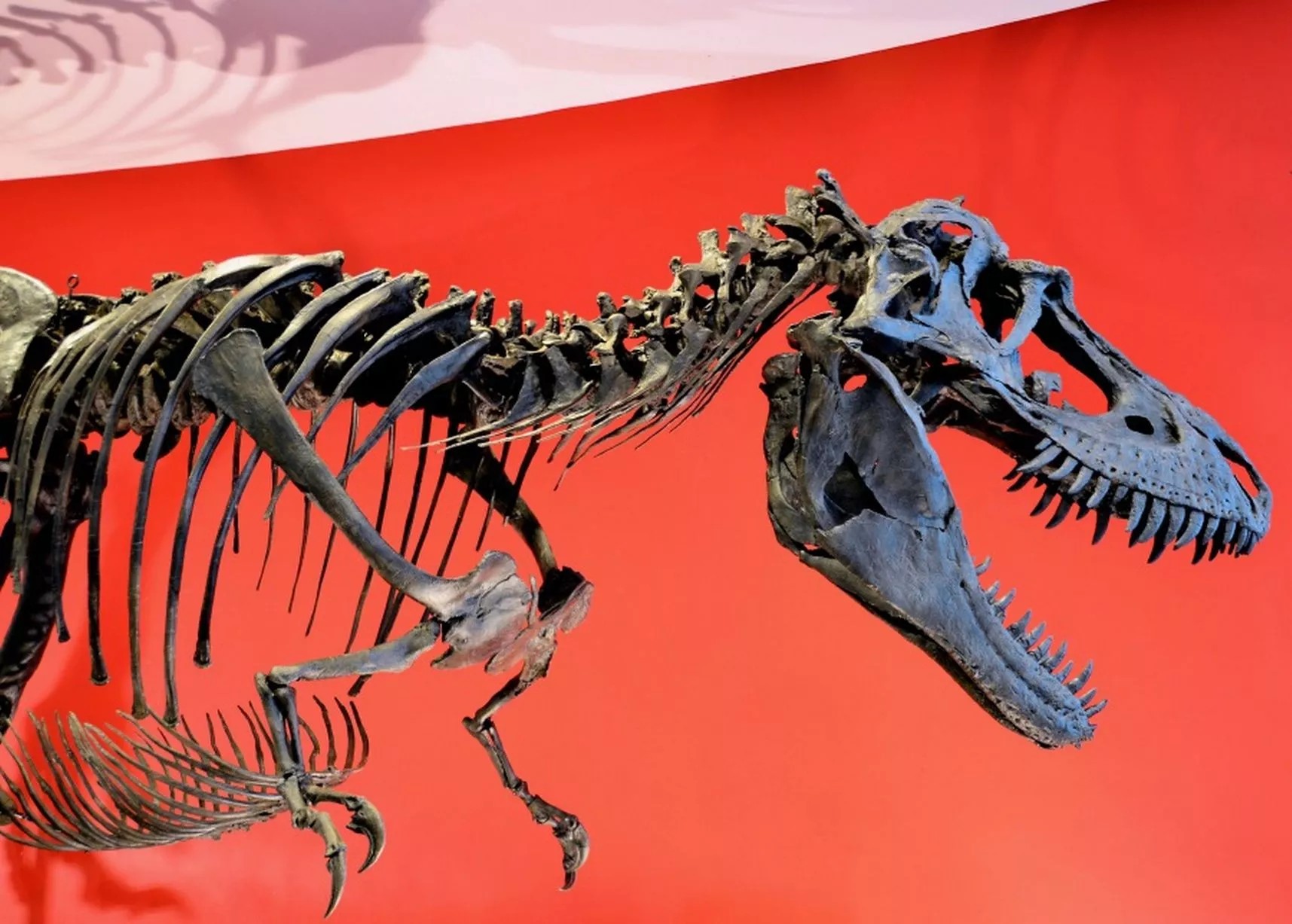
The study also incorporated tyrannosaurines at different ontogenetic (development) stages, including a juvenile Tarbosaurus, Raptorex, and a mid-sized young Tyrannosaurus. Cranial performance was evaluated using jaw muscle force reconstructions and FEA, enabling precise evaluations of jaw biomechanics and cranial structural adaptations throughout the clade.
The study revealed that broad-skulled tyrannosaurines Tyrannosaurus, Daspletosaurus, juvenile Tyrannosaurus, and Raptorex exhibited significantly higher jaw muscle forces, compared to other similarly sized tyrannosauroids such as Gorgosaurus, Yutyrannus, and Proceratosaurus.
Yutyrannus demonstrated lower cranial stress relative to most adult tyrannosaurids, indicating skull architecture minimizing stress effectively under loading conditions. Despite extreme bite forces, large tyrannosaurids maintained sufficient safety factors in skull integrity. Their reinforced morphology did not notably decrease overall bone stress, implying robustness was not the primary factor in stress mitigation (Ransom-Johnson et al. 2023).
These insights into skull and jaw muscle power structure reveal predators as precisely engineered as they were powerful. Setting the stage for understanding the deadly bite of tyrannosaurid design.
Deadly Bite
Tyrannosaur skull biomechanics reveal a lineage engineered for dominance: specialised feeding strategies, immense cranial power, and evolutionary refinements that shaped some of the Cretaceous’ most formidable predators. Their skulls and jaws were built for puncturing, slicing, and swallowing massive chunks of flesh, with bite forces capable of splintering bone. This suite of evolutionary refinements forged hunters whose cranial weaponry allowed them to dominate the ecosystems they ruled.
Palaeontology Fact of the Month

China continues to yield ground-breaking fossil discoveries. In 2012, researchers identified a new feathered species of early tyrannosauroid Yutyrannus huali. Meaning “feathered tyrant” from the Lower Cretaceous Yixian Formation in Liaoning Province. The only known species within its genus it displays a preserved coat of feathers. Unlike its later, more derived relatives such as Tyrannosaurus rex, Yutyrannus retained a three-fingered manus (forelimb) and bore a prominent cranial crest, a trait reminiscent of other theropods like Guanlong and Concavenator (Xu et al. 2012).
Be sure to explore more tyrannosaur secrets with The Secrets of Tyrannosaurs: Growth, Dominance, and Evolution at the link below.
Thanks for venturing into the Mesozoic with me—see you next edition!

Stay Up to Date with The Palaeo Minute Social Media Channels
Instagram: instagram.com/thepalaeominute/
Past Newsletter Editions: The Palaeo Vault: Newsletter Archive
References
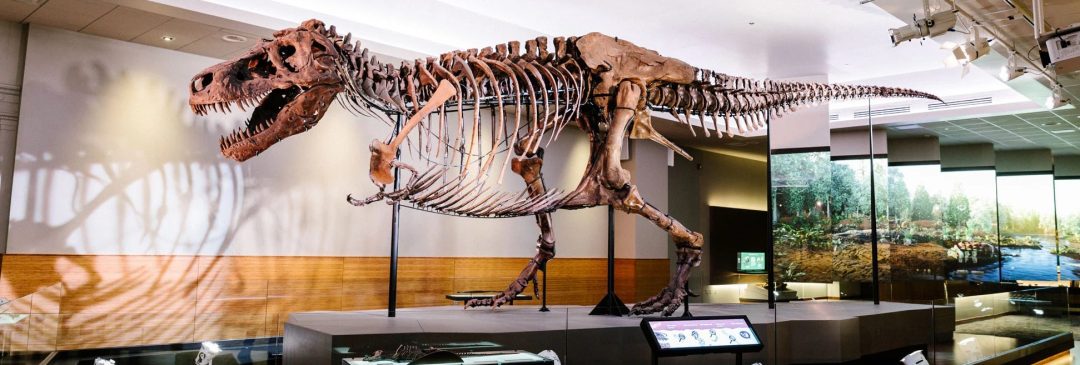
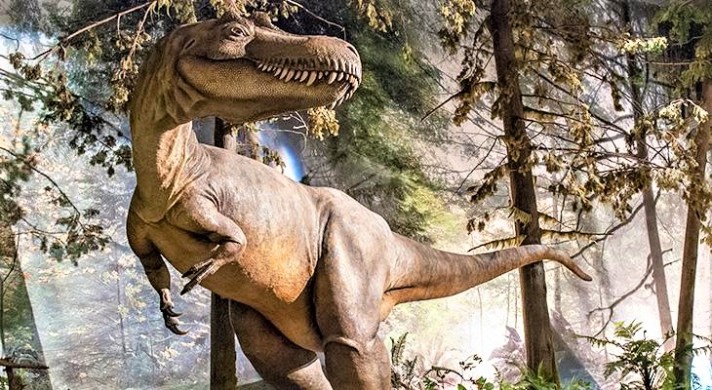
Header image is SUE the Tyrannosaurus rex at the Field Museum, Chicago. Image credit: Field Museum, 2026.

