Venture into the Lost World…One Minute at a Time

A warm welcome to The Palaeo Minute!
Plumage & Legacy: Birds as Living Dinosaurs: Welcome to The Palaeo Minute, your bite-sized window into prehistoric wonders. This edition dives into how birds retain evolutionary and genetic advancements inherited from their dinosaur ancestors.
I explore the seven distinct types of bird feathers and examine how natural selection has shaped bird development for survival and feeding. From modern plumage to beak morphology, birds tell a remarkable story one that links their vibrant diversity to their prehistoric lineage.
I hope you enjoy this evolutionary journey into the origins of feathers, structures that first emerged not just for flight, but for insulation, communication, and display. Together, let’s uncover how birds are not merely descended from dinosaurs, they are dinosaurs, alive and thriving in our world today.
This edition explores:
- Feather Types: The seven distinct types of bird feathers & their specialised functions.
- Avian Success: Why birds thrive today, with over 11,000 species adapted to diverse habitats.
- Natural Selection & Darwin’s Finches: Darwin’s Finches how evolutionary pressures shaped birds’ anatomy, & survival strategies.
Did you know?
That the sparrow in your garden is actually a living dinosaur.
Birds are Dinosaurs!
Whilst non-avian dinosaurs are extinct, we still have avian dinosaurs around us all today in the birds. As birds are dinosaurs, they carry with them the evolutionary and genetic advancements which first appeared many millions of years ago.
Modern birds retain evolutionary traits from their dinosaur ancestors:
- Over 11,000 species of birds exist today.
- Feathers serve multiple functions – flight, insulation, sexual signalling and communication.
- Sexual selection drives the diversity of bird plumage.
The diverse range of birds we have today has been driven by sexual selection and the splitting of species developing their own adaptations and colourful plumage.
To understand how birds evolved such remarkable traits, we need to look closer starting with one of their most iconic features: feathers.
Feather Types Explained
Birds have seven types of feathers covering their bodies and these are identified as filaments and pennaceous feathers. Filament feathers include the bristles, filoplumes and down feathers.
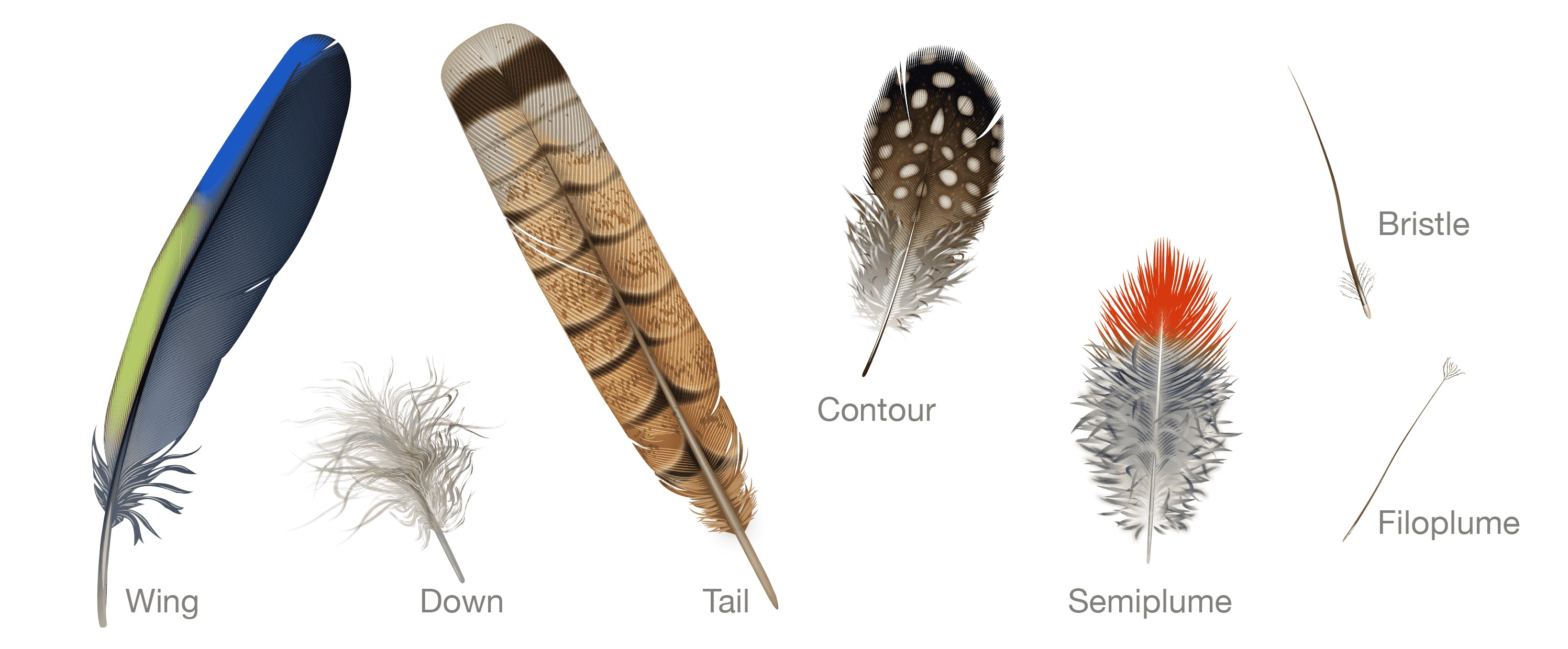
Whereas pennaceous feathers have a central quill and side branches, these feathers are generally formed in the bird back and bird wing/tails.
Pennaceous feathers include the semiplume which is a feather with barbs, although these barbs are not interlocked the feather has a down/fluffy like appearance. These semiplume feathers are utilised for insulation.
There are also contour feathers that follow the shape of the feather with interlocking barbs, and these cover the avian back and wing. Tail and wing feathers make up the sixth and seventh feather types, which are extended feathers providing the most surface for flight/gliding.
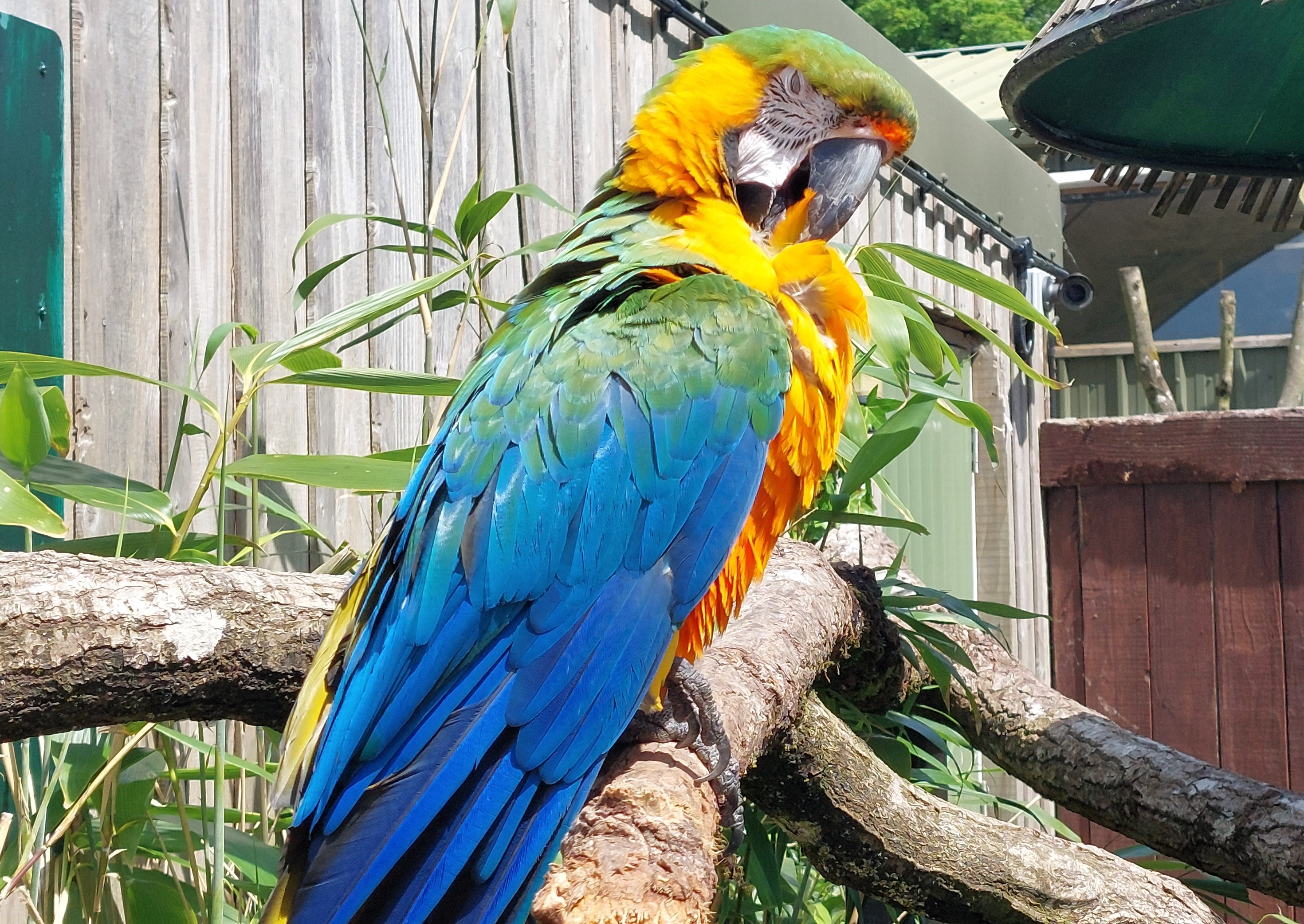
These feathers maintain a strong fairly rigid structure in both the wing and tail during flight. Birds today have a wide variety of colourful feathers. The pigmentation in many extant birds is striking and used for mating display, sexual selection and as a result of sexual dimorphism.
With such a diverse array of feathers supporting flight, insulation, and display, it is no surprise that birds have become one of Earth’s most successful vertebrate groups.
But feathers are just one part of the evolutionary toolkit. Birds’ success also stems from a suite of anatomical and behavioural adaptations.
Avian Success
Birds are incredibly successful today because they have adapted to the environments that they live in. With a variety of beaks specially adapted for specific food types such as insects, seeds, flowers and tearing flesh. Their claws/feet are also adapted for their specific life mode whether it be climbing, perching, grasping prey or swimming.
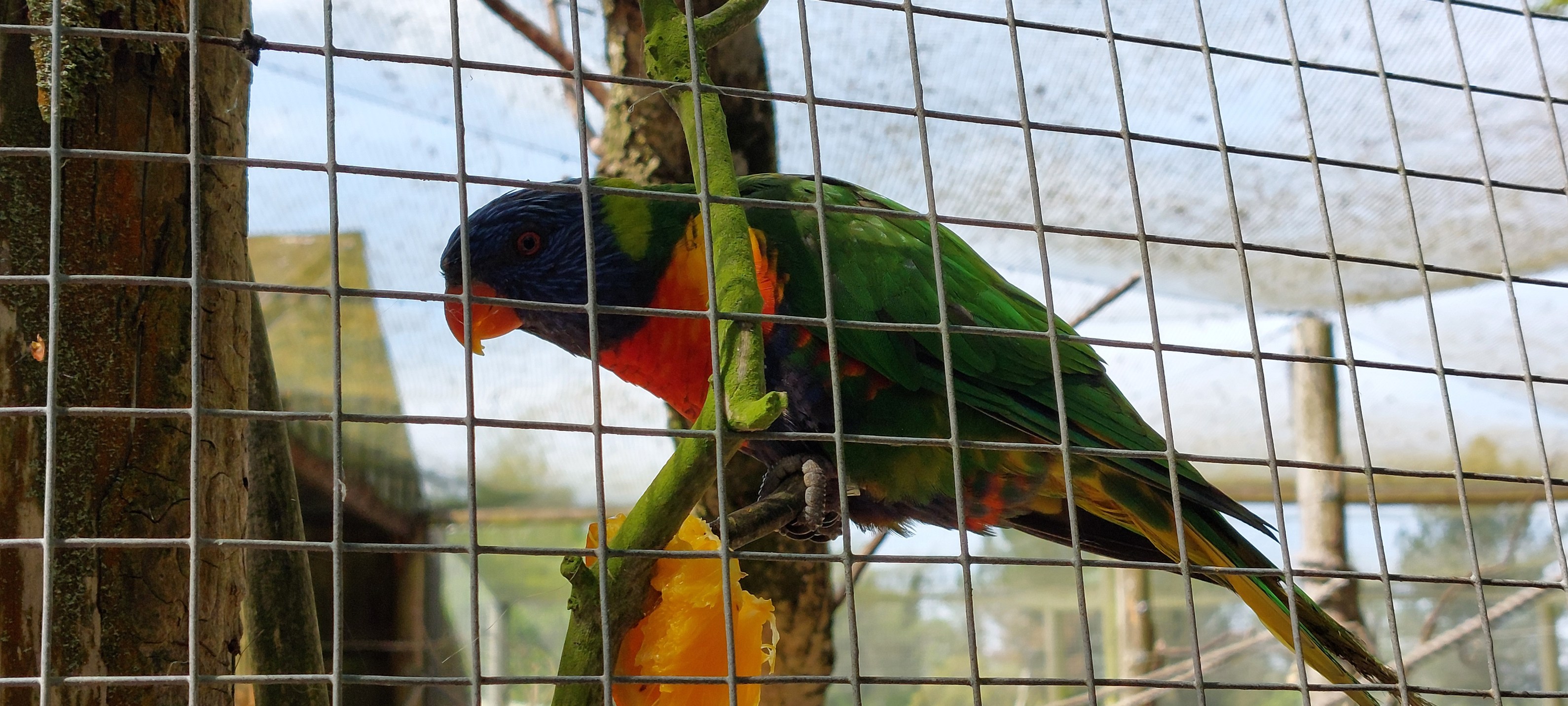
Natural selection has led to birds developing adaptations to survive and thrive across the globe.
To see evolution in action, we turn to one of the most iconic examples of natural selection: Darwin’s finches.
Just as feathers evolved under selective pressures for flight and display, the beaks of Darwin’s finches showcase another dimension of evolutionary ingenuity shaped by location, diet, habitat, and competition, all within the framework of avian dinosaurs.
Darwin’s Finches: A Case Study in Evolution
Birds have long been the subject of extensive scientific research, with Darwin’s finches on Daphne Major, a volcanic island in the Galápagos standing out as one of the most iconic examples. Since 1978, biologists Peter and Mary Grant have conducted pioneering fieldwork on the island, focusing on beak morphology and microevolutionary change, defined as genetic variation within a population over time.

The eighteen recognised species of Darwin’s finches are the result of adaptive radiation and allopatric speciation, processes in which species diversify and evolve due to geographic isolation that restricts gene flow. Through meticulous observation, the Grants documented microevolutionary shifts within two species in particular: Geospiza fortis and Geospiza scandens. By 1980, their research had catalogued and analysed data from over 1,000 individual finches, offering profound insights into the mechanisms of natural selection and evolutionary adaptation (Grant and Grant, 1992).

While Darwin’s finches illuminate modern evolutionary processes, the fossil record reveals how these adaptations trace back to their dinosaur ancestors.
Next up: Hadrosaur social and communication behaviour!
Just like the birds non-avian dinosaurs were also highly adapted across the Mesozoic with feathers being one adaptation used for insulation, sexual selection and flight, among many key adaptations that enabled their success.
In summary the evolution of bird-specific characteristics, including hollow bones, the furcula, and advanced feather structures traces back to theropod dinosaurs. Modern birds, as living dinosaurs, retain these evolutionary traits, with over 11,000 species displaying diverse adaptations for feeding, flight, insulation, and communication. The latest fossil discoveries and scientific advancements continue to refine our understanding of this fascinating dinosaur-to-bird transition.
These discoveries come to life in modern media, showcasing the vibrant diversity of birds today.
From feathered theropods to the finches and sparrows in our gardens, the story of birds is a story of survival, adaptation, and phylogenetic legacy. With each fossil unearthed, we glimpse the evolutionary ingenuity that shaped the skies and through The Palaeo Minute, we continue exploring the prehistoric threads that connect past to present.
From plumage to prehistoric ingenuity, the story of birds stretches far beyond feathers. And while theropods dazzled with display, another group the hadrosaurs may have ruled the social stage.
Don’t miss the next edition of The Palaeo Minute below, as I uncover the social lives and communication styles of hadrosaurs. It is one prehistoric conversation you will not want to miss!

Palaeontology Fact of the Month
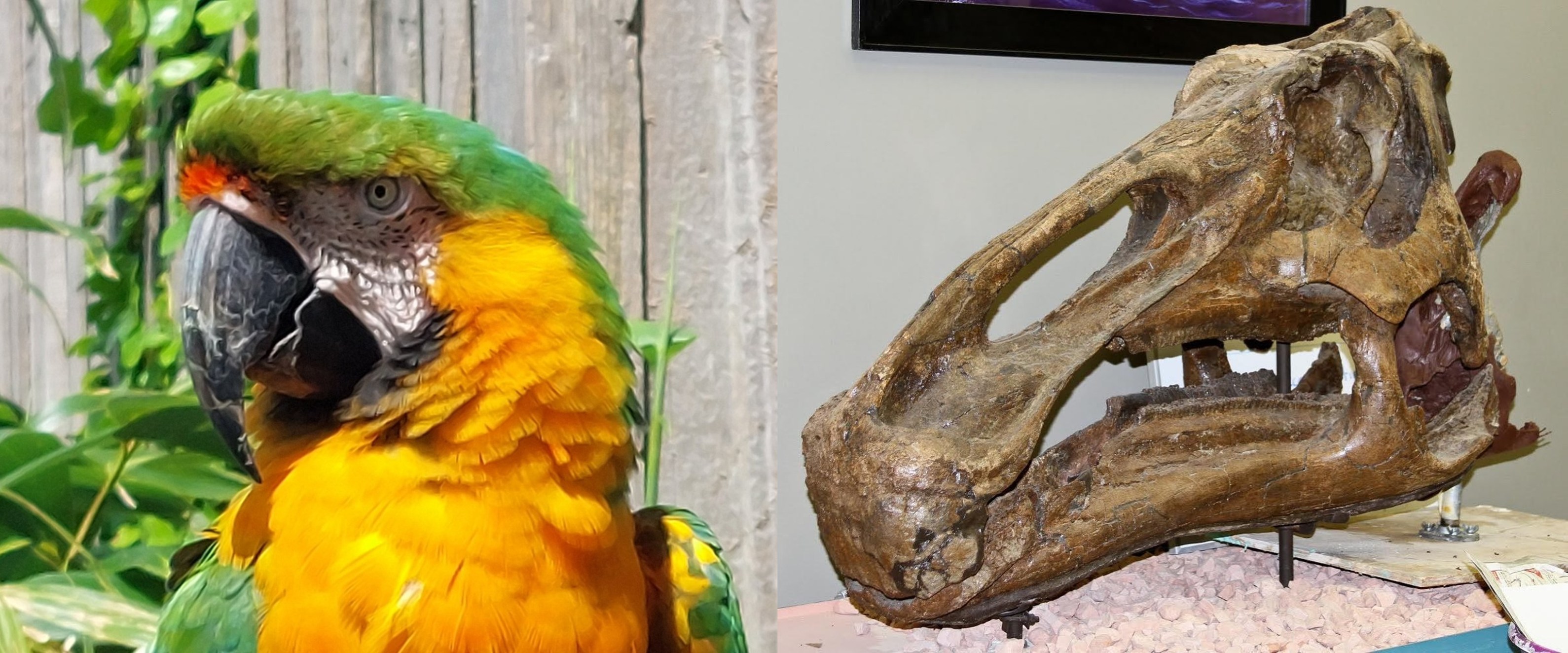
All birds possess beaks covered by a keratin sheath known as the rhamphotheca an evolutionary feature that dates back to their dinosaur ancestors. Intriguingly, many non-avian dinosaurs also shared similar jaw adaptations. Hadrosaurs, for example, bore curved rhamphotheca perfectly suited for shearing vegetation, showcasing a convergence (independent evolution) in feeding strategies.
Thanks for venturing into the Mesozoic with me—see you next edition!
Stay Up to Date with The Palaeo Minute Social Media Channels
X: https://x.com/ThePalaeoMinute
Instagram: instagram.com/thepalaeominute/
Past Newsletter Editions: The Palaeo Vault: Newsletter Archive
References

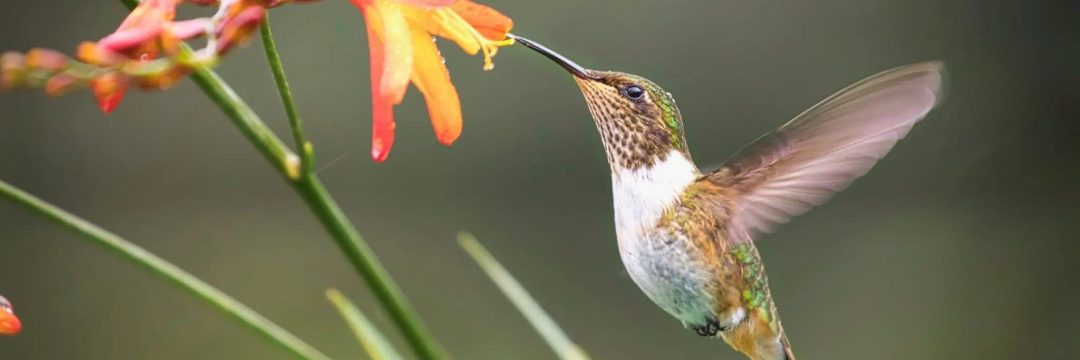
Header image Hummingbird photographed by Norbert Hentges. Image credit: Birdlife.org, 2025.

