Venture into the Lost World…One Minute at a Time

A warm welcome to The Palaeo Minute!
The Ginger-Tailed Dinosaur That Changed Everything: Welcome to The Palaeo Minute, where feathered secrets come to life, one filament at a time. In this edition, I spotlight Sinosauropteryx prima with its ginger-striped tail and “bandit mask” camouflage. I also examine Zhenyuanlong suni a spectacular dromaeosaurid from China with elaborate plumage.
From display and thermoregulation to evolutionary signalling, fossils continue to reshape our understanding of feather function in non-avian dinosaurs. I hope you enjoy this deep dive into their fossil stories and the evolutionary insights they continue to reveal.
This edition explores:
- Sinosauropteryx prima: A feathered dinosaur with a fascinating history.
- Melanosome & Pigmentation: How we can identify colour in dinosaurs.
- How Scientific Discoveries: Have reshaped our understanding of dinosaur appearance.
- Zhenyuanlong suni: A unique feathered dromaeosaurid from China.
Did you know?
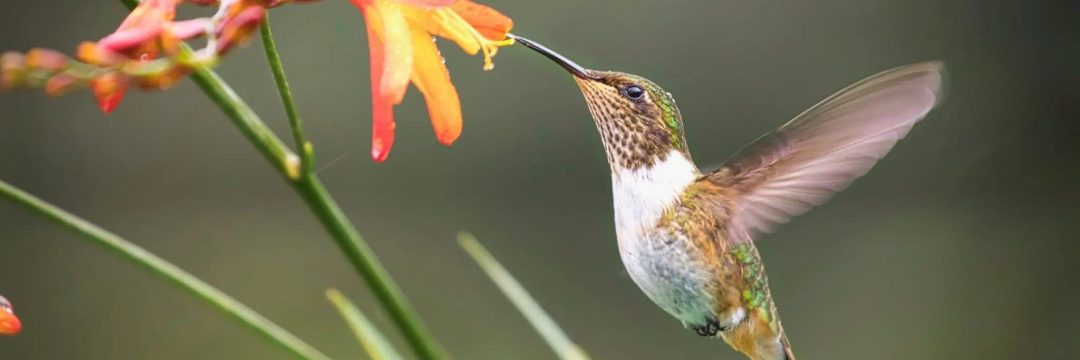
Fossils like Archaeopteryx, Sinosauropteryx, and Zhenyuanlong reveal feathers served purposes beyond flight offering insulation, display, and key insights into the evolutionary link between dinosaurs and birds.
Sinosauropteryx prima
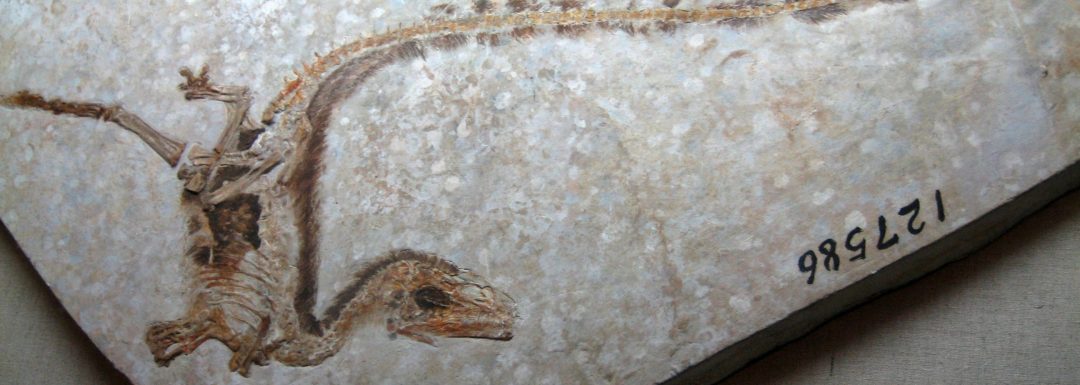
Sinosauropteryx prima was a small, feathered compsognathid dinosaur from the Early Cretaceous period, first described in 1996. It was recovered from the fossil-rich Yixian Formation in China a region renowned for producing exceptionally preserved specimens of feathered dinosaurs. As the first dinosaur ever described with evidence of feathers, Sinosauropteryx holds a pivotal place in palaeontology, marking a turning point in our understanding of the evolutionary link between dinosaurs and birds.

Unlike Archaeopteryx, which possessed adaptations for flight, Sinosauropteryx was incapable of flying or gliding but was still fully feathered. This contrast highlights the diversity of feather function among theropods.
Feather Functionality
A ground-breaking study led by the University of Bristol, in collaboration with institutions in Beijing, Dublin, and the Open University, provided key insights into feather structure and coloration in dinosaurs.
Researchers used scanning electron microscopy (SEM) to examine integumentary filaments from the tail of Sinosauropteryx (specimen IVPP V14202), identifying phaeomelanosomes pigment-bearing organelles. These indicated the presence of orange or ginger-coloured feathers with white bands along its tail (Zhang et al. 2010).

Further comparisons were made with Sinornithosaurus (IVPP V12811) and bird feathers from the Jehol Group. These findings confirmed that the pigment structures in Sinosauropteryx matched those found in extant birds, revealing early evidence for sophisticated feather coloration.

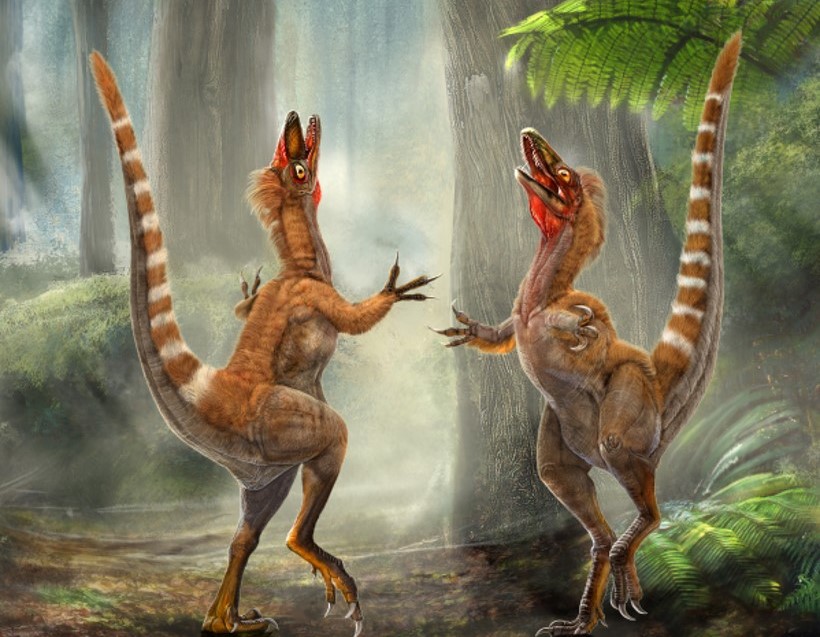
As Sinosauropteryx could not use its feathers for flight or insulation the long colourful banded tail of the dinosaur suggests a sexual signalling/communication use. Perhaps Sinosauropteryx used its brightly coloured long tail to attract a mate. Many species of birds today use their feathers in mating and courtship displays and it is likely that feathered dinosaurs used them in a similar way.
Countershading in Sinosauropteryx
In 2017, palaeontologists at the University of Bristol investigated countershading in Sinosauropteryx, reconstructing its colour patterns from fossil evidence. These patterns were analysed in comparison to predicted optimal countershading transitions, offering insights into the dinosaur’s camouflage and habitat preferences (Smithwick et al. 2017).

Colouration and Camouflage
Sinosauropteryx was found to display a distinct “bandit mask” a camouflage and shading pattern commonly observed in extant animals, especially birds. This coloration was analysed in comparison to predicted countershading models, which were based on 3D reconstructions of the dinosaur’s body.
Next up: Birds the Living Dinosaurs Explained!
These reconstructions were tested under a range of lighting environments, allowing researchers to evaluate how light interacted with the animal’s feathered surface. The results suggest that Sinosauropteryx exhibited pigmentation and patterning highly suited to its natural habitat offering evidence that its colouration played a critical role in environmental adaptation and concealment.
The video below from the University of Bristol provides further insights into this groundbreaking research.
Unlike Sinosauropteryx, which relied on feathered coloration for display, other dinosaurs like Zhenyuanlong possessed large, structured wings but did they actually fly?
Zhenyuanlong suni
In 2015, a new species of dromaeosaurid dinosaur was described from China Zhenyuanlong suni (JPM-0008) (Lü and Brusatte, 2015). This species lived approximately 125 million years ago and marks the sixth dromaeosaurid discovered within the fossil-rich Jehol Biota.

Identified as both a new genus and species, Zhenyuanlong suni is a close relative of the well-known Velociraptor. The holotype specimen was classified as a sub-adult individual with notably short forelimbs. Despite its reduced arm length, the dinosaur’s body including its arms and elongated tail was covered in feathers, although the hindlimbs lacked feathering.
Phylogenetic analyses conducted in the study positioned six dromaeosaurid species from Liaoning Province including Microraptor, Sinornithosaurus, Tianyuraptor, and Zhenyuanlong placing them within a basal polytomy. With the clade comprising dromaeosaurines and velociraptorines.
A polytomy is where more than two lineages descend from a single ancestral lineage. The study indicates that Zhenyuanlong shares a closer evolutionary relationship with fellow Liaoning dromaeosaurids, as well as with dromaeosaurines and velociraptorines originating from Laurasian deposits.

Distinctive feather apomorphies traits derived from ancestral forms have emerged as pivotal evidence in decoding the evolutionary trajectory from dinosaurs to birds. These structural adaptations not only highlight the deep-rooted avian lineage within theropods but also offer critical insights into how feathers contributed to the eventual emergence of birds.
In summary the latest fossil discoveries and scientific research on feather development has led to a deeper assessment of the dinosaur-to-avian transition. We know that certain species of dinosaurs throughout the Maniraptora were highly adapted and successful as a result due to the number of fossils and nests found. Pterosaurs, close relatives of dinosaurs, also had feather-like structures, indicating that feathers originated much earlier than previously thought.
Don’t miss the next edition of The Palaeo Minute below, as I uncover the secrets of birds and their evolutionary adaptations. It is one conversation you will not want to miss!
Palaeontology Fact of the Month

In 2016, a ground-breaking discovery was made when a feathered dinosaur tail was found exquisitely preserved in mid-Cretaceous amber from Myanmar. Originally intended for use in jewellery, the amber specimen was spotted at a market in Myitkyina, where closer examination revealed it contained the tail of a small, non-avian theropod. This extraordinary find marked the first time dinosaur skeletal material had been discovered encased in amber resin, offering an unprecedented glimpse into the anatomy, plumage, and preservation potential of these unique creatures (Xing et al. 2016).
Thanks for venturing into the Mesozoic with me—see you next edition!
Stay Up to Date with The Palaeo Minute Social Media Channels
X: https://x.com/ThePalaeoMinute
Instagram: instagram.com/thepalaeominute/
Past Newsletter Editions: The Palaeo Vault: Newsletter Archive
References


One thought on “Discovering the Vibrant Feathers of Sinosauropteryx”