Venture into the Lost World…One Minute at a Time

A warm welcome to The Palaeo Minute!
Feathers Before Flight The Dinosaur–Bird Connection: Welcome to The Palaeo Minute, where feathered dinosaurs rise from the geological record to rewrite natural history. This edition traces how feathers once seen as bird-exclusive evolved deep within the dinosaur lineage.
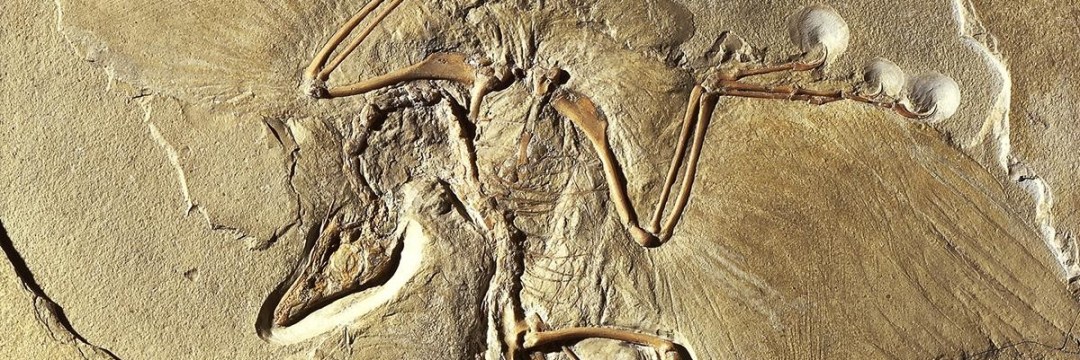
I examine one of the most important fossil discoveries Archaeopteryx and how this feathered dinosaur not only bridges the evolutionary gap between birds and their theropod ancestors, but also provides direct evidence of feather pigmentation through microscopic melanosomes.
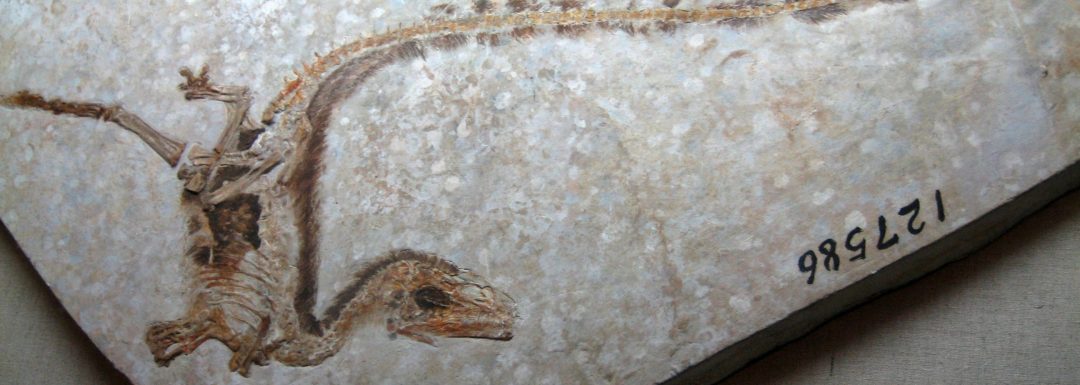
From Archaeopteryx’s wings to Sinosauropteryx’s striped tail, fossils reshape the story of flight, appearance, and evolution. I hope you enjoy this deep dive into the evolutionary history of feathered dinosaurs.
This edition explores:
- Feather Function: Feather evolution & their usage.
- Avian Character Development: The key traits which arose through avian evolution.
- Archaeopteryx: The first feathered bird-like dinosaur that changed everything.
Did you know?
New fossil evidence from China is fundamentally reshaping our understanding of feathered dinosaur evolution.
Welcome to a New Era of Dinosaur Discovery
Our understanding of dinosaur appearance has undergone a dramatic transformation thanks to cutting-edge scientific discoveries. In the upcoming editions of The Palaeo Minute, I spotlight three pivotal species Archaeopteryx lithographica, Sinosauropteryx prima, and Zhenyuanlong suni, each offering ground-breaking insights into the evolution of feathers.
As new fossils come to light, they challenge the long-held image of dinosaurs as purely scaled reptiles. Instead, we now see them as complex, feathered creatures whose plumage served a variety of functions from insulation and display to flight. Join me as I explore how these feathers shaped their survival, behaviour, and evolutionary legacy.
Functions of Feathers
Dinosaurs had feathers but what roles did they play? Were these feathers and protofeathers used for warmth, for attracting mates, for sexual selection, or even for flight? Fossil discoveries of dinosaurs with integumentary structures like feathers, quills, and filamentous coverings have prompted a dramatic re-evaluation of their appearance. Our understanding of what dinosaurs looked like has transformed radically over the last thirty years. These findings reveal new insights into their evolution, appearance, and developmental stages (ontogeny).

Feather Evolution
Research has explored not just dinosaurs but also pterosaurs, flying reptiles that have been extensively studied for their role in the evolution of flight and feather development.
Like most dinosaurs, pterosaurs (the close cousins of dinosaurs) were also feathered, with integumentary structures/pycnofibres across their bodies. Pterosaurs belong to the clade Archosauria a group containing the most recent common ancestor of birds and crocodilians and all their descendants. This consists of non-avian dinosaurs, birds, crocodilians and some other groups.
Feathers Before Flight
Palaeontologists have studied pterosaur filaments to determine when feathers first evolved, tracing their origins back to the Early Triassic around 250 million years ago. This research has transformed our understanding of the point of origin for when feathers first appeared. Identifying early monofilaments which evolved within the basal archosaur lineage, potentially for insulation. Pushing the evolution of feathers back 80 million years before the evolution of birds (Benton et al. 2019).

Feathers evolved long before flight and their role in dinosaur evolution, however, was remarkably complex. The development of avian traits like hollow bones and sophisticated flight adaptations offers deeper insight into this transition.
Avian Character Development
There are thirty unique characters that arose throughout bird evolution including feathers, these feather types can be identified in the following stages:
- Stage 1 hollow tube.
- Stage 2 series of barbs.
- Stage 3 contour barbs.
- Down feathers.
Other traits include hollow bones and the furcula, miniaturization, elongation of the arm and hand, advanced feathers, and flight. These features trace back through geological time with some being found at the origin of non-avian theropod dinosaurs.

We know birds lived across the Mesozoic, for instance a new short, tailed bird from the Late Jurassic was announced in 2025 called Baminornis zhenghensis identified as the first Jurassic and oldest bird discovered to date (Chen et al. 2025).
Enantiornithes a group of extinct birds also lived across the Early and Late Cretaceous, so these avian advancements were underway across the Mesozoic within the Maniraptora (the clade of coelurosaurian dinosaurs which includes birds).
Birds are not just descended from dinosaurs, they are dinosaurs.
One of the most pivotal evolutionary trends within Theropoda (the clade of bipedal dinosaurs) was the gradual miniaturization of species leading up to the origin of birds. This reduction in body size, often coupled with morphological refinements, played a key role in the development of flight-related adaptations.
However, not all maniraptoran theropods (the subgroup that includes birds) followed the path of shrinking. Some lineages evolved in the opposite direction, growing larger through time. This divergence suggests that avian traits such as feathers, furculae, and elongated forelimbs evolved multiple times across the theropod phylogenetic tree, not exclusively in lineages leading to modern birds.
Let us journey back to one of the earliest clues to examine the dinosaur Archaeopteryx.
Archaeopteryx lithographica
The Late Jurassic dinosaur Archaeopteryx lithographica was initially thought of as the origin of the phylogenetic tree of birds. The dinosaur has been a subject of palaeontological debate for many years. Renowned palaeontologist Richard Owen (1863) described the London specimen (BMNH 37001), and the dinosaurs’ importance was referred to by Charles Darwin in his book the Origin of Species.
Archaeopteryx is a Late Jurassic dinosaur that lived around 150 million years ago in what is now southern Germany. It is a species which bridges the gap between birds and non-avian dinosaurs. All fourteen known specimens of Archaeopteryx come from the finely preserved limestone deposits of the Solnhofen, making this region central to our understanding of early avian evolution.

This fossil was the first feathered, bird-like dinosaur to challenge conventional ideas, prompting scientists to reconsider the deep evolutionary link between theropod dinosaurs and modern birds. Palaeontologists have investigated the colour and microstructure of an isolated wing feather from Archaeopteryx, offering the first direct evidence of pigmentation in this iconic Jurassic dinosaur (Carney et al. 2012).
Feather Colour
The study identified microscopic structures called melanosomes, organelles responsible for pigmentation in feathers, much like in modern birds. Their shape and density closely matched those found in black feathers of living bird species.
Using a comprehensive phylogenetic database of modern bird feathers, researchers analysed the morphology of melanosomes in an isolated Archaeopteryx wing feather (Carney et al. 2012). These pigment-bearing organelles allowed scientists to statistically reconstruct the feather’s original colour black with 95% certainty.

Next up: Sinosauropteryx and Zhenyuanlong what secrets did their plumage conceal?
Built to Fly
Its mosaic of features like sharp-toothed jaws, three clawed fingers, and a hyperextensible second toe combines with an unmistakable coat of flight and tail feathers, suggests Archaeopteryx could likely fly or glide. It possessed the necessary anatomy and lift-generating capabilities, placing it firmly in the conversation about the earliest fliers.
While Archaeopteryx soared through the Jurassic skies with structured flight feathers, not all feathered dinosaurs took to the air. Some, like Sinosauropteryx, evolved filamentous bristles that served entirely different purposes; camouflage, communication, and display. These primitive plumage patterns open a new chapter in our understanding of feather evolution, one that is less about flight and more about survival strategy. Let us turn our gaze from the skies to the forest floor, where Sinosauropteryx strutted in stripes.
Don’t miss the next edition of The Palaeo Minute below, as I uncover the feather secrets of Sinosauropteryx and Zhenyuanlong. How these remarkable dinosaurs were adapted and how they used their plumage. It is one prehistoric conversation you will not want to miss!
Palaeontology Fact of the Month

The fossil of Psittacosaurus mongoliensis (above), an ornithischian dinosaur is incredibly well-preserved, as shown in this photo by palaeontologist Dr. David Hone taken in Frankfurt. This bipedal herbivore lived in the Early Cretaceous of Asia 125-105 million years ago. Twelve known species provide significant palaeontological information, including intact tail quills and skin deepening our understanding of dinosaur integuments and countershading (Bell et al. 2022).
Thanks for venturing into the Mesozoic with me—see you next edition!
Stay Up to Date with The Palaeo Minute Social Media Channels
X: https://x.com/ThePalaeoMinute
Instagram: instagram.com/thepalaeominute/
Past Newsletter Editions: The Palaeo Vault: Newsletter Archive
References


0 thoughts on “Unravelling Feathered Dinosaurs: Evolution Insights”