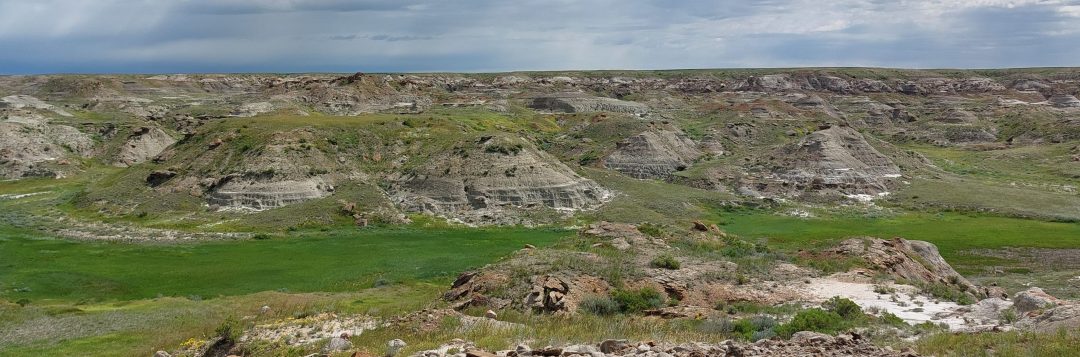
Venture into the Lost World…One Minute at a Time

A warm welcome to The Palaeo Minute!
Step into Montana’s Late Cretaceous wilderness, where dreams came true and 79-million-year-old fossils saw daylight again. In this edition of The Palaeo Minute, I take you behind-the-scenes of my fossil-hunting adventure in the Judith River Formation where ancient environments, incredible discoveries, and a lifelong dream came to life. I hope you enjoy the insights from the field and a closer look at this remarkable chapter in palaeontological exploration.
This edition explores:
- My Fossil Fieldwork in Montana: Digging deep into natural history!
- Excavating Dinosaur Fossils: The discoveries I made & the skills I gained.
- Step into the Late Cretaceous: Exploring this fossil rich site’s incredible dinosaur biodiversity.
- A Glimpse into a Lost World: The palaeoenvironment where dinosaurs thrived 79–75 million years ago.
Did you know?
That Montana is one of the best places to find dinosaur bones. The Montana Dinosaur Trail covers 14 locations across the state where the public can learn more about Montana’s palaeontology.
In June 2024, I set out on an extraordinary expedition to Montana joining the Badlands Dinosaur Museum team to explore the renowned Judith River Formation, a site teeming with prehistoric discoveries.
Stepping into the field, I was finally living a lifelong dream, excavating dinosaur fossils in Montana. Each day brought new challenges and discoveries, deepening my appreciation for natural history and the geological landscape I was exploring.
To understand the environment we were working in, it is worth exploring the landscape that held these prehistoric secrets.
The Judith River Formation
The Judith River Formation is a renowned dinosaur fossil site dating back to the Late Cretaceous (79–75 million years ago), rich in palaeontological discoveries. The stratigraphy of the formation includes the sedimentary rocks of sandstone, siltstone, and mudstone. This sedimentary rock tends to break and crumble quite easily until you get down to the bonebed layers, which are lot tougher to break through.
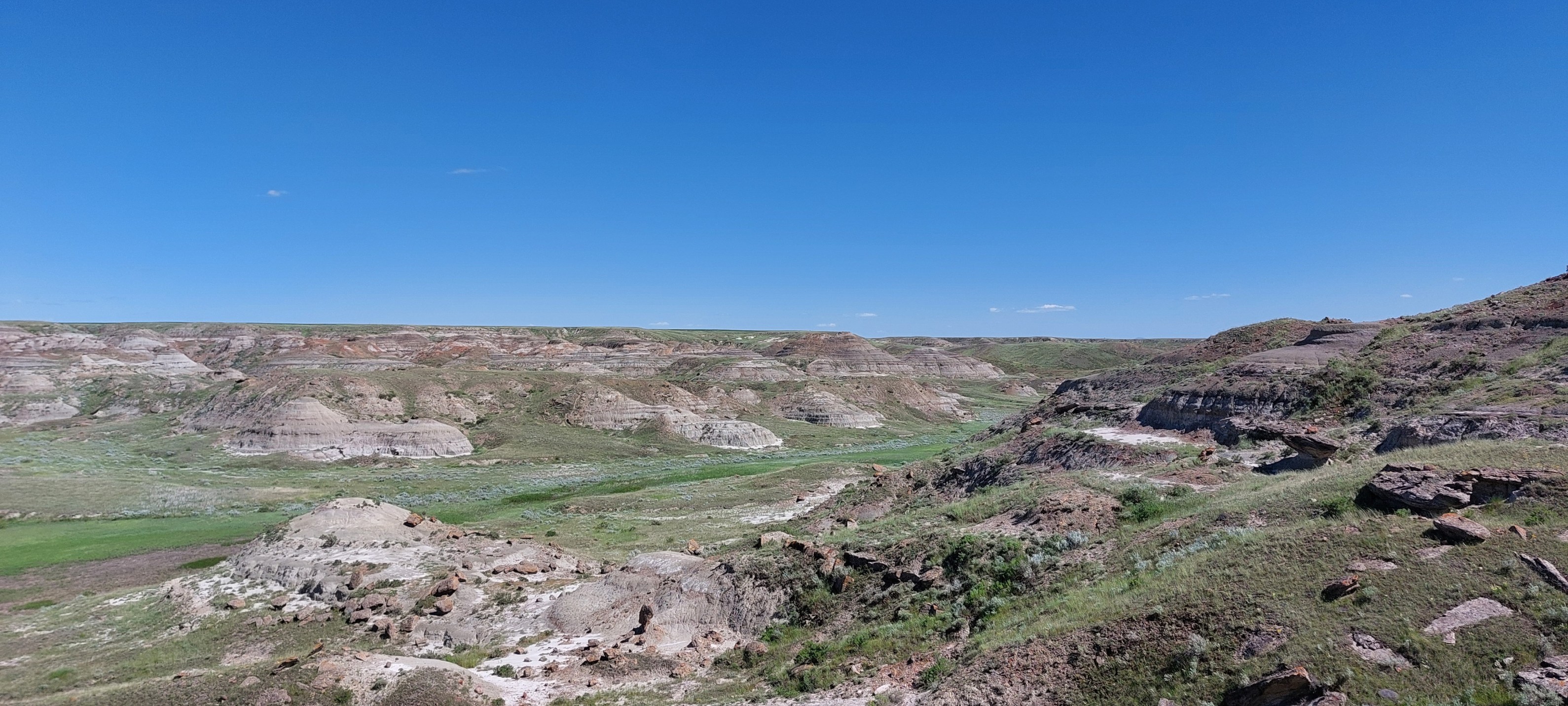
To excavate here is to trespass into deep time, where predators once prowled and ecosystems thrived.
The formation was once a swampy flood plain with rivers that snaked through the Late Cretaceous environment. A significant amount of dinosaur fossil material has been identified within its rocks. The formation logs an extensive biodiversity of dinosaur specimens within its stratigraphy from predators like Daspletosaurus and Gorgosaurus to duck-billed dinosaurs like Lambeosaurus and Brachylophosaurus.
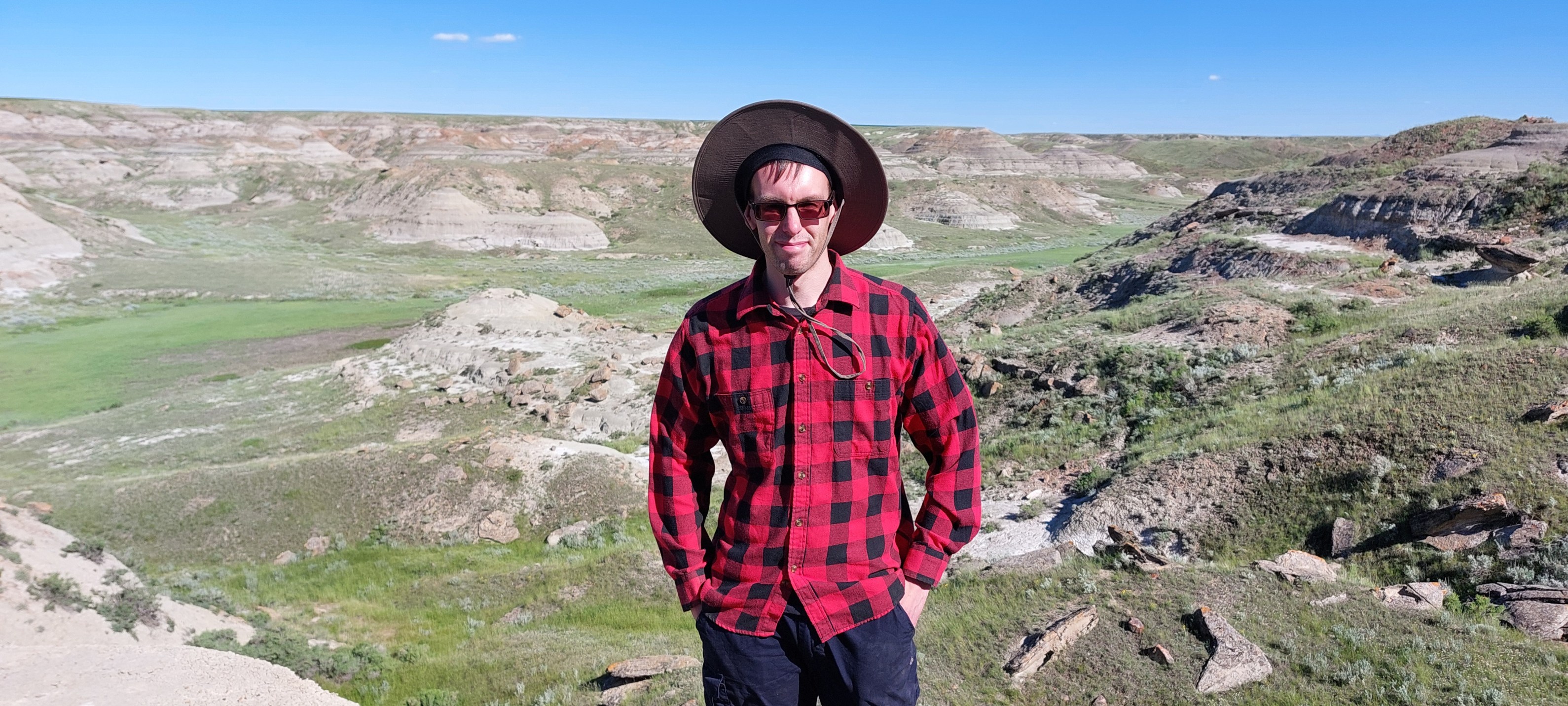
Other dinosaurs discovered within the formation include ceratopsians Lokiceratops and Avaceratops and common dinosaur species like Troodontids and Ornithomimids. The Late Cretaceous of Montana was biodiverse with a wide variety of taxa not just limited to dinosaurs, the palaeoenvironment at that time also included crocodiles and sharks/rays as well.
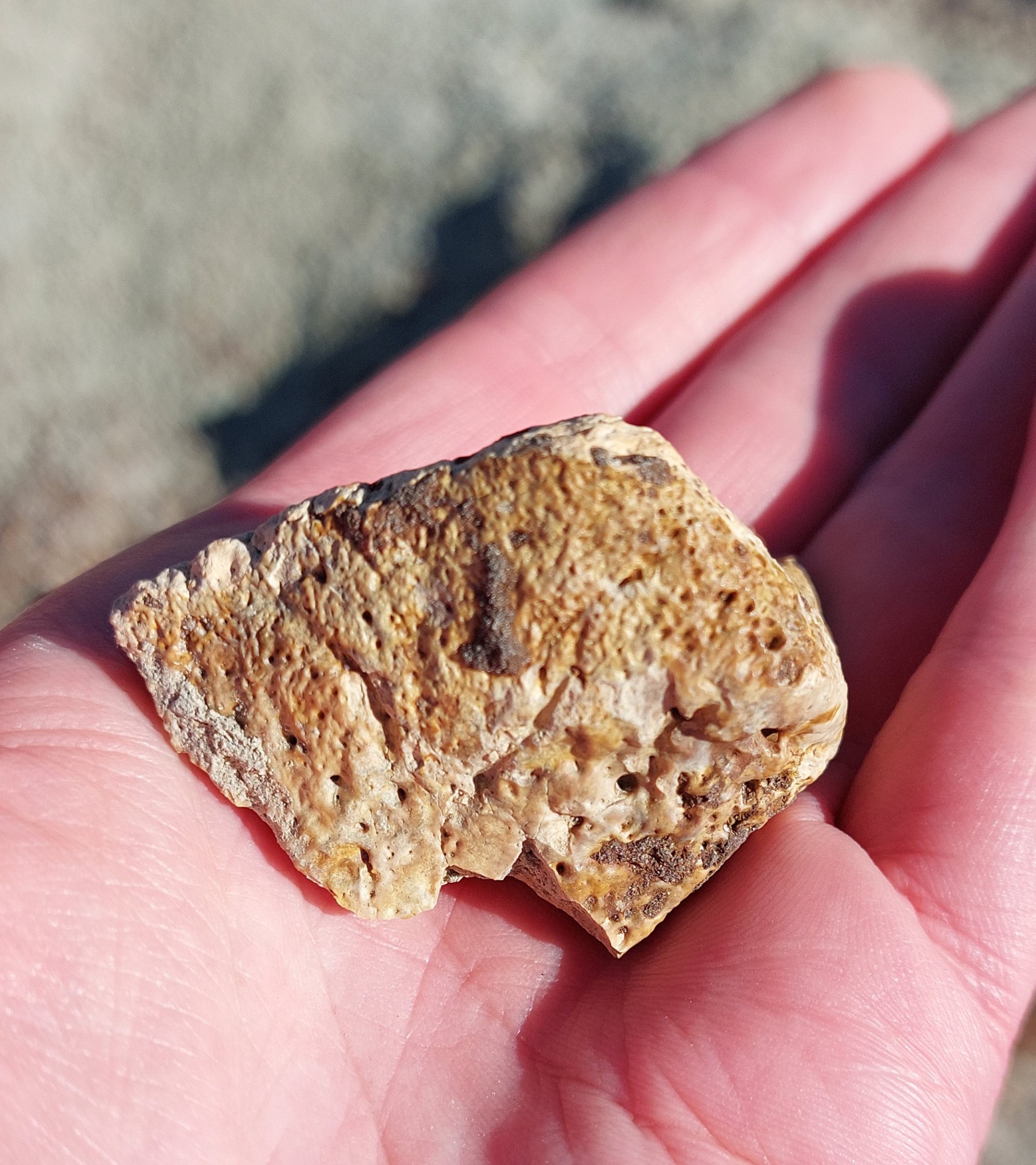
Immersed in this ancient landscape, I experienced first-hand the thrill of discovery, where every step across the Judith was a step through time.
Because the Judith has such an extensive palaeontological history, you are making history yourself when you excavate fossil material. As we carefully removed the bonebed layer, geological prehistory emerged before our eyes, fossils untouched for seventy-nine million years. Each discovery added to the growing picture of life in the Late Cretaceous as an environment filled with life, predation and survival.
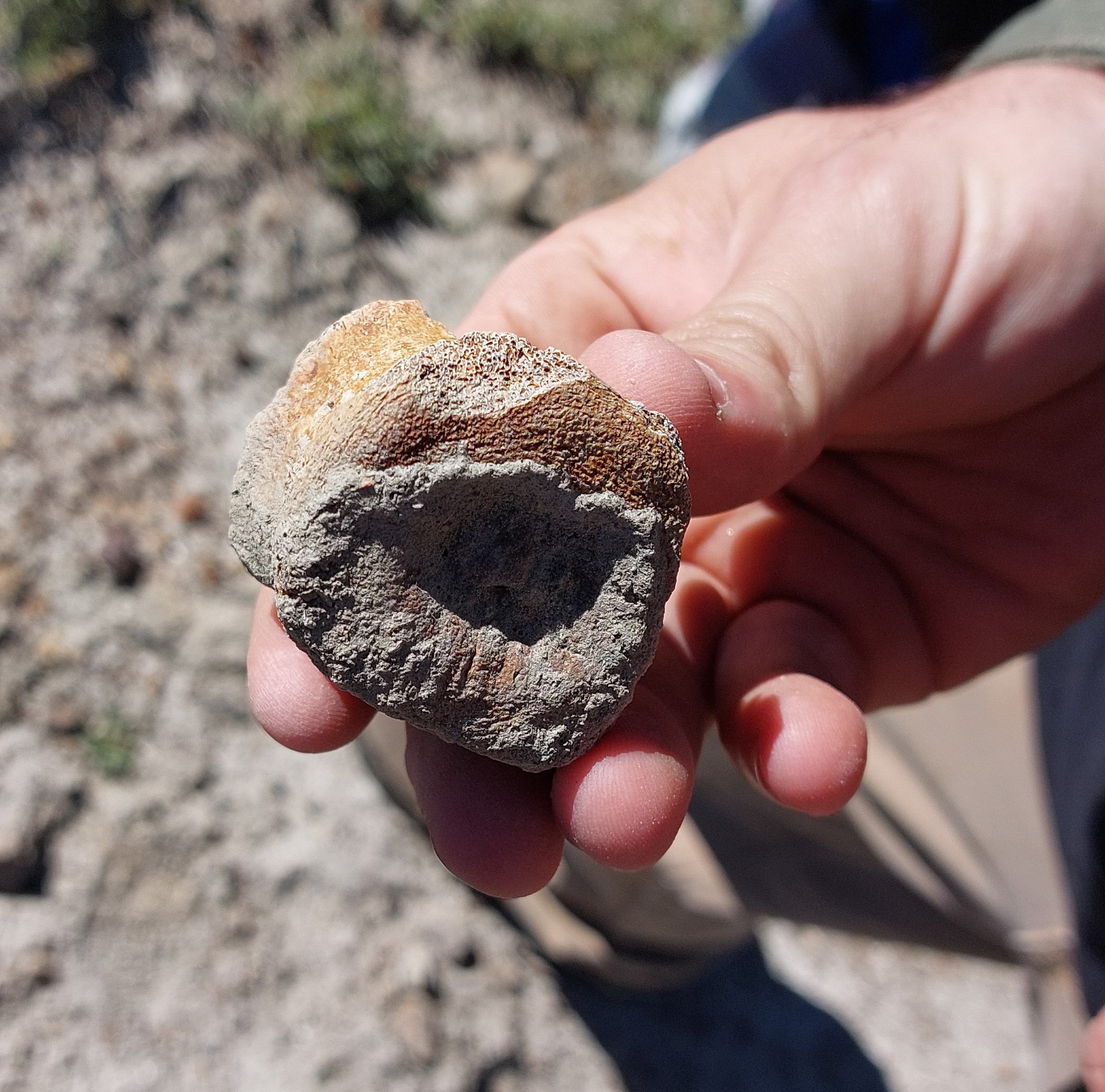
For the first time, I held dinosaur fossils in the USA that had lain untouched for seventy-nine million years, something I had dreamed about since childhood. That moment, cradling those bones the scute’s rough surface cool against my palm, felt like stepping across the threshold of a dream decades in the making. The thrill, the awe, the sheer wonder, it all crystallised in that single moment.
Echoed by the purpose of this newsletter to share science, inform and encourage the thrill of fossil discovery.

The T. rex biting the clock’s minute hand symbolises change. Each new dinosaur discovery reshapes how we understand these animals and the time they lived in. The broken clock represents not time lost, but time reimagined reminding us that palaeontology evolves with each timely discovery.
Sharing these discoveries is not just about the past, but about the science that moves us forward.
Just as The Palaeo Minute clock symbolises the transformative power of fossil discoveries, the specimens I helped uncover will now support ongoing research at the Badlands Dinosaur Museum. Their study will deepen our understanding of Late Cretaceous ancient ecosystems and expand the fossil record for future investigation.
That journey deepened at the bonebed dig sites, where excavation took on new intensity and focus.
The Multi Taxic Bonebeds
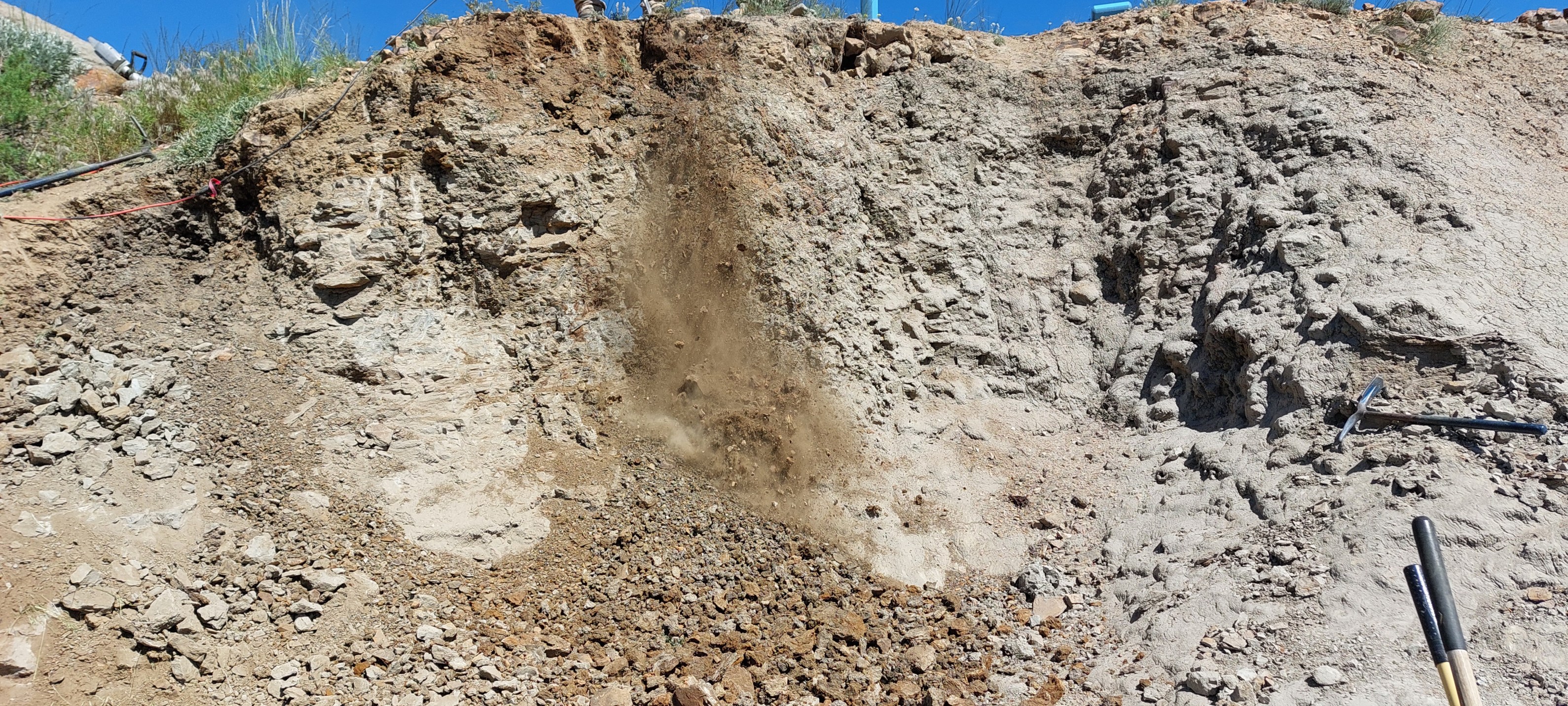
The field camp that we stayed at was in Havre, and we made the trip down to the bonebed site each day to work, hoping we might just strike gold with locating dinosaur fossil material. I took part in prospecting, excavation, fossil extraction and fossil jacketing.
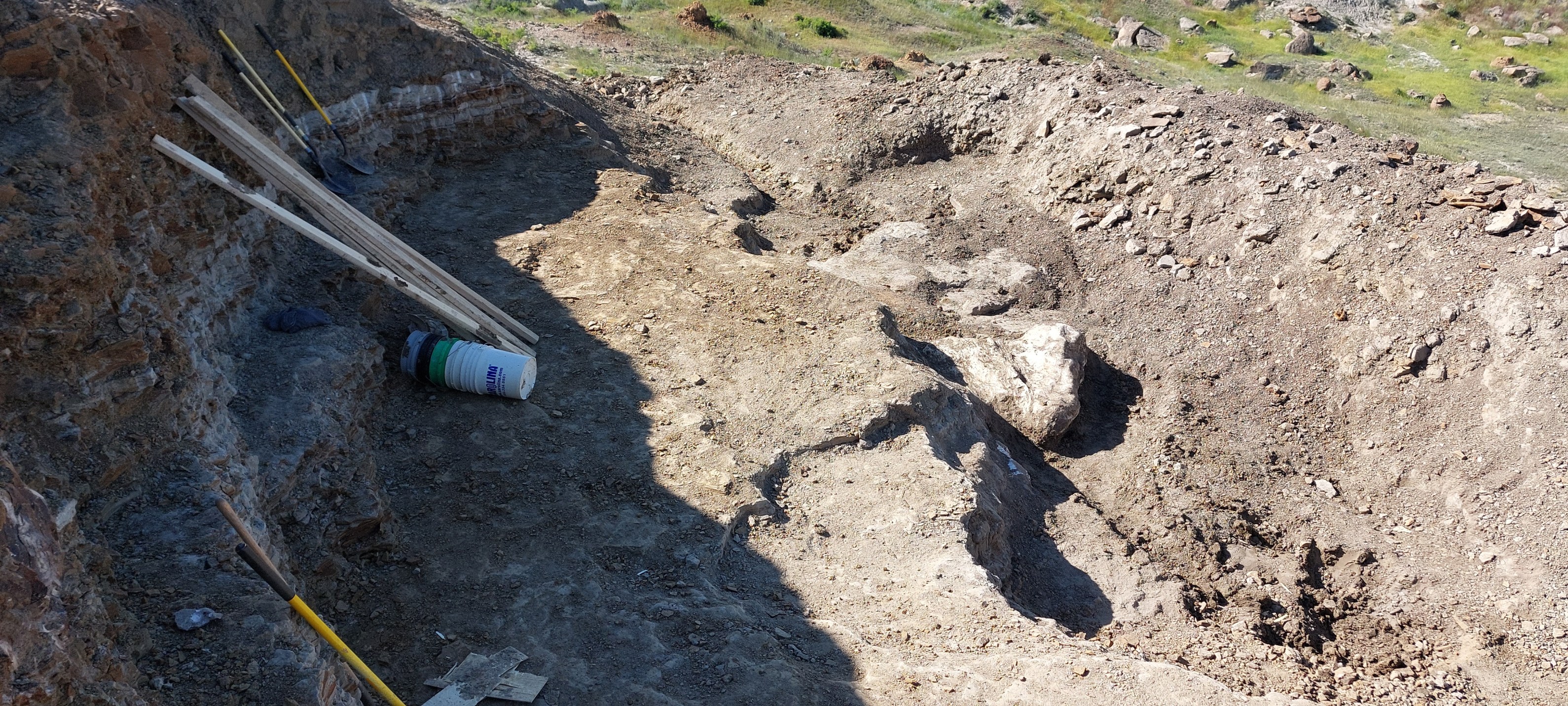
The first week was dedicated to removing overburden around two previously identified dinosaur bonebed sites. While sifting through these upper layers, we uncovered numerous well-preserved fossil leaves. However, it was not until we reached the true bonebed strata that a diverse array of fossil material began to emerge, offering a vivid glimpse into the richness of the ancient palaeoenvironment that once thrived here.
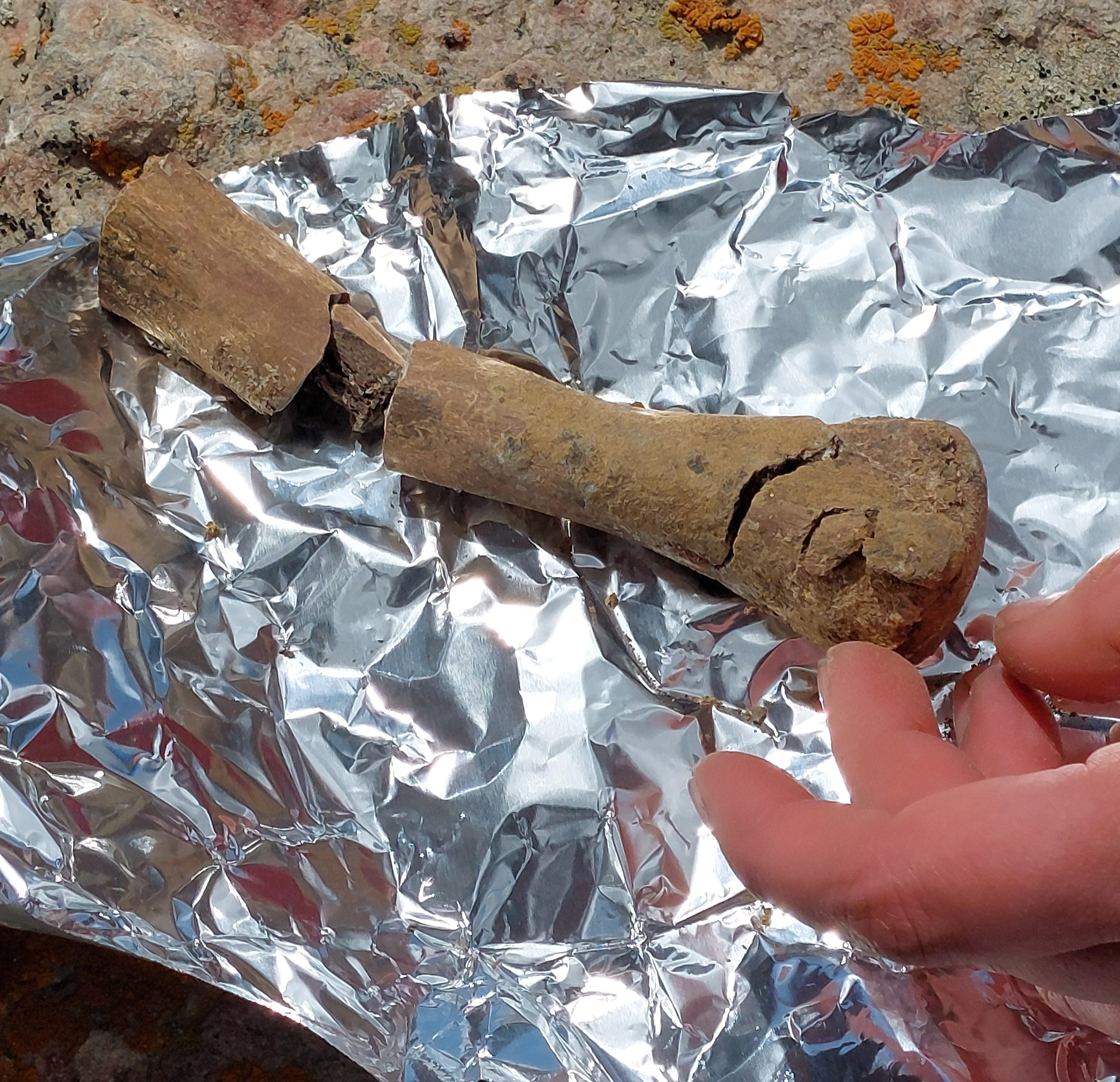
Each fossil unearthed was a whisper from the Cretaceous, echoing through seventy-nine million years of silence.
Fossil Material Discovered
During the excavation, I unearthed a remarkable variety of fossils, ranging from duck-billed dinosaur bones and theropod tendons, to ceratopsian teeth and tyrannosaurid teeth (likely Daspletosaurus or Gorgosaurus). I also uncovered a dinosaur caudal vertebra, fossilised leaves, crocodile teeth, and a sizeable section of turtle shell.
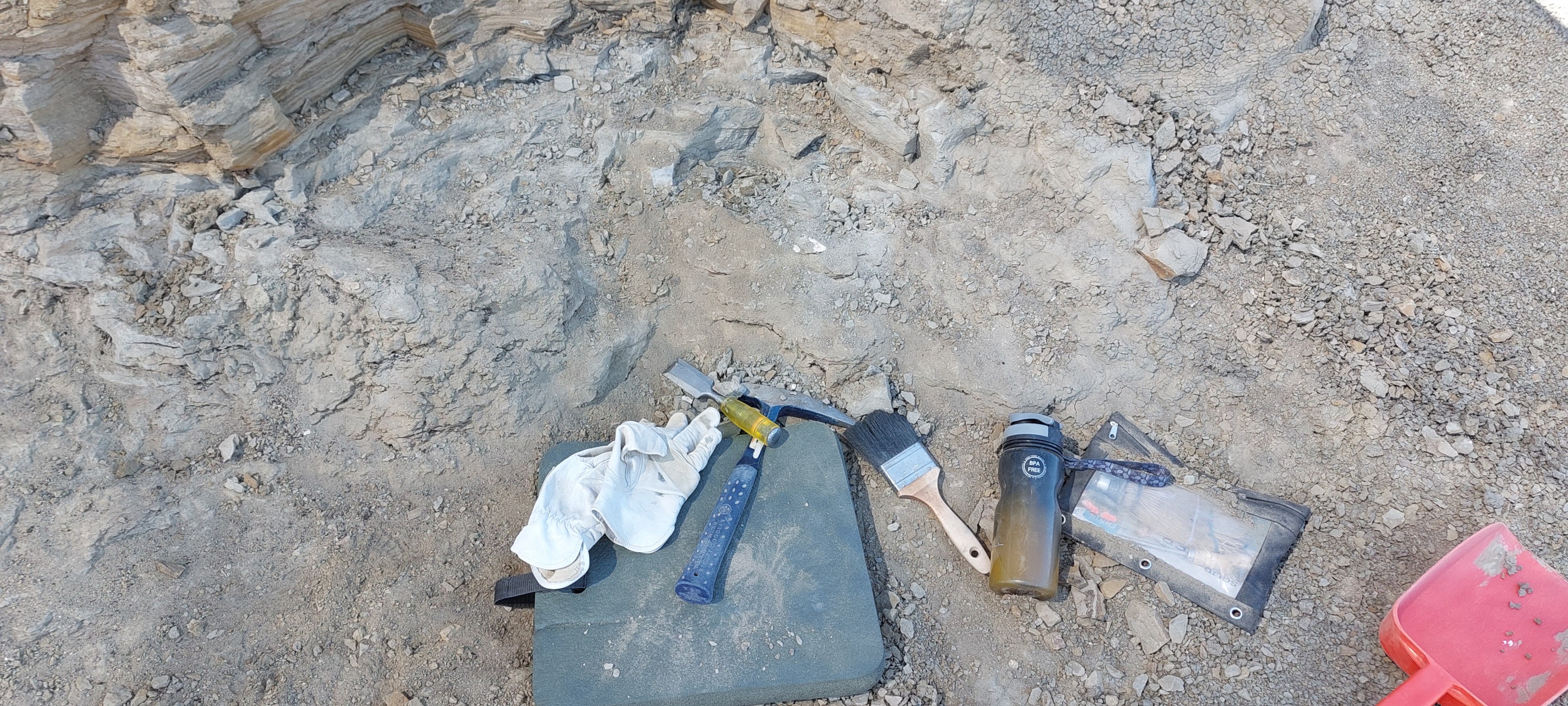
I had not expected to uncover such a range of fossil fauna. The bonebeds proved exceptionally rich in paleoenvironmental specimens, making each day a new chapter in discovery.
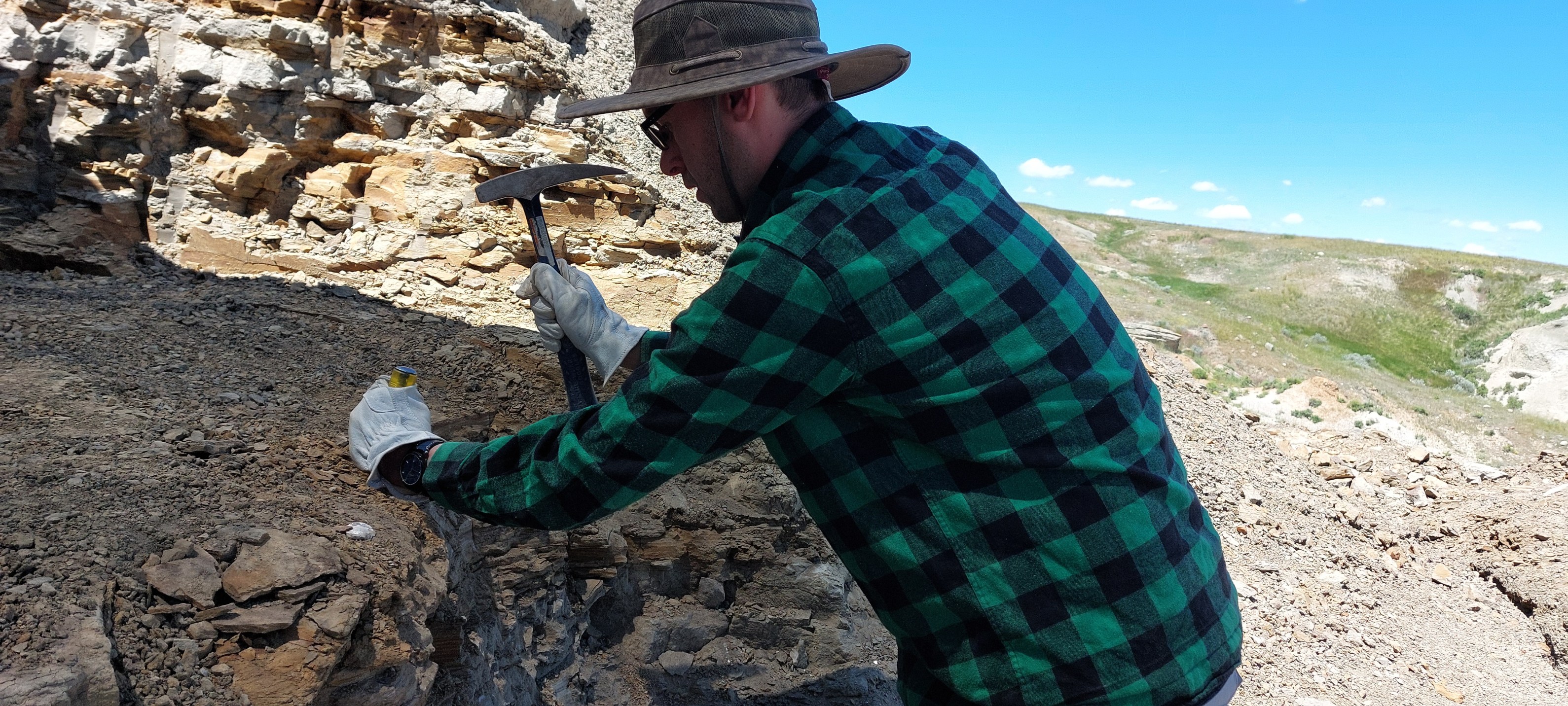
Among the many fossils uncovered, the intact tyrannosaurid teeth were particularly special, achieving a career milestone I had long envisioned. These discoveries reinforced the significance of fieldwork in palaeontology. It was quite a cathartic experience to be able to handle multiple tooth specimens. In the slideshow below you can view the fossil material recovered from the fieldwork.
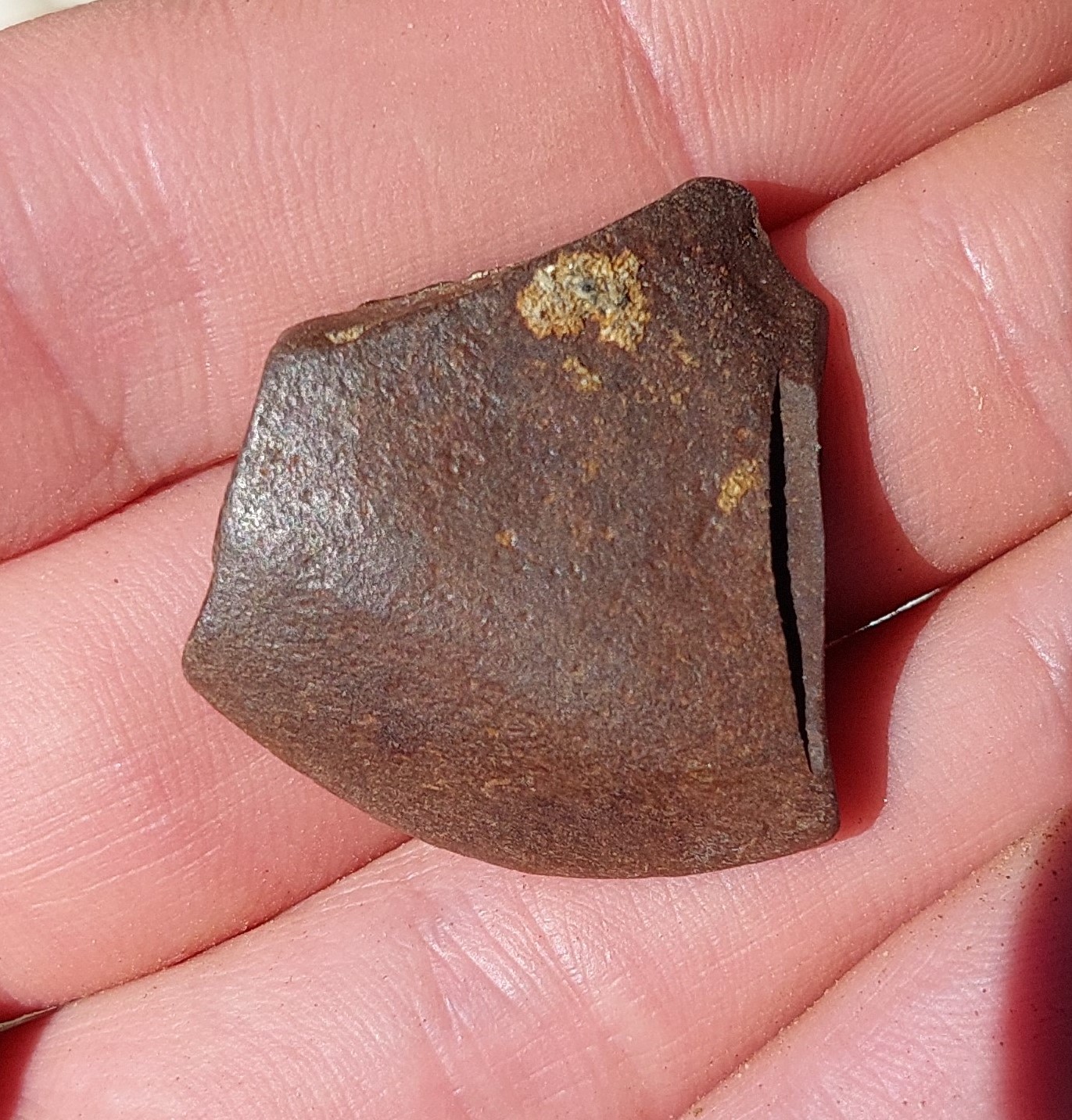
Turtle shell piece. 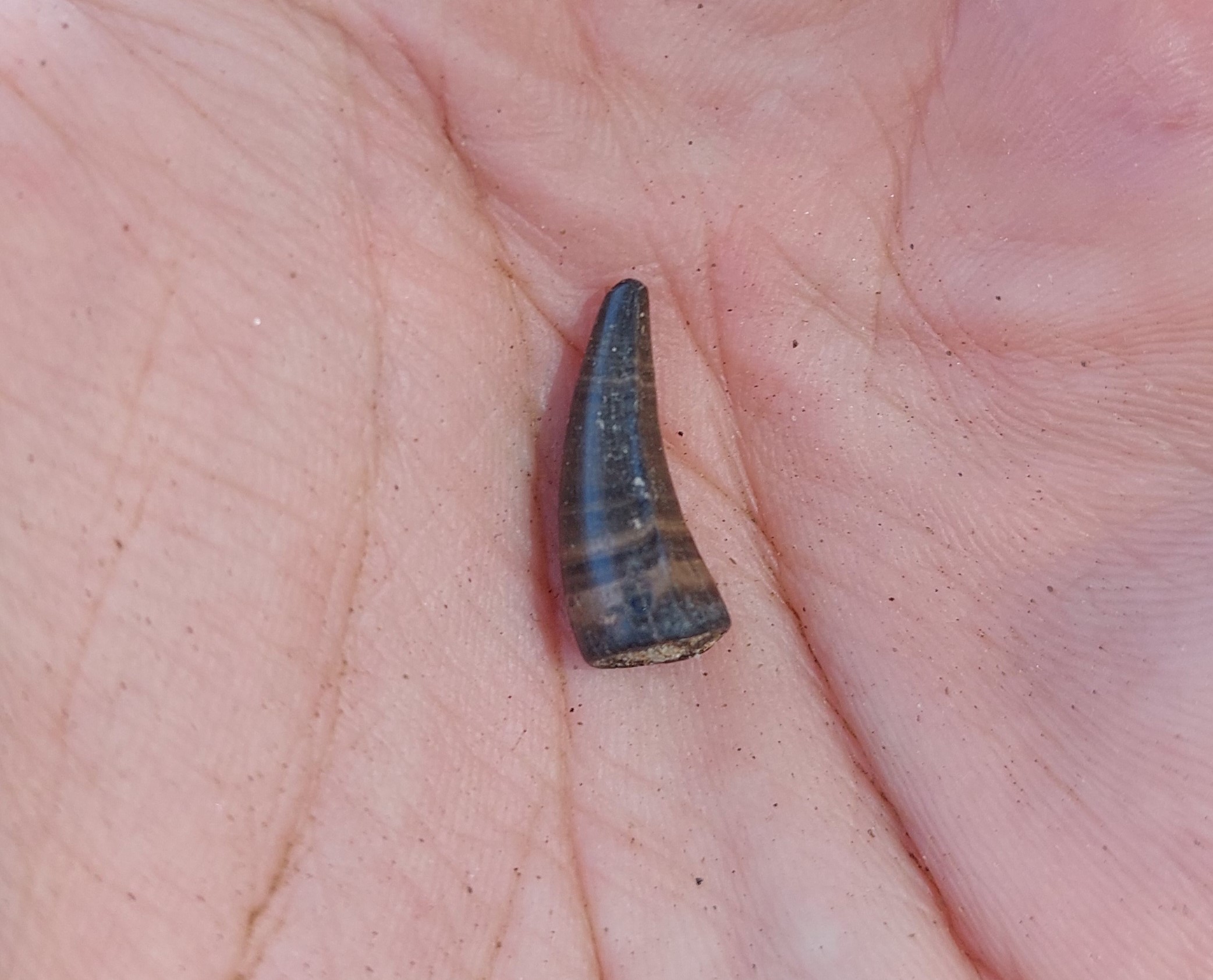
Banded crocodile tooth. 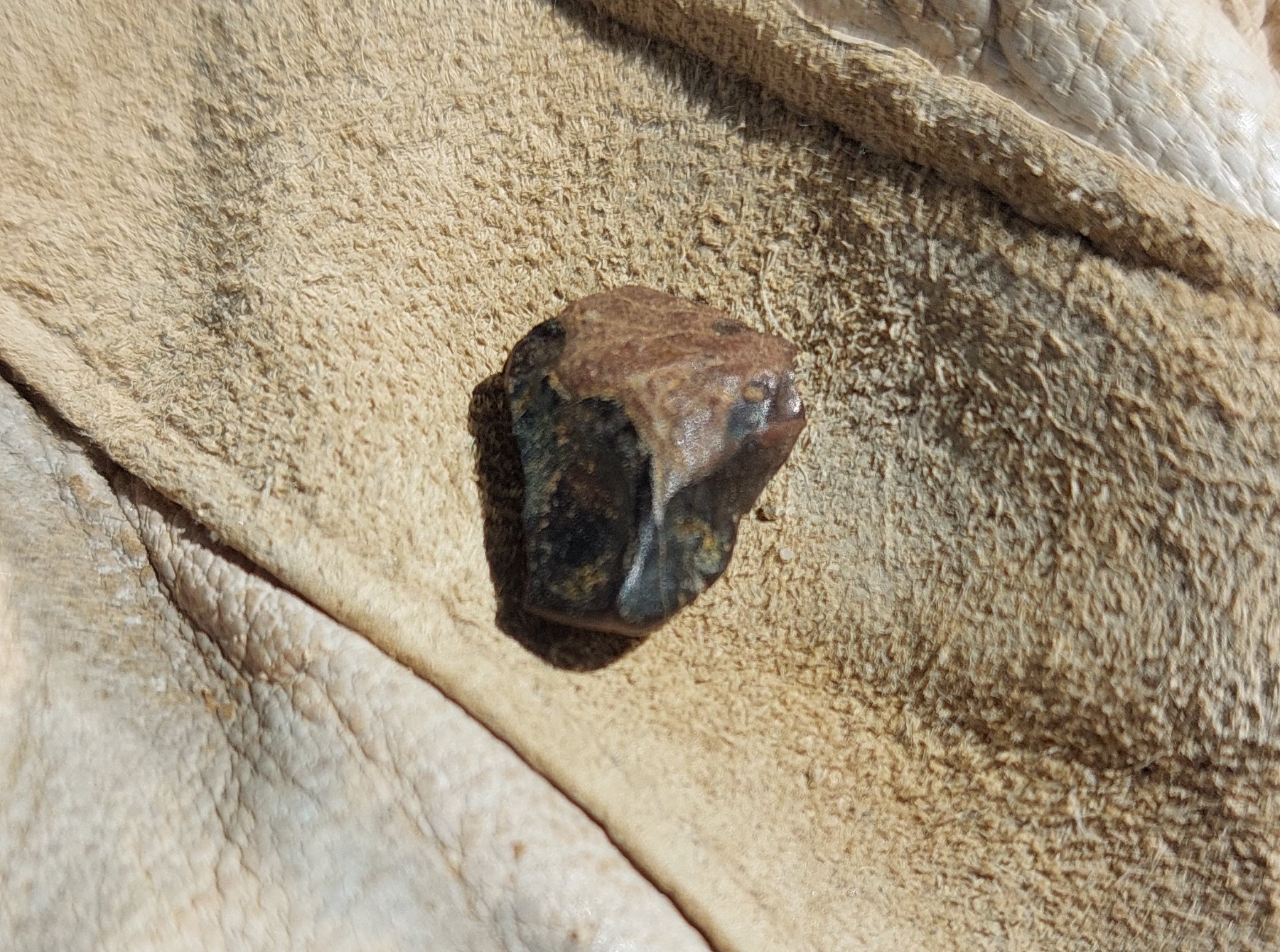
Ceratopsian tooth. 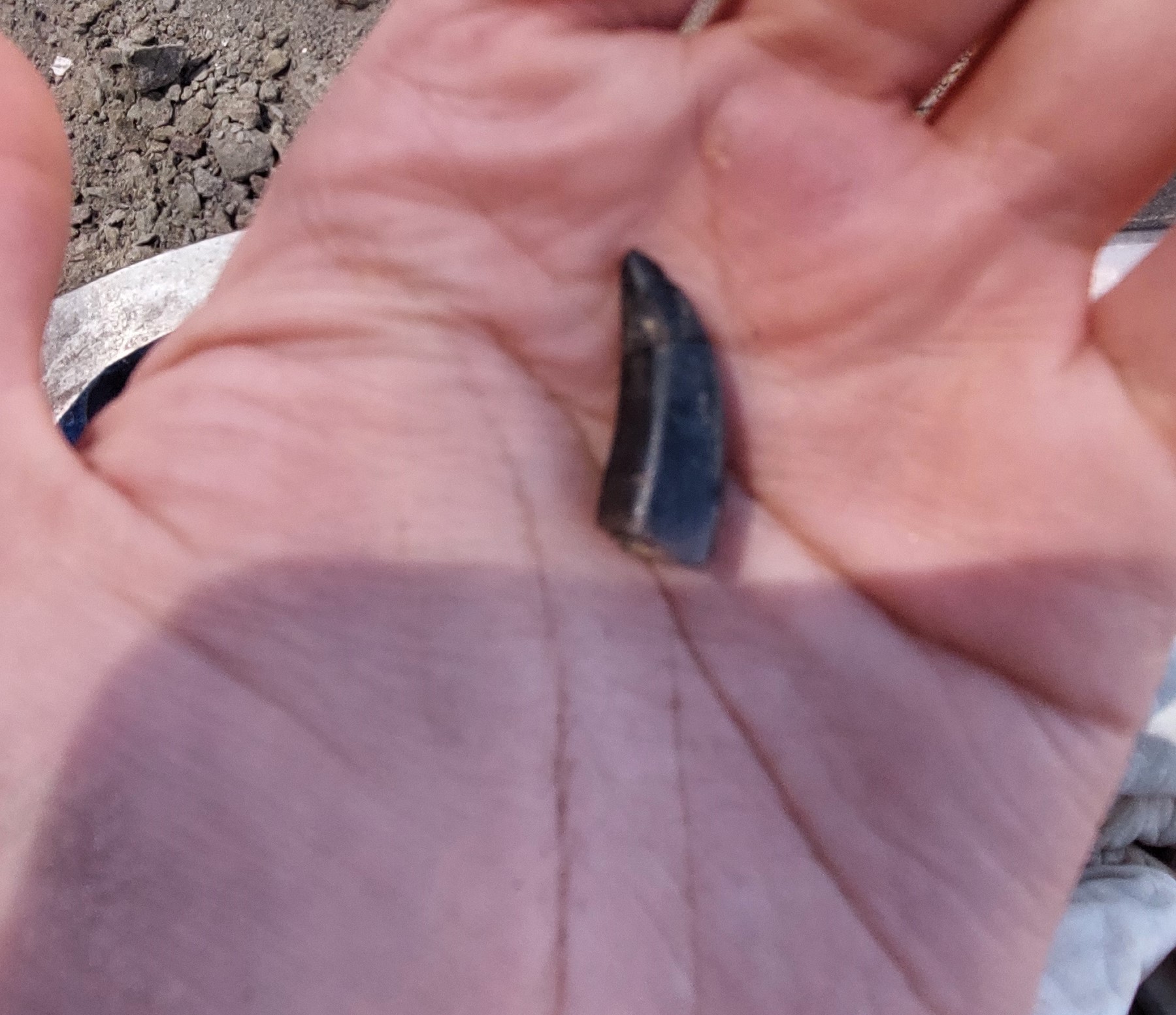
Tyrannosaurid tooth. 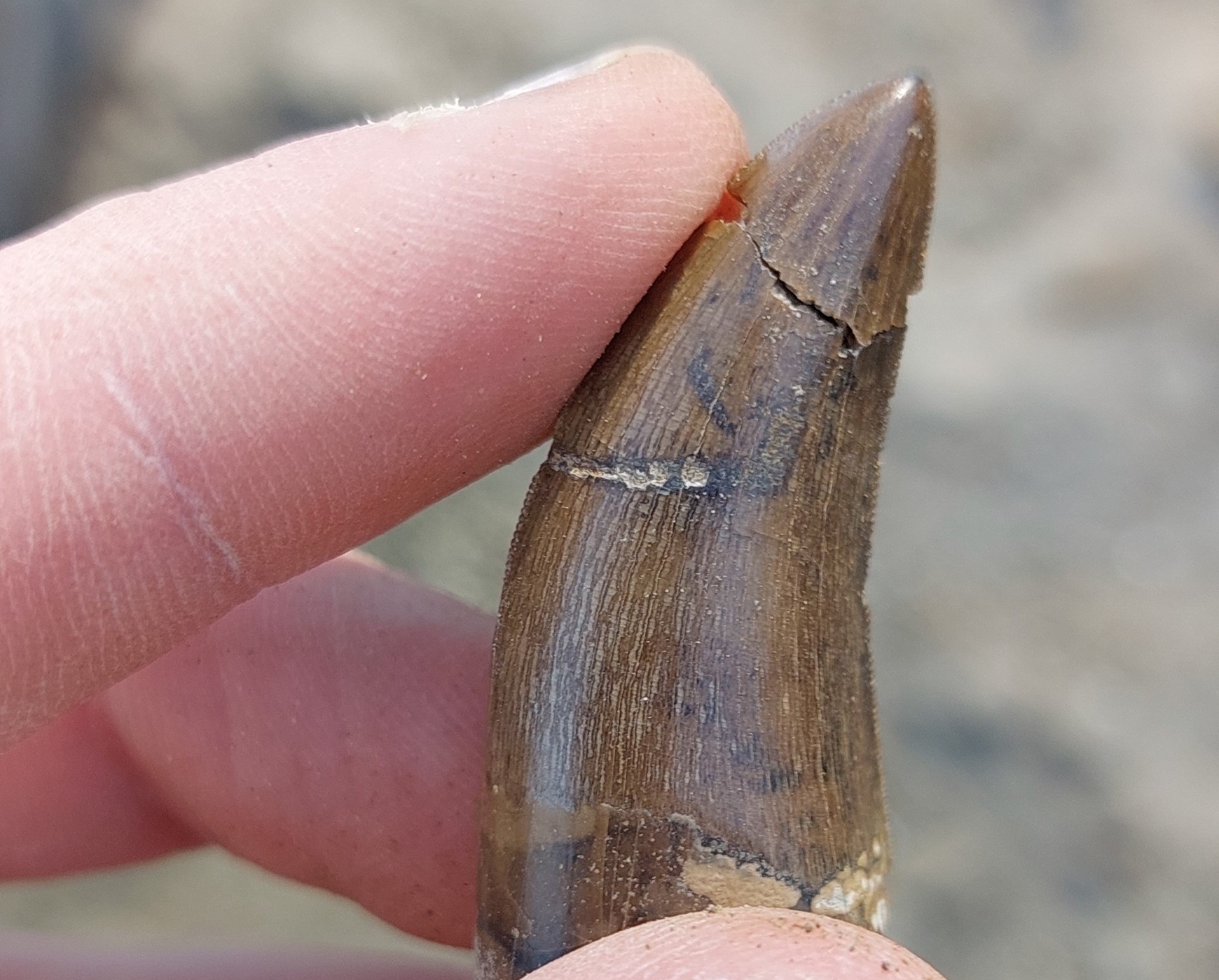
Second tyrannosaurid tooth. 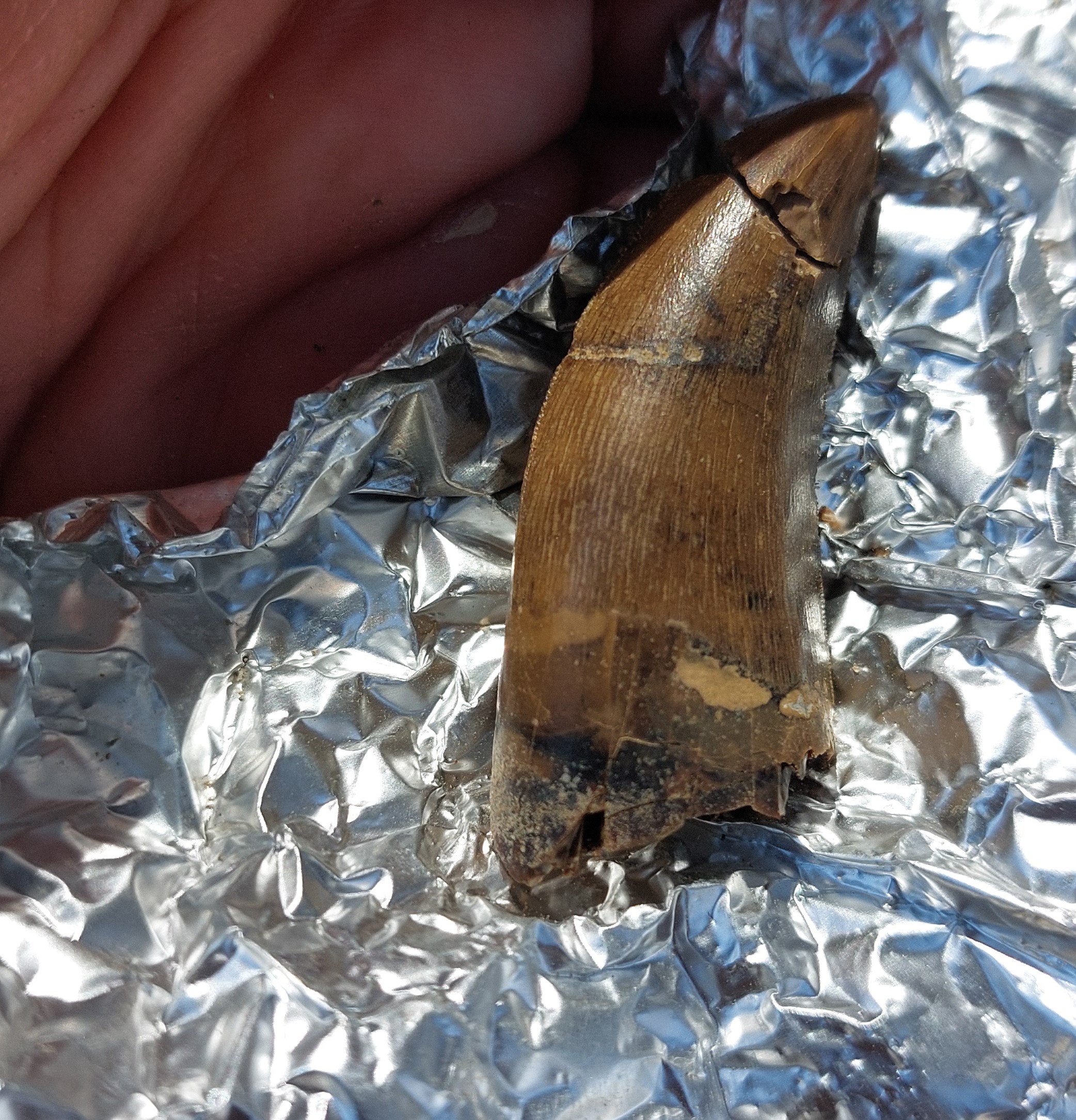
Another angle of the second tyrannosaurid tooth I discovered. 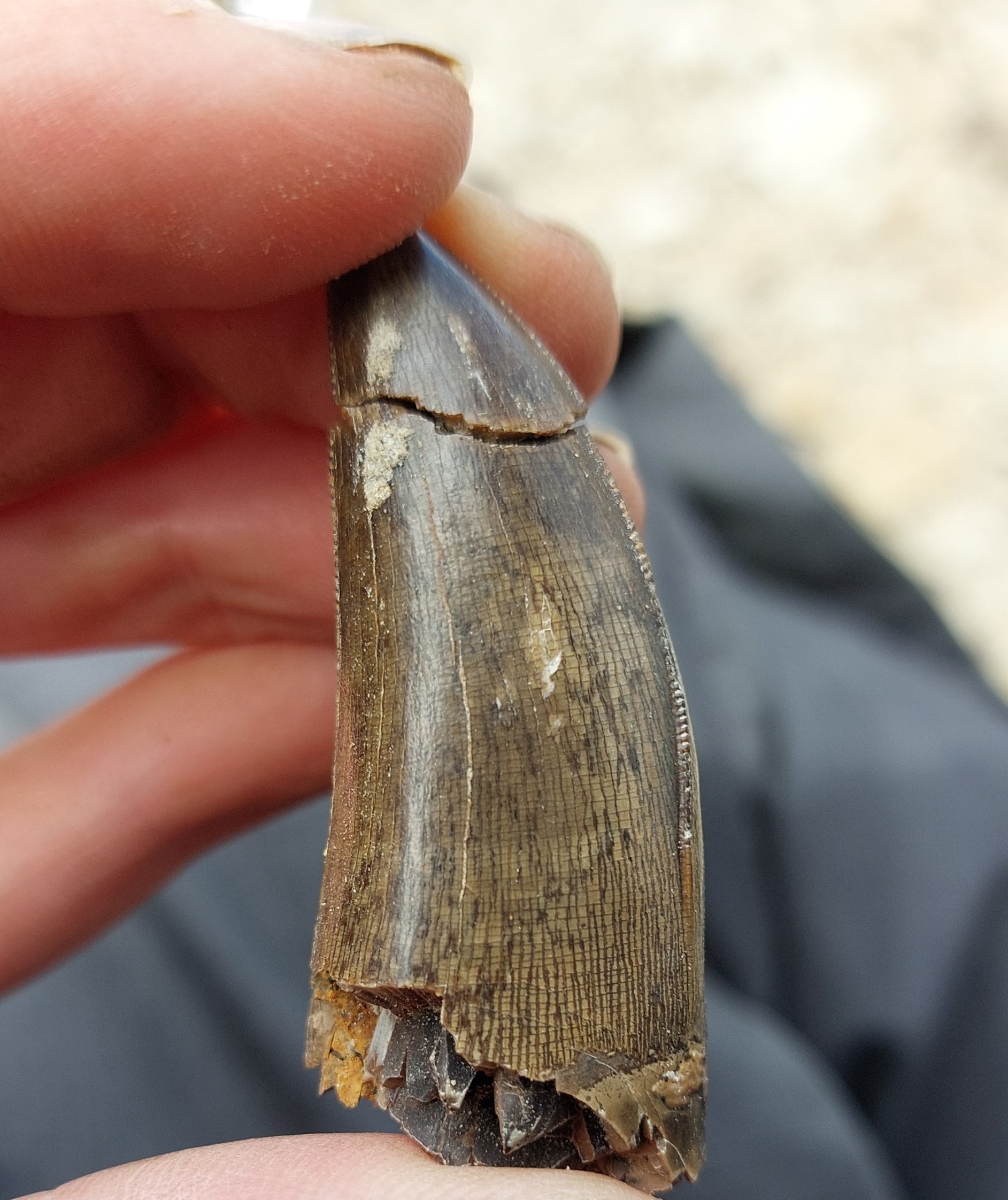
Third tyrannosaurid tooth. 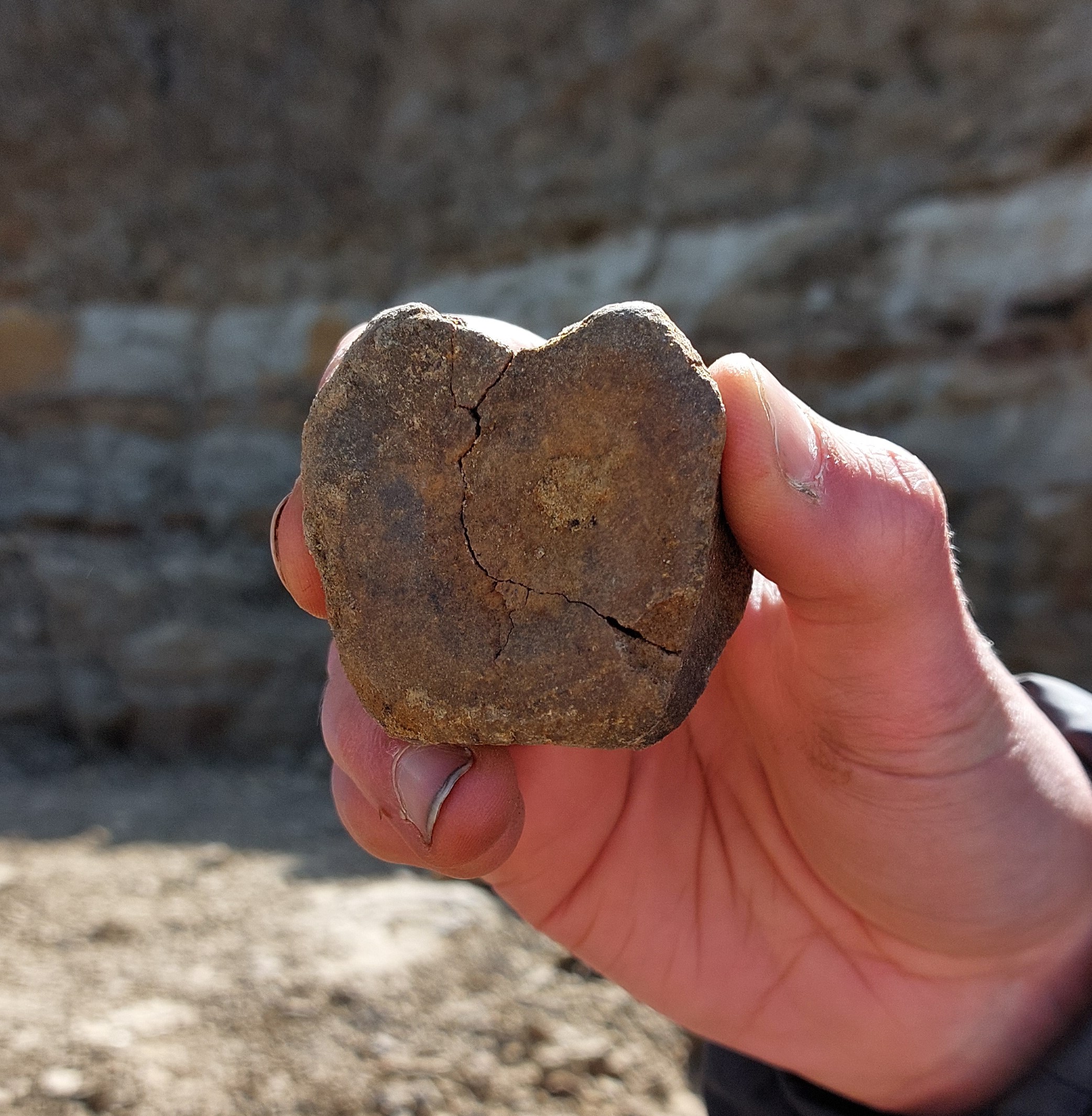
Dinosaur caudal vertebrae (tail vertebrae) . 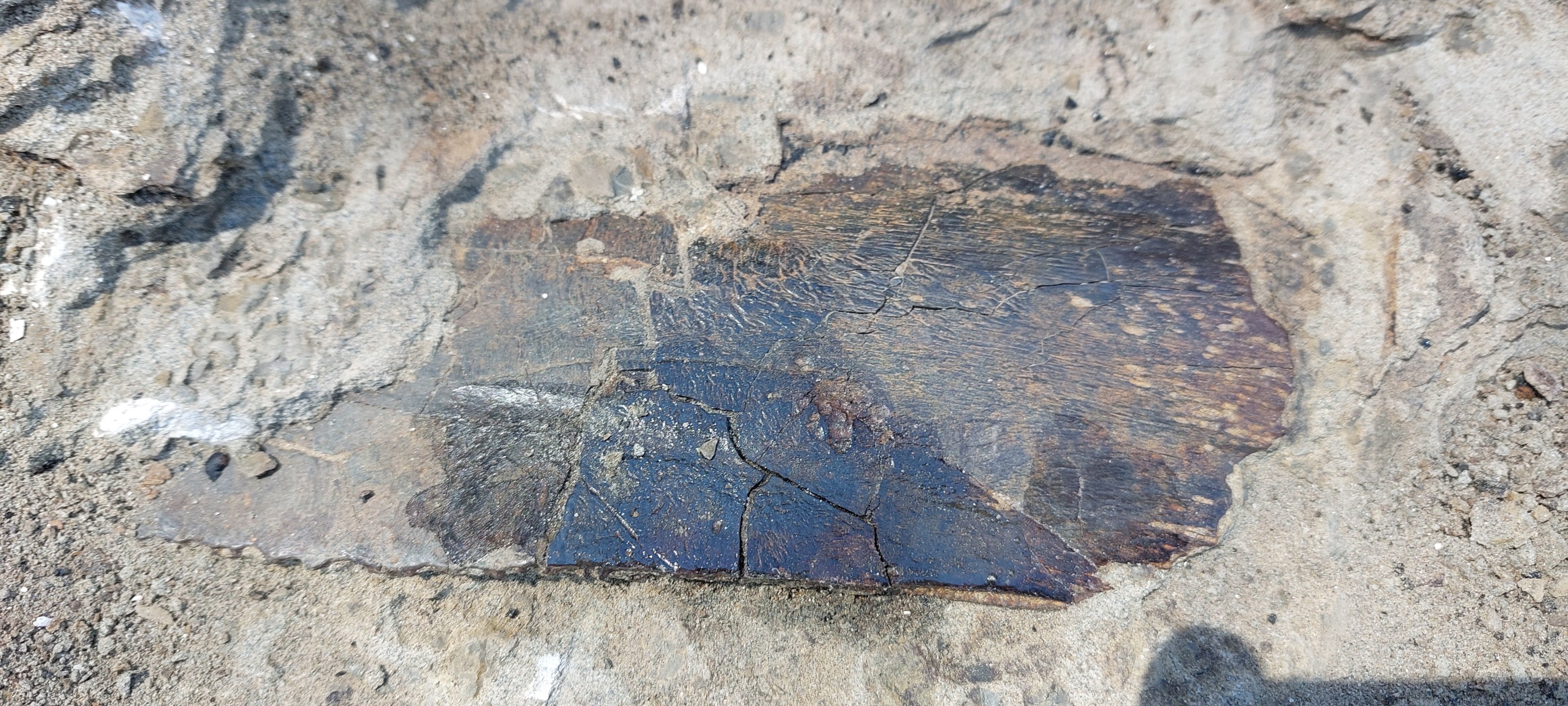
Big turtle shell piece I found and excavated. 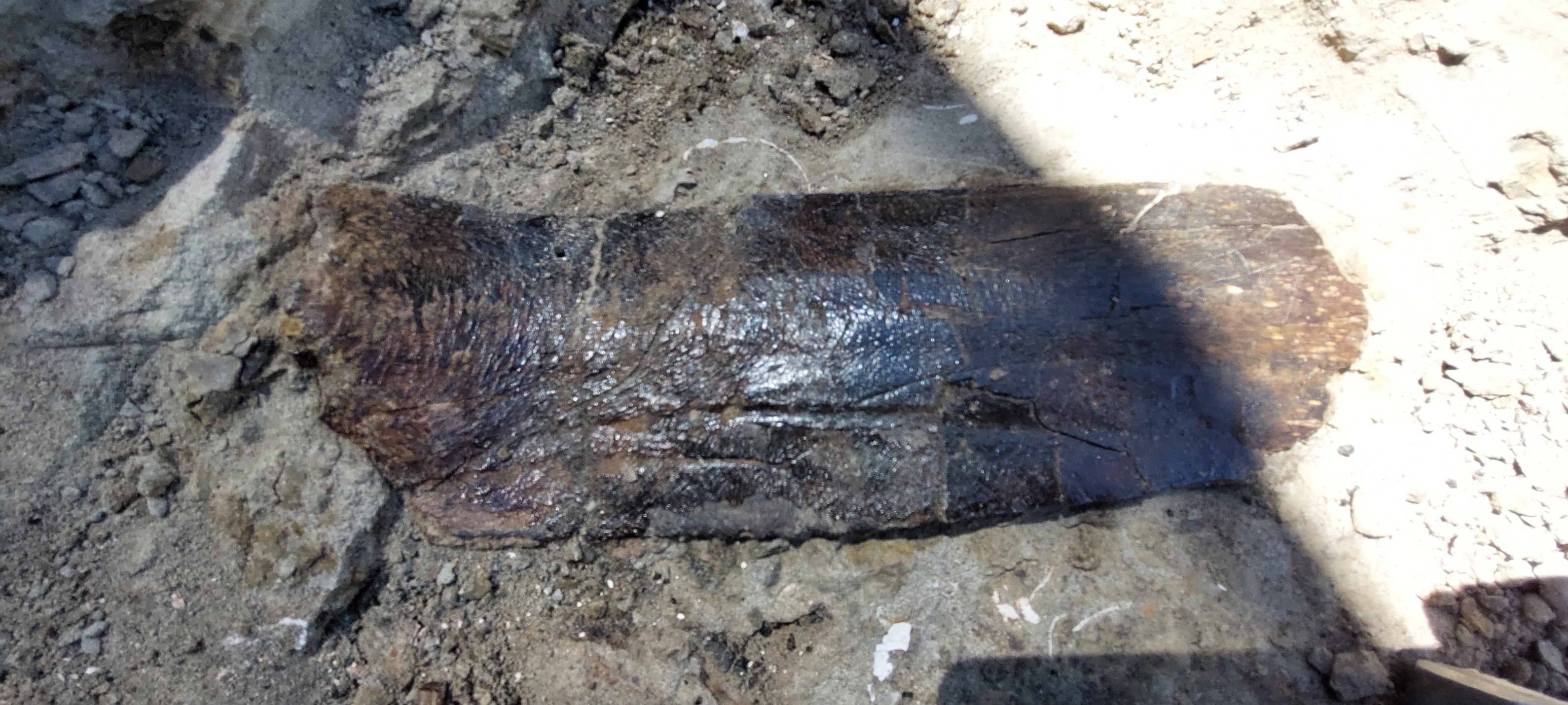
Big turtle shell piece excavated ready for plastering.
The tyrannosaurid teeth I uncovered were remarkably well-preserved, a testament to the resilience of fossils over millions of years. On my final dig day, I was determined to find a third tooth and I was not disappointed. Carefully excavating around its rocky encasement required patience and precision, but as the photo below shows, the effort was well worth it.
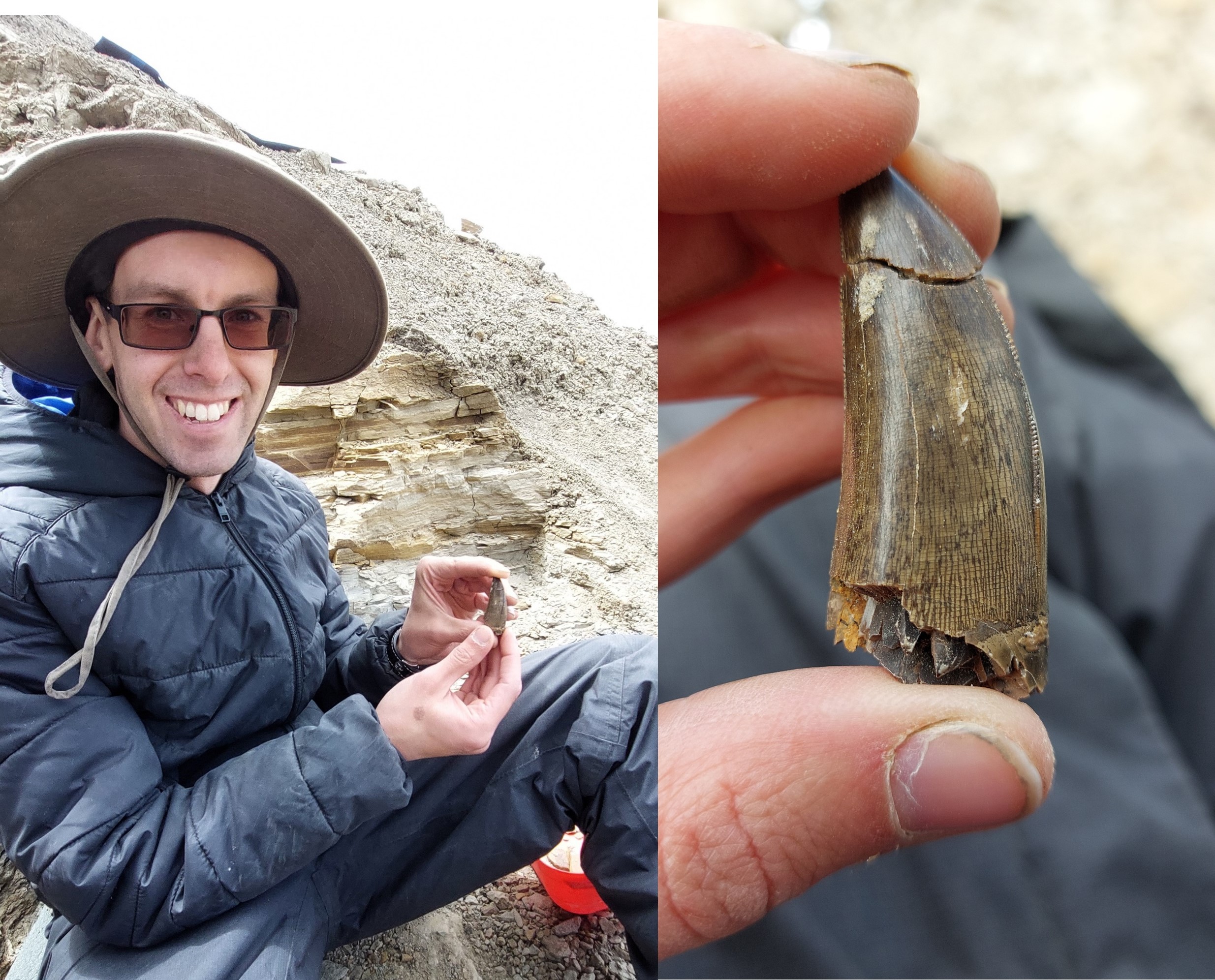
These fossils offer a rich trove of paleoenvironmental insights. The close proximity of tyrannosaurid remains to those of hadrosaurs and ceratopsians points to active predation or opportunistic scavenging. As prolific hunters, tyrannosaurids played a key role in the Late Cretaceous ecosystem. Like all theropods, they continuously shed and replaced their teeth making the discovery of isolated teeth a common and expected occurrence in fossil beds.
Finding such teeth stood out as one of the most exhilarating discoveries. Unfortunately, like many of the teeth I found, the tip had broken off; however, with careful restoration it could be seamlessly reassembled.
As the final layer of sediment gave way to discovery, I had time to reflect on what the experience meant.
From dust to discovery, each fossil was a triumph of patience and precision.
Reflections on Fieldwork & the Journey Ahead
Excavating fossils in Montana’s Judith River Formation was an profound experience and humbling experience. Deepening my understanding of Late Cretaceous palaeontology and reinforcing the significance of fieldwork in scientific discovery. To hold fossils untouched for over seventy-nine million years was both surreal and grounding.
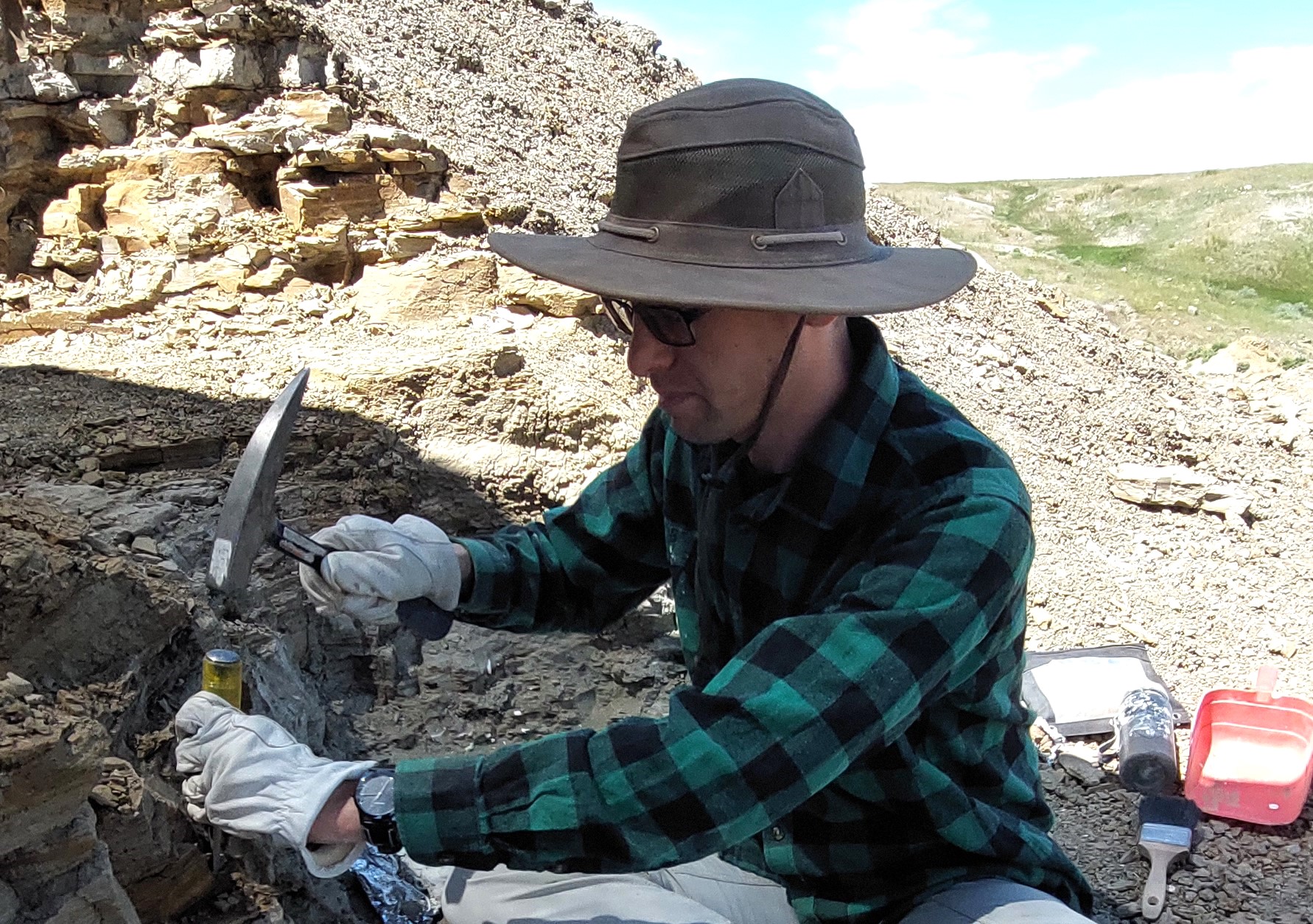
This expedition reaffirmed my dedication to palaeontology driving me to want to explore new field sites, expand my science communication, and share more fossil discoveries with you. It was a science-shaping milestone. Every fossil tells a story, and each expedition reveals more pieces of the prehistoric past that shape our understanding of ancient landscapes.
Next up: Evolution of feathered dinosaurs!
Fieldwork is the backbone of palaeontology, and I hope this newsletter has offered valuable insight into its challenges, rewards, and importance. If you have enjoyed this edition, I invite you to stay connected and be part of the conversation. Follow The Palaeo Minute on social media for future discoveries, exclusive insights, and behind-the-scenes content, let us continue exploring the prehistoric world together!
Don’t miss the next edition of The Palaeo Minute below, where I unravel the evolutionary secrets of dinosaur feathers. It is a prehistoric conversation you will not want to miss!
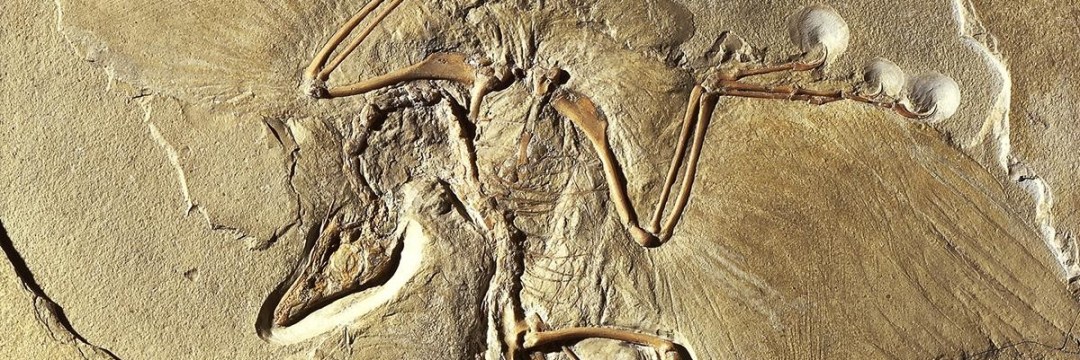
Palaeontology Fact of the Month
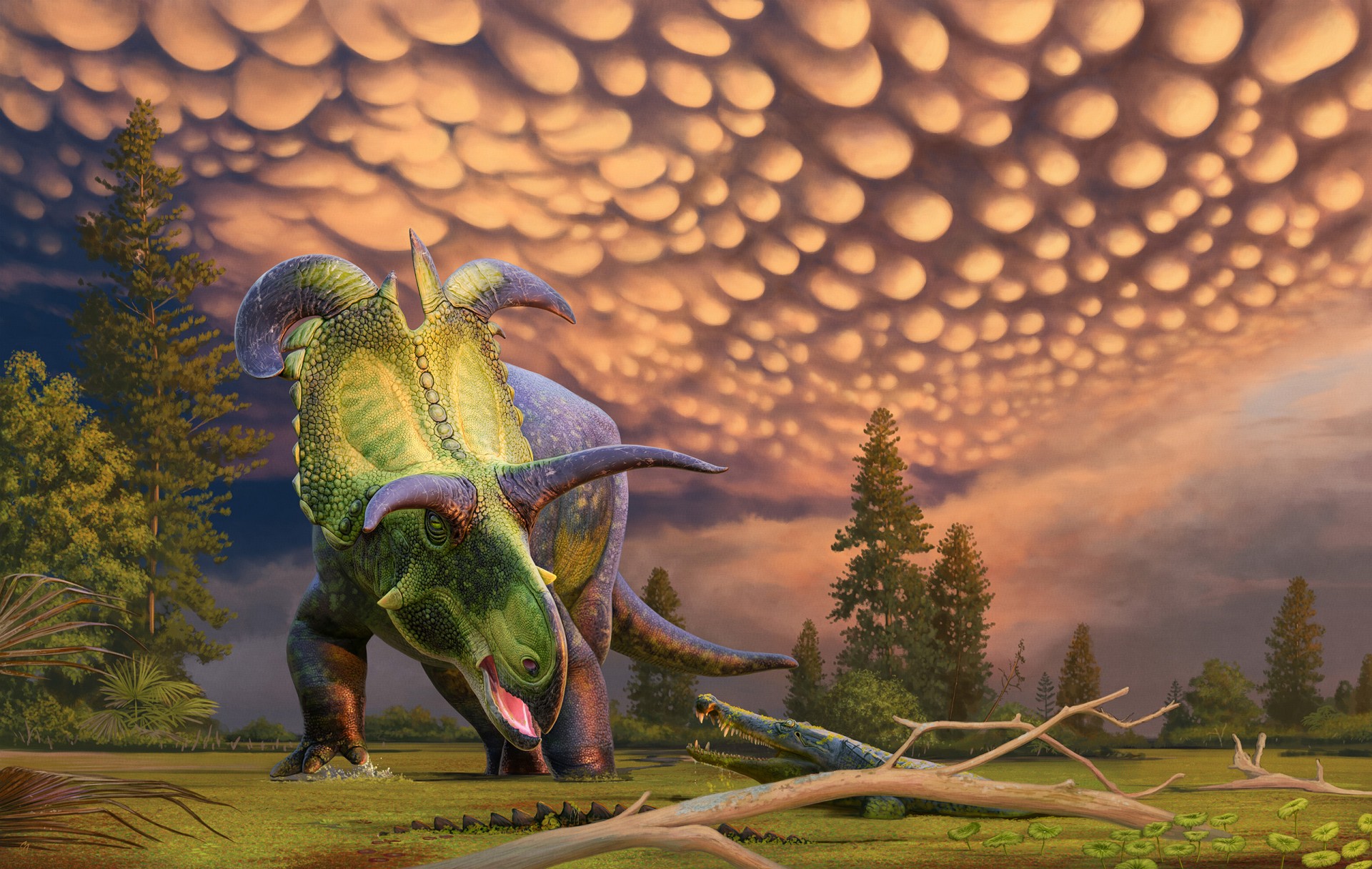
In June 2024, Lokiceratops rangiformis, a new centrosaurine ceratopsid was announced. Discovered in Montana’s Judith River Formation in 2019, Lokiceratops lived in the swamps and floodplains of Laramidia around 78 million years ago during the Late Cretaceous. As one of the largest centrosaurines discovered, it adds to the diverse species within the Judith River Formation (Loewen et al. 2024).
Thanks for venturing into the Mesozoic with me—see you next edition!

Stay Up to Date with The Palaeo Minute Social Media Channels
Instagram: instagram.com/thepalaeominute/
Past Newsletter Editions: The Palaeo Vault: Newsletter Archive


2 thoughts on “Unveiling Prehistoric Treasures in The Judith River Formation in Montana”