Skip to content
  • Twitter
  • Instagram
  • Patreon

James Ronan Palaeontologist

  • About
  • CV
  • Research & Fieldwork
    • Research
    • Publications
    • Fieldwork Adventures
  • Consultancy Services
    • Services Overview
    • Case Studies
      • Notable Events
      • Scicomm Links
  • Newsletter
    • Subscribe
    • Past Editions
  • Support
  • Contact
5 Jul 202520 Dec 2025 James Ronan Albertosaurus, Daspletosaurus, Dinosaurs, Education, Fossil Discoveries, Fossils, Gorgosaurus, Natural History, Newsletter, Palaeobiology, Palaeontology, Palaeontology Newsletter, Science Communication, Science Newsletter, Tarbosaurus, The Palaeo Minute, Theropod, Tyrannosaurid, Tyrannosaurus Rex, Unlock Dino Insights

The Secrets of Tyrannosaurs: Growth, Dominance, and Evolution

Expert perspective from a palaeontologist with 8+ years of research and field experience – insights based on extensive research, fieldwork excavation and scientific literature review.

Venture into the Lost World…One Minute at a Time

Note: This edition is a special extended feature. Future newsletters may be shorter or vary in depth depending on the topic.

In this edition: How tyrannosaurs grew fast, bit harder than sharks, and evolved skulls built for battle. Subscribe to unlock future dispatches and join the fossil frontier.

Your source for prehistoric knowledge!

Welcome to The Palaeo Minute your one-stop dispatch from the fossil frontier. Imagine growing faster than an elephant and delivering a bite force powerful enough to crush a car.

In this thunderous edition I spotlight the mascot of the newsletter delving into the life, growth, and bone-crunching bite of tyrannosaurs, from their ontogeny (development) to their skull adaptations. Get ready for the latest palaeobiology insights and fossil-fuelled discoveries, all packed into one mighty read.

Want to help the project thrive? Join my Patreon community to support the work behind the newsletter and gain access to bonus perks including a PDF starter edition of the newsletter, patron-only polls, and access to the Fossil Vault a subscriber-only archive of palaeo insights, consulting stories, and more.

Become a Patron at the link and help keep the fossil reporting flowing!

Join the Dinosaur discovery on Patreon

This is the final FREE edition of The Palaeo Minute! Future editions are available exclusively to Palaeo Explorers on a rolling subscription basis or rolling annual purchase. You can also purchase editions individually.

This FREE edition explores:

  • Tyrannosaurs Unleashed: Astonishing adaptations of the ultimate predator.
  • Science Meets the Skeleton: How new techniques are transforming our understanding of tyrannosaurid bone growth.
  • Bite Like a Tyrant: Feeding technique & skull arsenal.
  • Stress Tested Evolution: Explore the biomechanics of skull & jaw power.
  • Form and Function: What tyrannosaur growth & skull mechanics reveal about their reign.

Did you know?

Tyrannosaurus rex wielded a bite force over three times stronger than a great white shark, more than enough to crunch through bone.

Tyrannosaurs Unleashed

Tyrannosaurs continue to capture the imagination. These colossal “tyrant lizards” ranged from twenty-six to over thirty feet in length, with Tyrannosaurus rex itself stretching beyond forty feet and weighing more than eight tonnes.

Some estimates suggest individuals may have reached up to forty-nine feet long and tipped the scales at fifteen tonnes. With new research suggesting T. rex could have been up to seventy percent bigger than the biggest known specimen (Mallon and Hone, 2024).
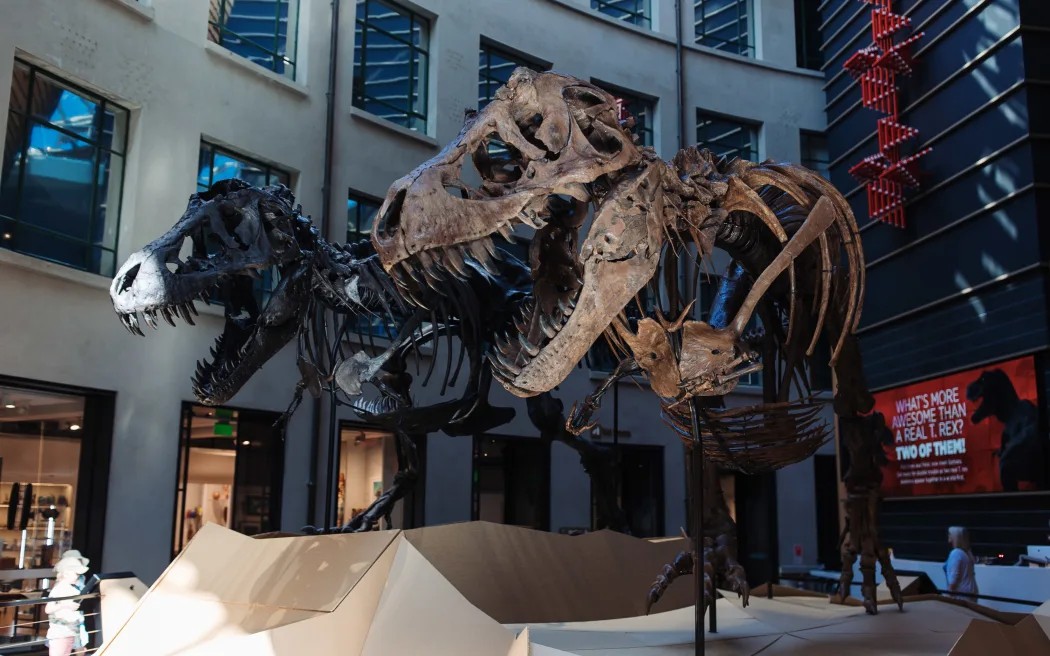
Tyrannosaur showdown: In 2022, Auckland Museum unveiled a fierce duo of male and female specimens of Tyrannosaurus rex, standing side by side in prehistoric splendour. Image credit: RNZ, 2023.

Recent research has used volumetric modelling to reassess dinosaur body mass and shape across major clades, revealing that many species were heavier than previously thought (Dempsey et al. 2025). The study found that shifts in centre of mass evolved through both convergence and divergence, driven by changes across multiple body segments.
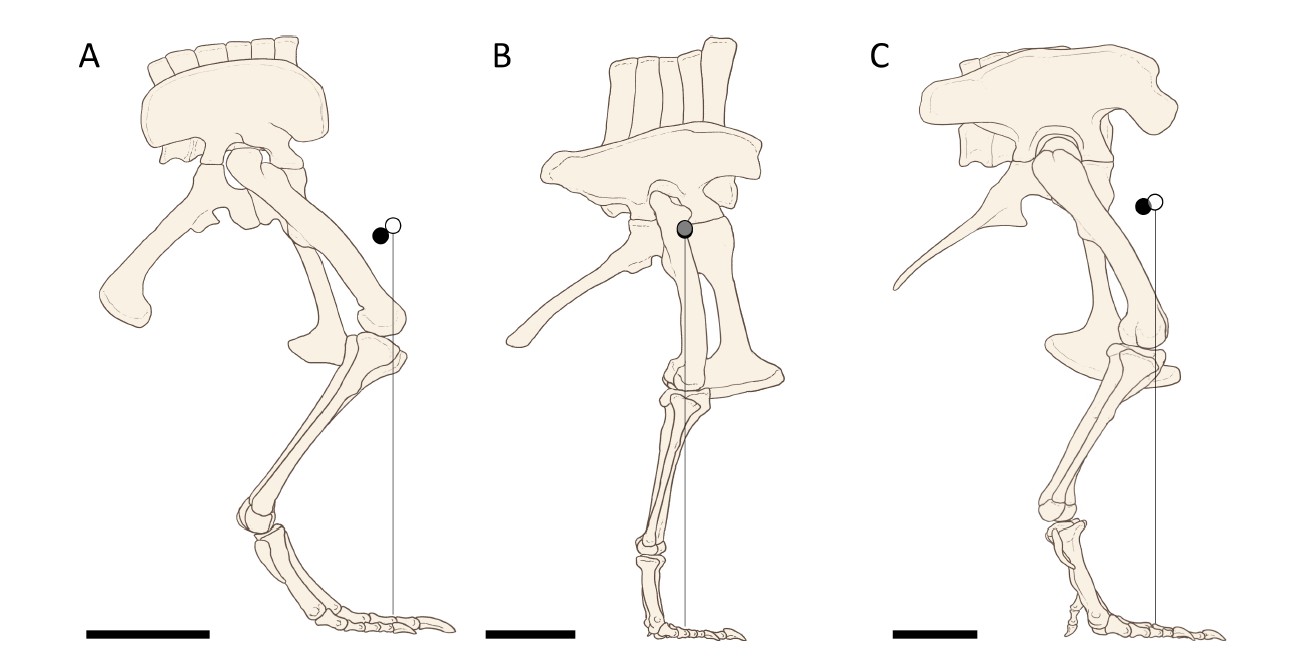
Illustrations show standing postures and limb flexion in large theropods to align the knee and foot beneath the centre of mass. Black and white circles indicate centre of mass positions. Featured taxa include (A) Sinraptor, (B) Acrocanthosaurus, and (C) Tyrannosaurus. Scale bars is 0.5 m. Image credit: Dempsey et al. 2025.

This fresh perspective not only reshapes our understanding of T. rex, but also casts new light on its formidable relatives Albertosaurus, Gorgosaurus, Daspletosaurus, and Tarbosaurus, each one a master of its Late Cretaceous domain. T. rex remains, of course, the most iconic and widely recognised member of this formidable lineage.

Face to face with a legend: A T. rex skull cast takes centre stage at Oxford’s Museum of Natural History. Image credit: James Ronan, 2019.

Key features of these dinosaurs included high, broad snouts and a square-fronted ilium. They also displayed an arctometatarsus where the central metatarsal was pinched between the surrounding toe bones, forming a semi-fused, reduced element that did not fully extend.
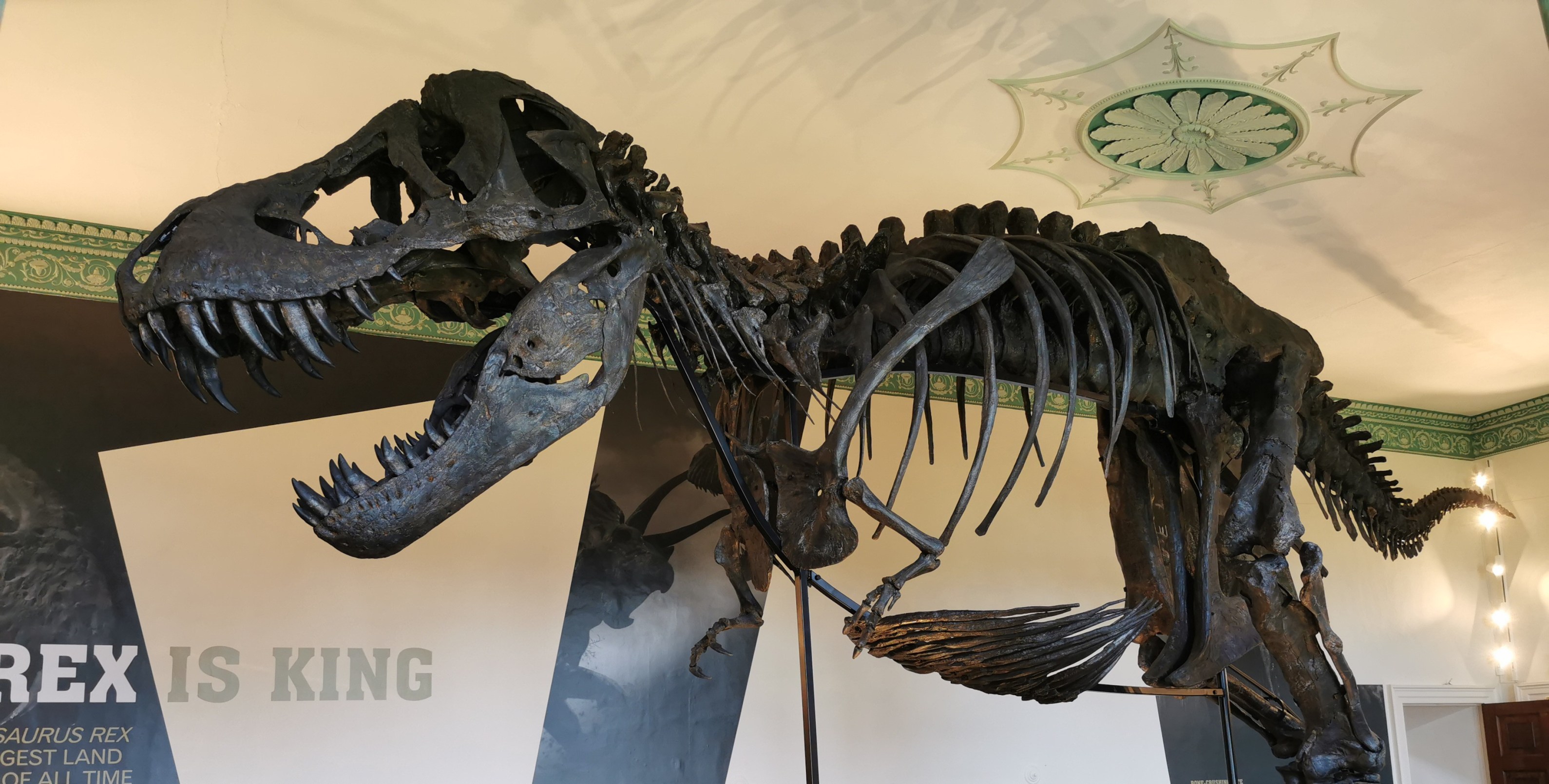
Meet Titus: The bone-crushing tyrant of Montana. On display at Wollaton Hall, this Tyrannosaurus rex brings prehistoric power straight to Britain’s doorstep. Image credit: Wikimedia, 2025.

Their arms were short, with phalanges reduced to just two functional fingers. But it is the sheer power of their jaws that truly defies comprehension. Tyrannosaurus rex, for instance, possessed a bite force strong enough to crush a modern-day car. Its serrated teeth were not only terrifying in appearance but served as highly efficient tools, evolved to slice through flesh and pulverise bone with ease.

Conservationist Nigel Larkin prepares and mounts ‘Titus’. The remarkable Tyrannosaurus rex specimen made up of 15% bone material on display at Wollaton Hall, bringing prehistoric grandeur to life in the heart of Nottingham.

Enjoying this fossil deep dive? Subscribe now to receive monthly dispatches packed with palaeontological discoveries.

Predators with Purpose

To me, tyrannosaurids are endlessly intriguing. Each new discovery hints at a deeper story still waiting to be unearthed.

The fossil record reveals a wealth of palaeontological evidence about tyrannosaur life history, from predatory and cannibalistic behaviour to signs of intelligence and acute sensory abilities. Each new discovery hints at a deeper story. Many more tyrannosaur species may still lie buried, waiting to be uncovered.

To truly understand the tyrannosaurs’ path to dominance, we must explore their palaeobiology and we must look beneath the surface, literally.

Recent histological studies have uncovered how these giants grew with astonishing speed, revealing bone microstructures that hold the secrets to their rise, survival, and success.

Tyrannosaurs do not just belong to the past they are icons of evolution’s most dramatic tale.

Science Meets the Skeleton

Advances in palaeontology and histological analysis are lifting the veil on tyrannosaur biology. One area that has drawn attention is growth, just how rapidly did a Tyrannosaurus rex reach its towering adult proportions?

In 2004, Jack Horner and colleagues investigated this question by analysing histological samples (fossil growth rings). Samples taken from seven tyrannosaur specimens housed at the Museum of the Rockies in Montana.
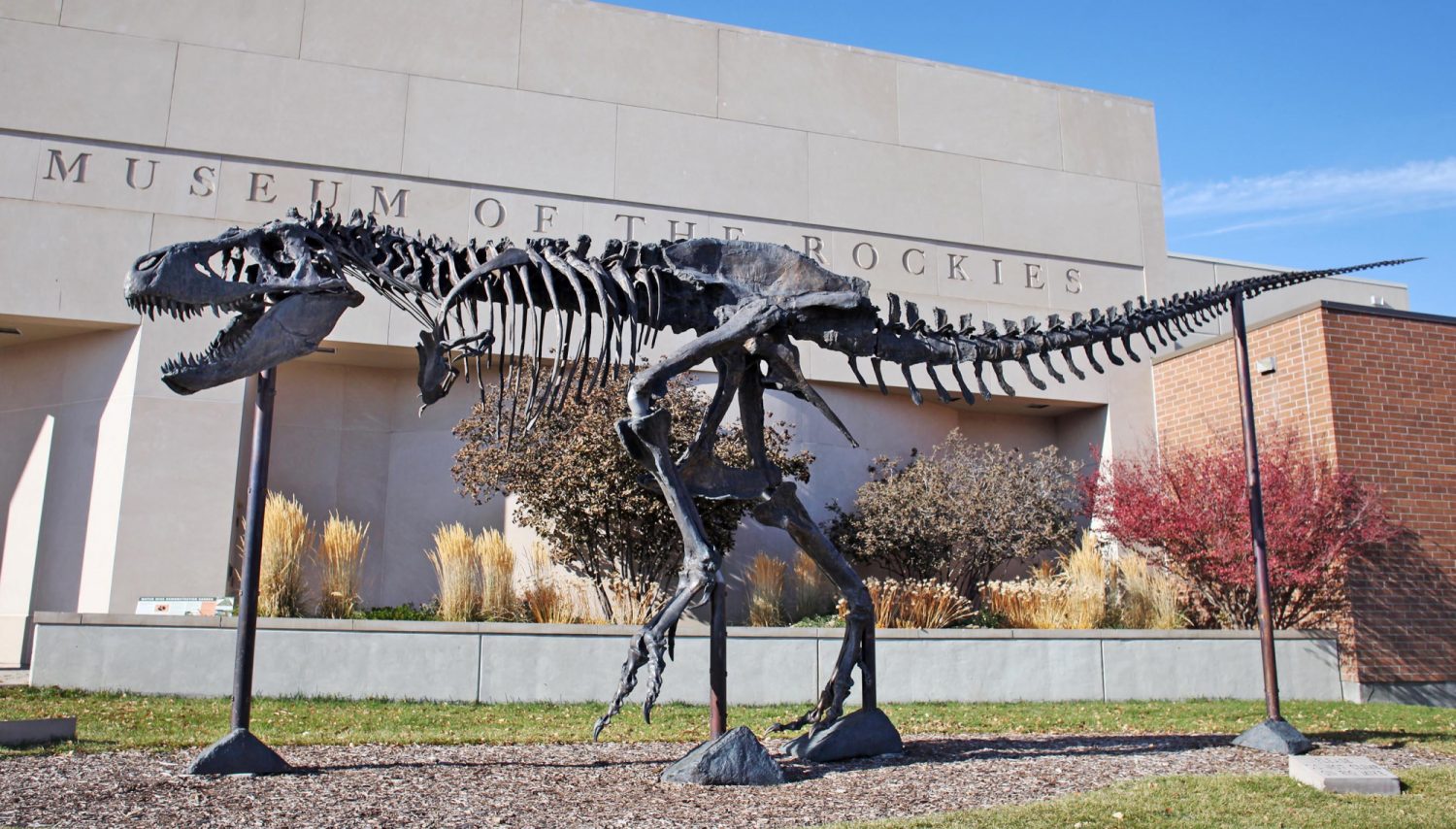
Legend immortalised: The bronze cast of Tyrannosaurus rex (MOR 555) stands guard at the Museum of the Rockies. Image credit: The Museum of the Rockies, 2025.

Much like examining the life rings of a tree, dinosaur bones can provide palaeontologists with insight into their bone growth and mature rate. Their research offered a rare glimpse into the growth dynamics of these prehistoric giants.

Transverse thin sections were prepared from the tibia, femur, fibula, and additional long bones to investigate growth dynamics (Horner and Padian, 2004). Specimen lengths were measured or estimated, and lines of arrested growth (LAGs) were identified in the preserved cortex.

These LAGs were counted and measured, including the distances between them. Observations were conducted using a petrographic microscope and digitally recorded with a Nikon DS-L1 camera.

Fast-Track to Gianthood

Compared to modern megafauna, tyrannosaurs matured rapidly with an accelerated sprint to adulthood.

Additional analysis was undertaken to assess the extent of bone growth lost due to erosion and remodelling. The results revealed all sampled specimens exhibited lines of arrested growth (LAGs) that extended continuously through both the inner and outer cortical regions. These LAGs were consistently fine, each no wider than the surrounding vascular canals.

Laminae thickness averaged 0.17 mm across all specimens, though localized variations ranged from 0.13 mm to 0.15 mm. Comparable thicknesses have been documented in Troodon, deer, and moa specimens housed in the collections of the Museum of the Rockies.
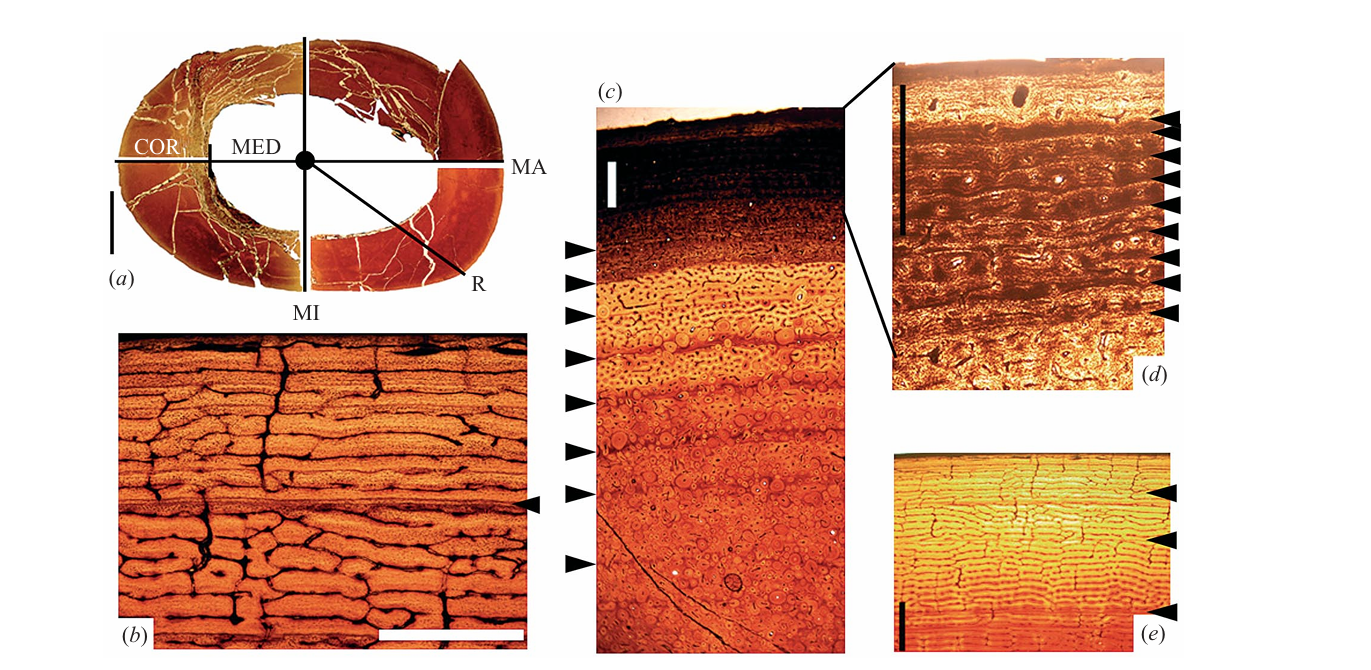
Bone histology samples from Tyrannosaurus rex. Transverse thin sections of limb bones reveal varying growth patterns, with fibro-lamellar bone and LAGs indicating rapid development. Image credit: Horner and Padian, 2004.

Of the seven tyrannosaur specimens analysed, three had ceased active growth two to three years prior to death, yet still showed cortical bone expansion at an annual rate of 0.5%–0.7%.

The remaining four were still growing, though narrowing LAG spacing suggests they were nearing skeletal maturity and would reach full adult size within one to three years

Evidence from the femora and tibiae suggests Tyrannosaurus rex typically reached full adult size at approximately 16 ± 3 years of age. However, due to small sample size, this estimate may not encompass the full spectrum of individual variation in growth trajectories or the timing of skeletal maturity.

Most tyrannosaurs reached their towering adult size by age twenty, a growth sprint unmatched by today’s megafauna. The study revealed notable variability in individual growth patterns, with overall durations ranging from twenty-two to twenty-seven years.

When compared to living megafauna, such as the African elephant, tyrannosaurs exhibited a slightly accelerated growth rate, reaching adult size rapidly relative to their total lifespan. This pattern underscores the intense, fast-paced development that characterised their journey to adulthood.

As with their accelerated growth that made them giants, it was their mechanical bite force that crowned them apex predators. As their bones rocketed toward adulthood, so too did their bite evolve into one of nature’s most destructive forces.

Tyrannosaur Feeding

From meteoric growth to monstrous might, their bones tell a tale of thunderous ascent—but it was the jaw that crowned the king.

Tyrannosaur feeding strategies have long been the focus of extensive research. One prominent hypothesis is “puncture-pull” feeding, in which tyrannosaurs used their massive body weight to pin down prey while delivering powerful, flesh-tearing bites.

Their teeth serrated like steak knives were well suited to this method. In cross-section, these teeth were D-shaped, ideal for resisting lateral forces. Like all theropods, tyrannosaurs continually replaced lost teeth, maintaining a relentless arsenal throughout life.

Fossil evidence supports this: numerous specimens show missing teeth, and isolated tyrannosaur teeth are commonly recovered from sites such as the Hell Creek and Judith River formations in Montana.

Sharp and deadly: Tyrannosaurid teeth discovered in Montana’s Judith River Formation, speak to the apex bite of a predator that once ruled North America. Image credit: James Ronan, 2024.

But feeding was not just about ripping flesh structural adaptations within the skull made it all possible. Tyrannosaurid skulls had to be structurally refined to withstand destructive loads. Let’s examine the biomechanics of tyrannosaur skulls now.

Stress-Tested Evolution

More than weapons, tyrannosaur skulls were evolutionary architecture, engineered for dominance in a Cretaceous arms race.

Finite Element Analysis (FEA), a digital engineering technique, shows tyrannosaurid skulls were built to endure the punishing stresses of biting and tearing. In particular, the maxilla-jugal suture functioned as a shock absorber by reducing tension during feeding. However, this adaptation came at a cost slightly compromising overall skull integrity (Rayfield, 2004).

Tyrannosaurus rex skull and FEM. (A) Left lateral view of BHM 3033 skull; (B) 2D finite element mesh (FEM) of the same specimen. Digitally stress-tested skulls revealed shock-absorbing sutures and fierce bite mechanics. Image credit: Rayfield, 2004.

Recent research has increasingly spotlighted the comparative cranial biomechanics of tyrannosaurids. In 2023, Johnson-Ransom and colleagues conducted a comprehensive analysis across a broad range of tyrannosauroid sizes and developmental stages, revealing how jaw structure evolved to meet the demands of these fearsome predators.

Their dataset included tyrannosauroids spanning a range of body sizes from small (Proceratosaurus, Dilong), medium (Teratophoneus), and large taxa (Tarbosaurus, Daspletosaurus, Gorgosaurus, Yutyrannus).

Gorgosaurus cast looms large at Manchester Museum in 2014. Image credit: Manchester Evening News, 2014.

The study also incorporated tyrannosaurines at different ontogenetic (development) stages, including a juvenile Tarbosaurus, Raptorex, and a mid-sized young Tyrannosaurus. Cranial performance was evaluated using jaw muscle force reconstructions and FEA, enabling precise evaluations of jaw biomechanics and cranial structural adaptations throughout the clade.

The study revealed that broad-skulled tyrannosaurines Tyrannosaurus, Daspletosaurus, juvenile Tyrannosaurus, and Raptorex exhibited significantly higher jaw muscle forces, compared to other similarly sized tyrannosauroids such as Gorgosaurus, Yutyrannus, and Proceratosaurus.

Yutyrannus demonstrated lower cranial stress relative to most adult tyrannosaurids, indicating skull architecture minimizing stress effectively under loading conditions.

Despite extreme bite forces, large tyrannosaurids maintained sufficient safety factors in skull integrity. Their reinforced morphology did not notably decrease overall bone stress, implying robustness was not the primary factor in stress mitigation (Johnson-Ransom et al. 2023).

These insights into skull and jaw muscle power structure reveal predators as precisely engineered as they were powerful. Setting the stage for understanding how form met function in tyrannosaurid deadly design.

Form and Function

In summary, tyrannosaur growth rates and skull biomechanics reveal how these predators stormed their ecosystems with speed and strength. Engineered for dominance, their skulls absorbed punishing forces, their jaws tore through bone, and their bodies surged toward adult size in mere decades, every adaptation a weapon in the evolutionary arms race.

Next up: Montana’s fossil treasures!

From Albertosaurus to Tarbosaurus, these apex predators carried a legacy of lethal design, a blueprint written in bone. Today, their fossils still speak of battles fought, prey claimed, and mysteries yet to surface.

And those mysteries? They are waiting to be discovered beneath the rock.

Museum showcase: The Albertosaurus strikes a pose in this scenic display at the Royal Tyrrell Museum in Canada. Image credit: Royal Tyrrell Museum, 2025.

I hope you have enjoyed exploring the life history of tyrannosaurids in this edition. Discovering how highly adapted and truly formidable these predators were.

This marks the final FREE edition of The Palaeo Minute. Subscribe today to continue the excavation for knowledge £4.99/month. Fossils, facts, and fearless commentary await.

As The Palaeo Minute evolves into a subscriber-exclusive journey, I want to thank every reader who has walked beside me through fossil beds and forgotten worlds. The support, curiosity, and shared wonder have meant the world.

But this is just the beginning because behind each discovery, another waits to surface. Join me in the next chapter, where each edition digs deeper, resonates stronger, and reveals palaeontology’s most thrilling frontiers.

Subscribe today and continue the excavation for knowledge.

Why Subscribe?

Ready to dig deeper? Here is why subscribing unlocks the full fossil frontier. Dive into palaeontology’s cutting edge science and get exclusive access to the most riveting research in the field.

  • Dive into scientific breakthroughs & fossil discoveries redefining our understanding of dinosaurs & natural history.
  • Bonus content: Palaeo Fact of the Month & social media updates.
  • Join Patreon for exclusive content & access to the Fossil Vault.

Quick 30-second signup required. Secure checkout. Instant access upon newsletter release.

Available via £4.99/month rolling subscription (cancel anytime) or as a £59.99 rolling subscription annual bundle.

Curious to support the science? Click below to join me on Patreon.

join the excavation for knowledge

Do not forget to check out the palaeontology fact of the month and follow The Palaeo Minute on X and Instagram for fossils, facts, and behind-the-scenes glimpses into palaeontology in action.

Palaeontology Fact of the Month

Yutyrannus huali specimens (ZCDM V5000, ZCDM V5001, and ELDM V1001). Display extensive feather preservation and anatomical detail. Image credit: Xu et al. 2012.

China continues to yield ground-breaking palaeontological discoveries. In 2012, researchers identified a new feathered species of early tyrannosauroid Yutyrannus huali. Meaning “feathered tyrant” from the Lower Cretaceous Yixian Formation in Liaoning Province.

The only known species within its genus it displays a preserved coat of filamentous feathers, suggesting Yutyrannus was feathered. Unlike its later, more derived relatives such as Tyrannosaurus rex, Yutyrannus retained a three-fingered manus (forelimb) and bore a prominent cranial crest, a trait reminiscent of other theropods like Guanlong and Concavenator (Xu et al. 2012).

Don’t miss the next edition of The Palaeo Minute below, where I dig into fossil fieldwork and dinosaur biodiversity in Montana’s legendary Judith River Formation!
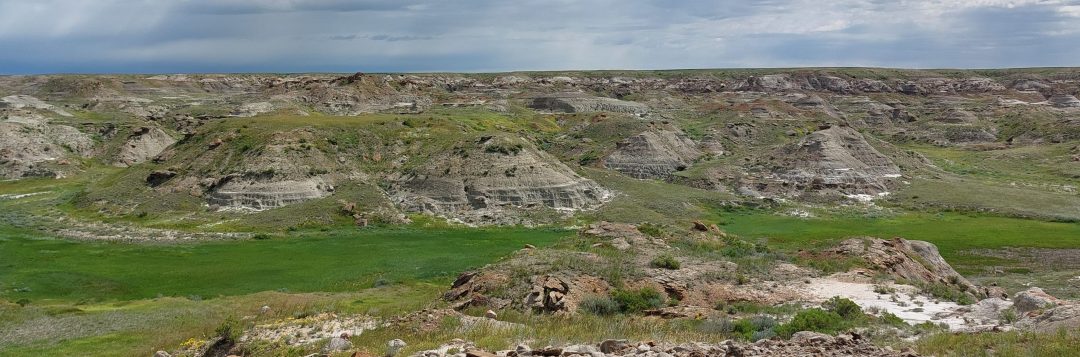
Unveiling Prehistoric Treasures in The Judith River Formation in Montana

Unveiling Prehistoric Treasures in The Judith River Formation in Montana

12 Aug 2025
This content is reserved for subscribers of The Palaeo Minute

Thanks for venturing into the Mesozoic with me. Paid subscribers, buckle up… things only get more fossiliferous from here.

Stay Up to Date with The Palaeo Minute Social Media Channels

X: x.com/ThePalaeoMinute

Instagram: instagram.com/thepalaeominute/

Support The Palaeo Minute on Patreon: patreon.com/ThePalaeoMinute

Past Newsletter Editions: The Palaeo Vault: Newsletter Archive

References

Mallon, J. C. and Hone, D. W. E. (2024) Estimation of maximum body size in fossil species: A case study using Tyrannosaurus rex. Ecology and Evolution. 14, p. 1-10

Dempsey, M., Cross, S. R. R., Maidment, S. C. R., Hutchinson, J. R., & Bates, K. T. (in press) (2025) New perspectives on body size and shape evolution in dinosaurs. Biological Reviews.

Horner, J. R. and Padian, K. (2004) Age and growth dynamics of Tyrannosaurus rex. The Royal Society. 271 p. 1875-1880

Rayfield, E. J. (2004) Cranial mechanics and feeding in Tyrannosaurus rex. Proceedings of the Royal Society of Biological Sciences. 271 p. 1451-1459

Ransom-Johnson, E., Feng, L., Xu, X., Ramos, R., Midzuk, J. A., Ulrike, T., Weltman-Atkins, K., & Snively, E. (2023) Comparative cranial biomechanics reveal that Late Cretaceous tyrannosaurids exerted relatively greater bite force than in early-diverging tyrannosauroids. The Anatomical Record. 307, p. 1897-1917

Xu, X., Wang, K., Zhang, K., Ma, Q., Xing, L., Sullivan, C., Hu, D., Cheng, S., & Wang, S. (2012) A gigantic feathered dinosaur from the Lower Cretaceous of China. Nature. 484, p. 92-95

Header image is Titus the Tyrannosaurus rex at Wollaton Hall, Nottingham. Image credit: Wikimedia, 2025.


Discover more from James Ronan Palaeontologist

Subscribe to get the latest posts sent to your email.

Share this:

  • Click to email a link to a friend (Opens in new window) Email
  • Click to share on X (Opens in new window) X
  • Click to share on Facebook (Opens in new window) Facebook
  • Click to share on Bluesky (Opens in new window) Bluesky
  • Click to share on LinkedIn (Opens in new window) LinkedIn
Like Loading...
Tagged Albertosaurus, Anatomy, Cretaceous, Daspletosaurus, Dominance, Evolution, Fossil Discoveries, Fossils, Gorgosaurus, Growth, Natural History, Newsletter, Palaeobiology, Palaeontology Newsletter, Paleontology, science, Science Newsletter, Scientific Newsletter, Secrets of Tyrannosaurs, Tarbosaurus, The Palaeo Minute, Tyrannosaurid, Tyrannosaurus Rex
Unknown's avatar

Published by James Ronan

James is a UK-based vertebrate palaeontologist and science communicator with an MSc in Palaeobiology from the University of Bristol. He studies fossils, explores the past, and brings palaeontology to life through engaging outreach. His mission? To spark curiosity, deepen understanding, and make palaeontology an unforgettable experience. You can follow James on Twitter @ThePalaeoMinute. View all posts by James Ronan

2 thoughts on “The Secrets of Tyrannosaurs: Growth, Dominance, and Evolution”

  1. Pingback: Discover Prehistoric Knowledge: Join The Palaeo Minute Newsletter – James Ronan Palaeontologist
  2. Pingback: Welcome to The Palaeo Minute: Your Source for Prehistoric Knowledge! – James Ronan Palaeontologist

Leave a comment Cancel reply

Post navigation

Welcome to The Palaeo Minute: Your Source for Prehistoric Knowledge!
Behind the Scenes: Consulting for Palaeontology in Media

Home

Unlock the Lost World. Join The Palaeo Minute for Fossil Secrets from Deep Time.

What's inside?

Unlock Exclusive Content on Patreon

Step into the fossil vault

Palaeo Sponsor Spotlight

Become a sponsor & reach thousands of fossil fans.

Example Sponsor: Walking With Dinosaurs: Uncovering the Secret Stories of Prehistoric Life. Highly recommended. Available from DK Books or Amazon UK.
become a sponsor

The Fossil Record

85,565 views

Scientific Consulting

Need a Palaeontology Consultant?

Helping creators bring prehistoric worlds to life. Get expert support for books, media & publishing.

Get Expert Support for Your Project!

Keep Science Accessible!

Help keep science accessible to everyone.
Support my science!

Dinosaur Discoveries

Tyrannosaurid tooth discovered in Montana.
Dig Deep: Montana Fossils!

Science Communication

Learn about scicomm!

My Science Soundbites!

dinosaur action interview
NEW from The Palaeo Minute: Newsletter 8 At the Feet of the Dinosaurs Unearthing Ancient Secrets NEW from The Palaeo Minute: Newsletter 7 Exploring Hadrosaur Social Behaviour and Communication NEW from The Palaeo Minute: Newsletter 6 Birds the Living Dinosaurs Explained Want to get your dino brand in front of 82,000+ fossil fanatics? NEW from The Palaeo Minute: Newsletter 5 Discovering the Vibrant Feathers of Sinosauropteryx Here are the titles for the upcoming Palaeo Minute editions from October 2025 to January 2026 Step into the Lost World... One Minute at a Time NEW from The Palaeo Minute: Newsletter 4 Unravelling Feathered Dinosaurs: Evolution Secrets Unravelling Feathered Dinosaurs: Evolution Insights (Newsletter 4) is here!

Support the Science. Join the Expedition. Explore deep time with every dispatch. Subscribe to The Palaeo Minute newsletter and be part of the fossil journey.

Quick 30-second sign up required. Payment is safe and secure with immediate access when each edition goes live.

Tyrannosaurus rex banner commissioned by palaeoartist Aram Papazyan https://www.artstation.com/aram_rex.

Venture into the Lost World of Dinosaurs & Palaeontology!

© 2026 James Ronan Palaeontologist
Website Built with WordPress.com.


Loading Comments...
 

You must be logged in to post a comment.

    %d