
This article covers a scansoriopterygid, a sauropodomorph, and a new iguanodontian dinosaur discovered in Lightening Ridge in Australia named Fostoria dhimbangunmal. This article will examine these fossil discoveries and the importance of Fostoria as a new dinosaur species in Australia.
Ambopteryx longibrachium
On the 8th of May 2019 palaeontologists published research in the Journal of Nature about the discovery of a new scansoriopterygid (climbing/gliding dinosaur). This dinosaur called Ambopteryx longibrachium lived 160 Million Years Ago during the Jurassic period in north-western China. These dinosaurs had membranous wings similar to that seen in pterosaurs and today’s mammal bat’s.

The Ambopteryx fossil discovered in China’s Liaoning Province is the most well preserved specimen from the scansoripterygid family to date. It is so well preserved that palaeontologists could identify it’s stomach contents, these being small pieces of bone and small rocks known as gastroliths (which modern birds use to grind plant vegetation).
The Ambopteryx specimen also showcases downy like feathers along it’s body, but these were not used for flight (Pickrell, 2019). If you didn’t think dinosaurs were weird enough already then Ambopteryx and the rest of the scansoripterygid family take dinosaur uniqueness to a whole new level. Other examples of these dinosaurs include Epidexipteryx hui, Scansoriopteryx heilmanni and Yi qi.
Mussaurus patagonicus
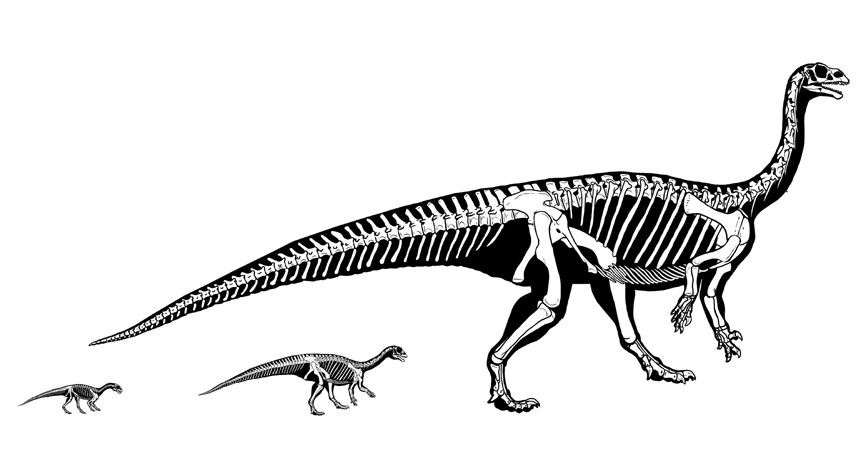
On the 20th of May another paper was published this time in the Journal of Scientific Reports in Nature on the early Jurassic dinosaur Mussaurus patagonicus. Mussaurus was a sauropodomorph dinosaur with a long neck and tail which lived in present day Argentina. This dinosaur as a hatchling walked on all fours and gradually as it grew older it’s gait moved into walking on two legs.
Palaeontologists used the fossil bones from Mussaurus specimens covering the various stages of the dinosaurs development from hatchling to adult, which were CT scanned with 3D models being made to digitalise and visualise the dinosaur at each developmental stage.
Allowing the team to estimate the dinosaurs weight and movement throughout the animals development. As Mussaurus got bigger it’s centre of gravity moved towards the rear, with the tail playing a large role as counterbalance. As such an adult Mussaurus centre of gravity was very close to the hips, with the dinosaur walking bipedally (Ye, 2019).
Fostoria dhimbangunmal
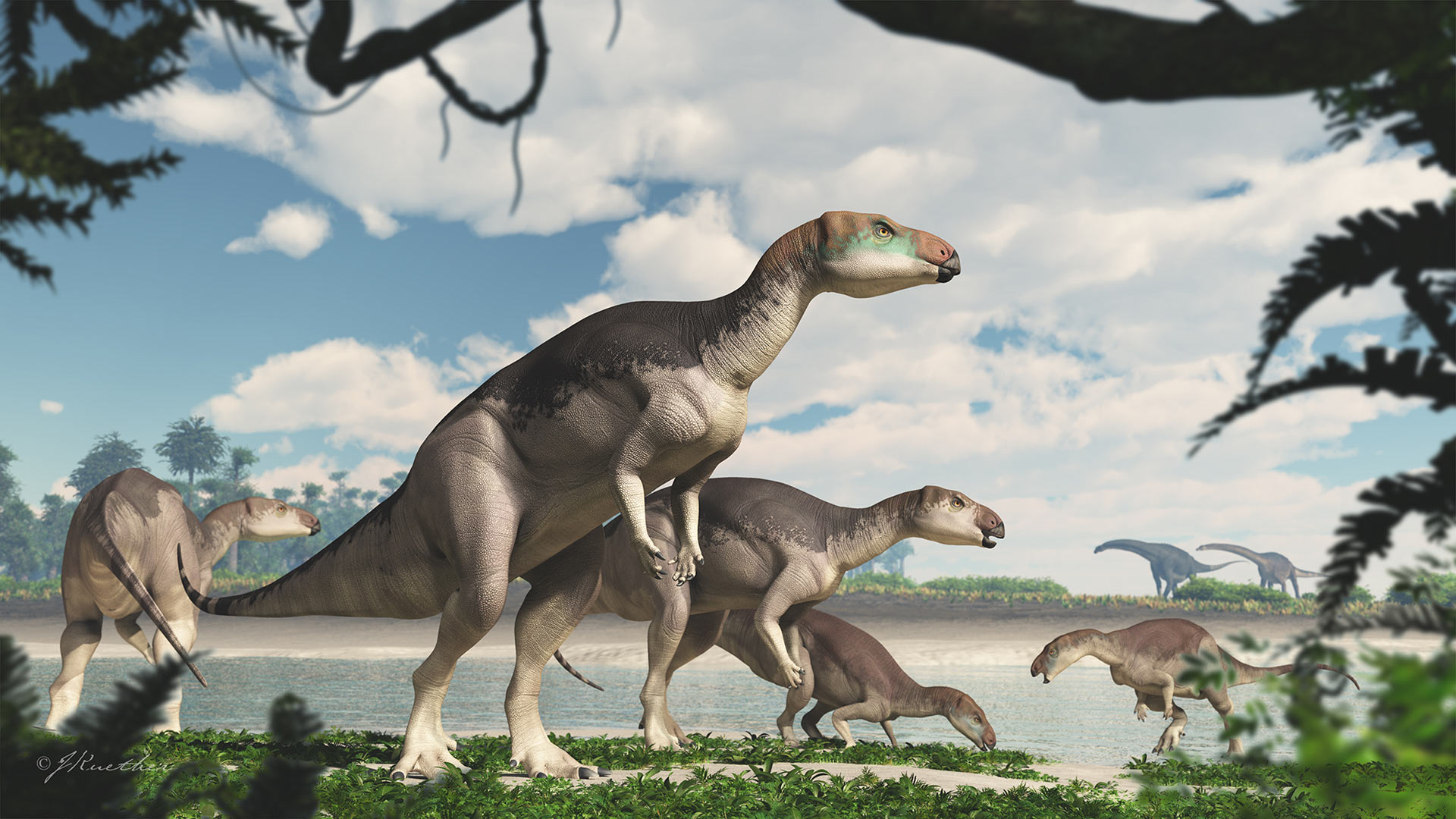
Research was also published in the Journal of Vertebrate Palaeontology about the fossil discovery of a new mid Cretaceous iguanodontian dinosaur called Fostoria dhimbangunmal. The fossilized remains of this new dinosaur were discovered at a well-known fossil locality at Lightening Ridge, which has an underground opal mine where fossilized dinosaur bones have been discovered. The fossils of Fostoria are opalized and the first fossil evidence of a dinosaur herd found so far in Australia.
These dinosaur bones were originally discovered 35 years ago by opal miner Bob Foster, it wasn’t until recently when they were donated to the Australian Opal Centre that they were studied, researched and a new species of dinosaur was announced (Conroy, 2019).
Many News and Science websites quickly picked up the research story about Fostoria with The Australian, The New York Times, The National Geographic, Science News and many others explaining more about this fascinating new species of iguanodontid.
Fostoria’s importance to Australia
Lightening Ridge is a small town in New South Wales, Australia. Famous for its mining heritage due to the elusive black opal found within the mines. The area is an important palaeontological site with many dinosaur remains being found dating from the Cretaceous period, many of the fossils discovered here have been found crystallized in opal.
The discovery of Fostoria dhimbangunmal is significant not just as an opalized fossil discovery but as a discovery of another iguanodontian, with Australia’s Muttaburrasaurus langdoni being the only other well known iguanodontid discovered within the country.
Australia’s dinosaur record has been quite poor with only 10 dinosaur species being discovered at present. Fostoria not only contributes another dinosaur discovery to Australia, but contributes and supports the global diversity of iguanodontian dinosaurs from the Mid-Cretaceous (Bell et al. 2019).
References
Conroy G. (2019) Dinosaur Bones Shimmering With Opal Reveal a New Species in Australia, [online] Smithsonianmag.com, Available from: https://www.smithsonianmag.com/science-nature/dinosaur-bones-encrusted-opal-reveal-new-species-australia-180972332/ [Accessed 10th June 2019]
Pickrell J. (2019) New batlike dinosaur was early experiment in flight, [online] ScienceMag.org, Available from: https://www.sciencemag.org/news/2019/05/new-batlike-dinosaur-was-early-experiment-flight [Accessed 10th June 2019]
Yvaine Ye. (2019) Some baby dinosaurs crawled before learning to walk on two legs, [online] New Scientist.com, Available from: https://www.newscientist.com/article/2203628-some-baby-dinosaurs-crawled-before-learning-to-walk-on-two-legs/ [Accessed 10th June 2019]

