
The above profile for Brachylophosaurus covers its temporal range, fossil location, preserved soft tissue remains, and stomach contents, with additional palaeontological research and references provided below
Brachylophosaurus canadensis was a saurolophine hadrosaurid that lived throughout the Late Cretaceous 83.5 to 72.1 million years ago. Brachylophosaurus was an active quadrupedal herbivore, a social dinosaur that lived in herds. The holotype specimen (NMC 8893) was first discovered in 1953 by palaeontologist Charles Mortram Sternberg in Alberta, Canada.
Brachylophosaurus remains have been recovered in the geological formations of the Judith River Formation in Montana, the Wahweap Formation in Utah USA, and the Oldman Formation in Alberta Canada.
Multiple Brachylophosaurus bonebed sites have been identified and there have also been a number of exquisitely preserved mummified specimens which have also been discovered. These beautifully preserved fossilised specimens provide soft tissue evidence including skin imprints and muscle tissue.
The most famous of these specimens is displayed in the above fact file, specimen (JRF 115) which was discovered in 2000 in Philips County in Malta, Montana. The fossil specimen is currently on loan from the Great Plains Dinosaur Museum of which it is housed to the Children’s Museum of Indianapolis.
Brachylophosaurus (JRF 115) is incredibly well preserved due to the dinosaur being buried within a fluvial channel system. The specimen displays a number of important biological and palaeontological features which include polygonal skin imprints that cover over 90% of the specimen, a heavily muscled neck, and an intact gut with digested plant matter contents.
Analysis of the Brachylophosaurus gut contents identified a diet of ferns, conifers, and leaves. The dinosaur used its highly developed jaws and teeth to breakdown tough vegetation enabling it to be able to browse and graze with ease. You can check out the video below where palaeontologist Dr. Robert Bakker gives an overview of the scientific evidence obtained from the mummified Brachylophosaurus specimen.
The 2016 research paper by Tweet and co-authors examined the gut contents of Brachylophosaurus specimen (JRF 115) in further detail. The research observed two hundred and eighty trace fossils in the dinosaur’s gut region, from the parasite Parvitubulites striatus where burrows had been identified.
This exciting palaeontological evidence suggests that like many extant animals of today which carry parasites, dinosaurs were also prone to parasites as well. Revealing a fascinating aspect of the complexity of life within the Late Cretaceous dinosaur and ecological food web.
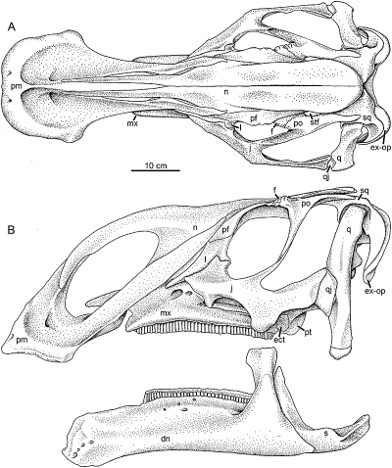
Brachylophosaurus has seen extensive palaeontological research covering its nasal crest, skull, diet, fossil preservation potential and evidence for tumour growth. This research has provided an in-depth examination of the hadrosaurids palaeobiology and the paleoenvironments it lived in, which has been integral in furthering our understanding of prehistoric history and the biology of dinosaurs.
I hope you have found this profile and examination of Brachylophosaurus canadensis intriguing. You can find out more about other saurolophine hadrosaurs like Edmontosaurus here.
The science communication tab and dinosaur profile tab have been immensely popular with new readers, and I recommend exploring all that the website has to offer.
Enjoyed this post? Support my science outreach.
References
Brachylophosaurus canadensis skeletal by Dr. Scott Hartman skeletaldrawing.com.
Dinosaur silhouettes from Phylopic.org by Dr. Scott Hartman and used under the Attribution-NonCommercial-Sharealike 3.0 Unported license.
