
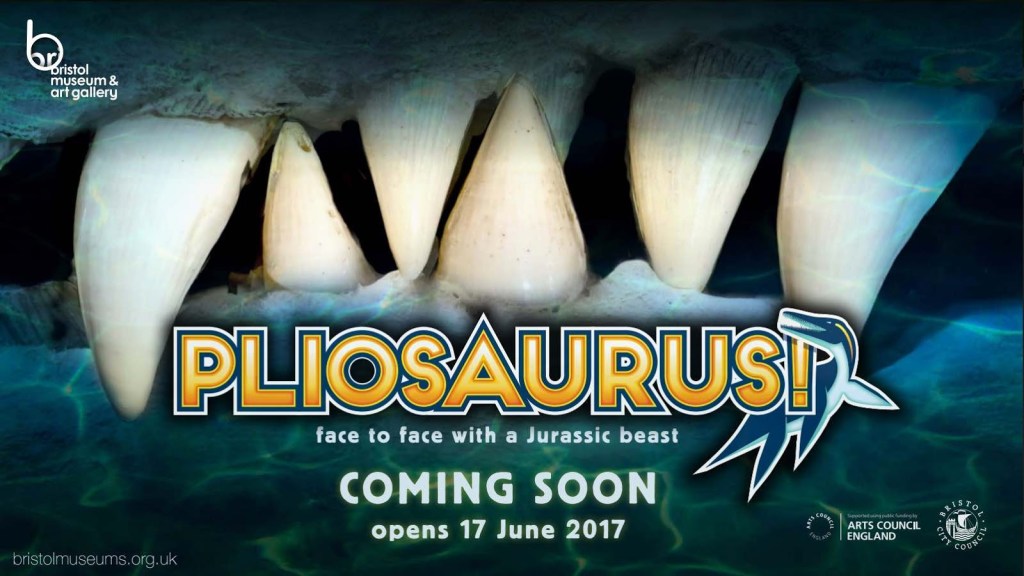
Explore my experience as a science communicator for the Pliosaurus! Exhibition at Bristol Museum & Art Gallery (2017–2018), where I helped bring palaeontology to life for the public.
- Uncover the exhibition’s focus & its impact on palaeontological outreach.
- Learn about my role in science communication & the hands-on experience that sparked curiosity.
- Dive into the fascinating story of Pliosaurus carpenteri through its fossil evidence.
The Exhibition
Volunteering Experience
This volunteering was a great steppingstone, helping me to build up necessary palaeontological experience. I look back fondly on this science communication experience especially as I have built up a lot of scicomm experience since.
The Pliosaurus! Exhibition was my first experience of palaeontological volunteering, before I had done my palaeontology internship and eventual Masters.
I joined a passionate team of Pliosaurus! volunteers who like me wanted to share more about palaeontology and natural history with the public. I volunteered for three months from December 2017 to February 2018, working every Saturday for three months alongside other volunteers and the museum’s staff.
Interactive Elements
Bringing Palaeontology to Life: Engaging Audiences with Fossils & Models
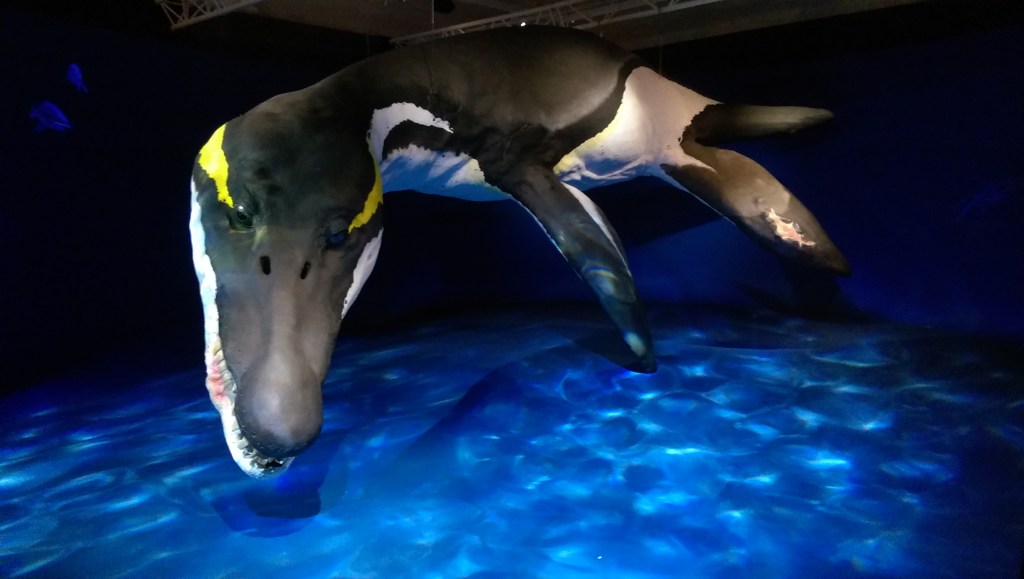
The exhibition ran from June 2017 to February 2018 and featured a time gate entrance where visitors could travel back through time to Bristol’s Jurassic Seas. This led into two areas of the exhibition the first featured the life-size model of Pliosaurus carpenteri (nicknamed Doris for the exhibition) which museum visitors could interact with.
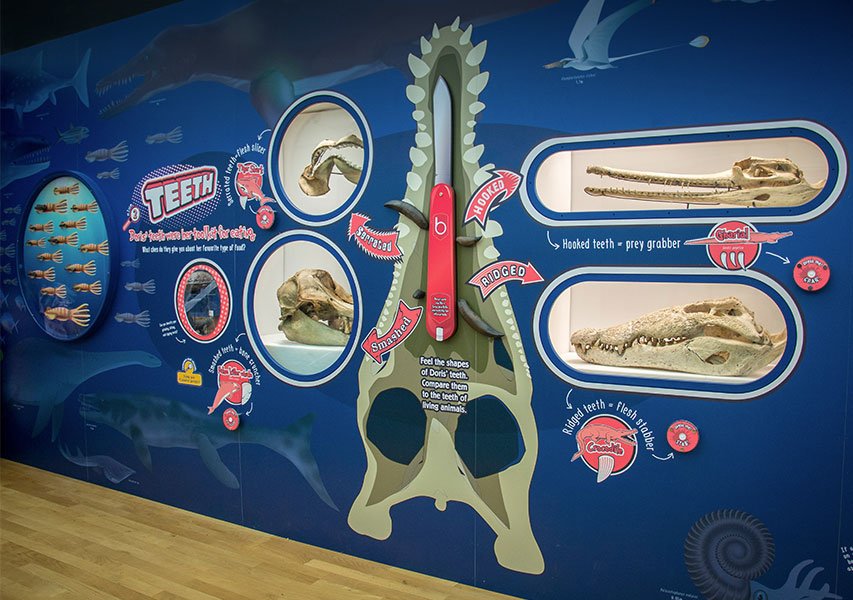
Visitors then returned to the present to see the actual fossil on display, with the interactive stations around the second room displaying evidence covering the marine reptile’s diet, pathology, and colour.

The primary target audience for the exhibition was families with children ages three to eleven and as such I adapted my approach to the varying knowledge of the Museums visitors.
Having a life-size tactile Pliosaurus model to get families to interact with was incredibly helpful, helping spark the imaginations of visitors to think about what life was like in the Jurassic seas 150 million years ago.

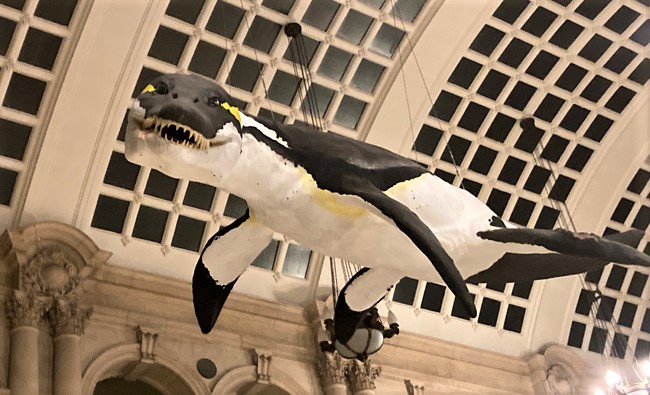
The model gave the marine reptile a sense of scale that was correct to its size. A lot of people who visited were surprised by how big Pliosaurus carpenteri actually was.
The tactile nature of the model brought palaeontology to life, and this was supplemented by the sounds and moving images around the room. The swimming ichthyosaurs projected behind and around the Pliosaurus helped to visualise the Jurassic time period.
Science Communication Engagement
Making Marine Reptiles Accessible: Inspiring Curiosity Through Outreach
Alongside the other volunteers I would invite children, families, and the elderly to interact with the model, to touch the skin, feel the pulse, and smell the animal’s breath.
Using the life-size model and the actual fossil on display just around the corner enabled myself and the other volunteers to get the public to ask the important palaeontological questions like:
• What did Pliosaurus carpenteri eat?
• What other sea creatures did this marine reptile live with?
• What did this creature look like?
• And how much did it weigh?
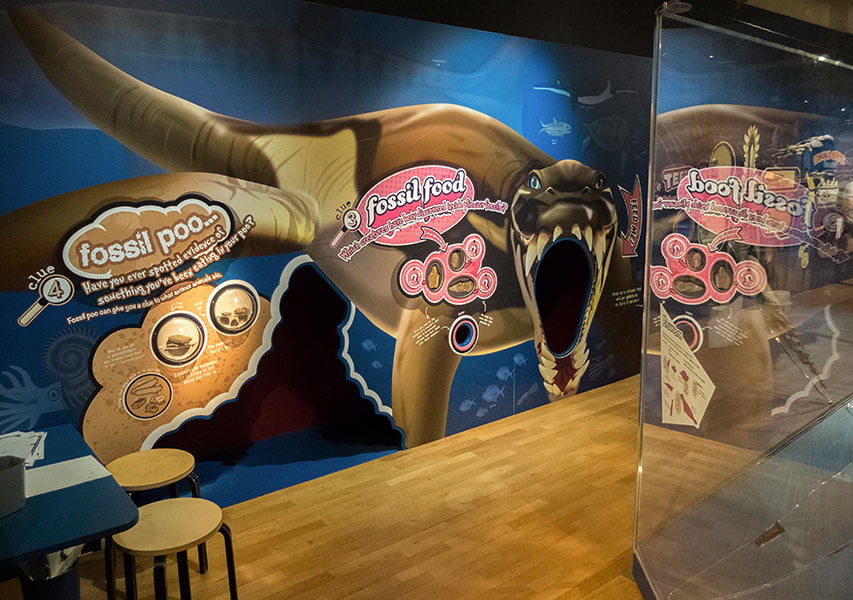
I happily helped explain these questions with a passionate enthusiasm, whilst also showing visitors around the different interactive sections of the second half of the exhibit, which explored these questions in greater detail.
This was a key part of what made the exhibition a success, the interactive activities around the exhibition room for people to engage with. Making palaeontological information accessible, interactive, and most importantly imaginative.
Pliosaurus carpenteri Fossil
A Window into the Past: The Remarkable Fossil of Pliosaurus carpenteri
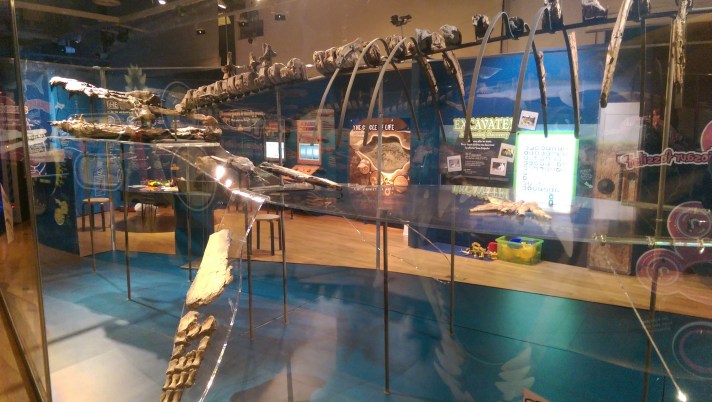
Pliosaurus carpenteri itself was and still is a remarkable sight and on display the fossil looked truly incredible. The fossilised remains of Pliosaurus carpenteri were first discovered in a Westbury clay pit in Wiltshire in 1994.
Fossil Details
Unearthing Pliosaurus carpenteri: Discovery & Significance
- This magnificent fossil was discovered by local fossil hunter Simon Carpenter and was named after him.
- The fossil dates back 150 million years to the Late Jurassic and was discovered seven meters below the Kimmeridge Clay Formation.
- Pliosaurus carpenteri grew to a size in excess of 9 metres and was a mature adult when it died.
- The Pliosaur was named as a new species in 2013 and was found in the same clay pit as another Pliosaur called Pliosaurus westburyensis previously discovered in 1980.
- The Pliosaurus westburyensis fossil skull was on display in the Sea Dragon’s area at Bristol Museum.

Fossil Pathology Evidence
Signs of Life & Death: Pathological Insights from Pliosaurus carpenteri
Pathology evidence on the fossil suggests the animal had a degenerative condition similar to human arthritis. This condition affected the left jaw, eroding the jaw joint and moving it aside.
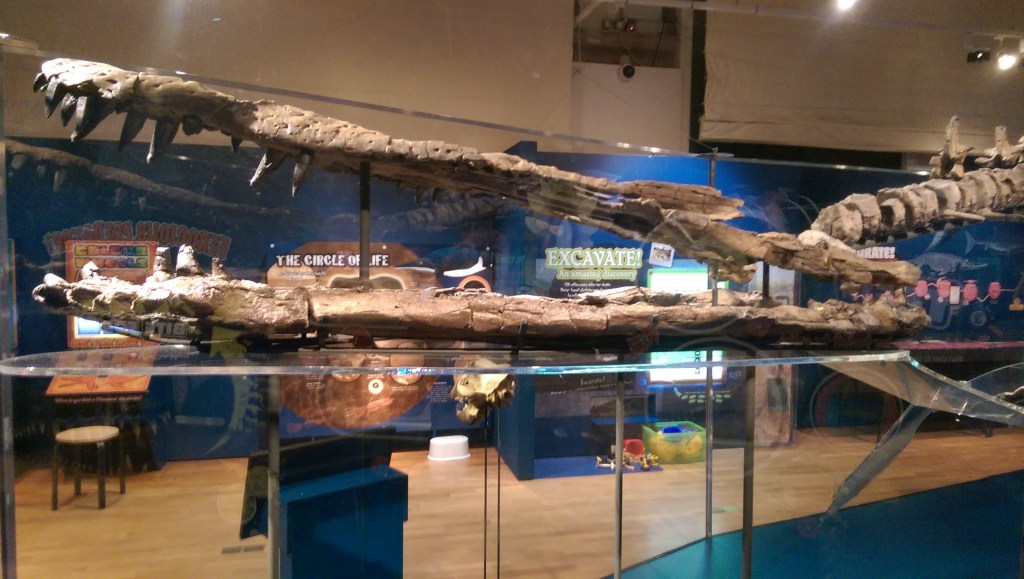
The Pliosaurus specimen lived with this impairment for some time until the jaw broke, which would have stopped the animal from feeding leading to the creature’s demise. The fossilised remains were discovered disarticulated and scattered suggesting other marine creatures had eaten the Pliosaurus remains after its death (Pliosaurus! Volunteer Handbook, 2017).
Exhibition Success
The exhibition was made possible from funding and support from Arts Council England, support from Bristol Culture and the exhibitions sponsor Clifton High School. The Palaeontological Association also funded the volunteer engagement programme, with further sponsors and grants making the exhibition a reality.
The exhibition was a major success with over 76,000 visitors and it was great to help supply science communication for it.
I enjoyed my time communicating palaeontology to so many people during the exhibition, my last day of volunteering was on the 17th of February 2018 on a day when the museum was holding activities around Chinese New Year.
I had never seen the museum so busy during the Chinese New Year activities; it was the perfect day for me to finish my volunteering as we had so many visitors come to learn, interact, and see the Pliosaurus fossil.
Pliosaurus! Virtual Exhibition
Pliosaurus! Lives On: Exploring the Digital Exhibit
After the exhibition ended Bristol Museum created a virtual version of the exhibition where people can keep on learning about Pliosaurus carpenteri. I highly recommend checking the virtual exhibition out!
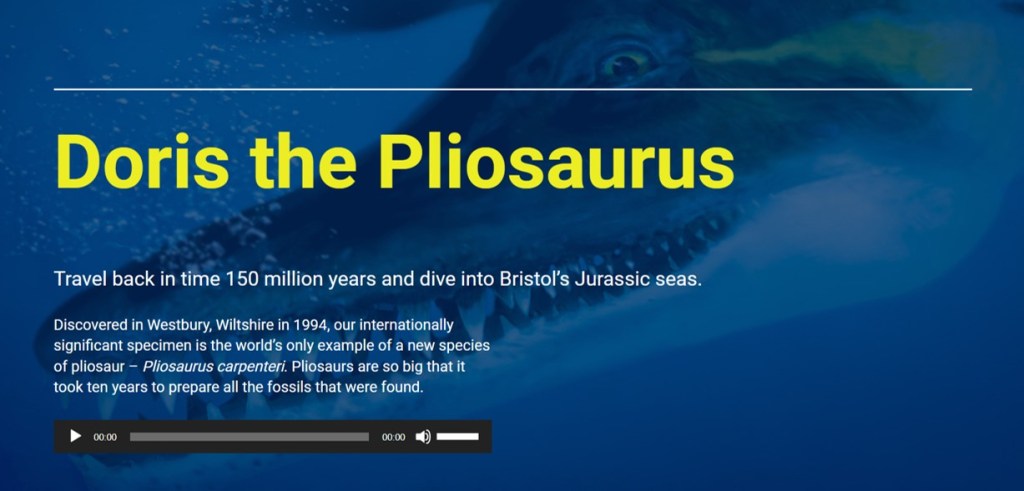
The virtual website takes the science communication of the exhibition further, enabling more people to be engaged in learning about this incredible marine reptile.
The legacy of the exhibition also lives on in the life-size model of the Pliosaurus, which was moved and now hangs above Wills hall at the back of the museum for visitors to look at.
Science Communication Now
Beyond Pliosaurus!: Continuing My Palaeontology Outreach Journey
I learned so much science communication engagement experience from my time volunteering for Pliosaurus! that it helped me in future scicomm roles. Since 2018 I have continued to build up palaeontology outreach experience and you can find out more about this at the scicomm page link below.
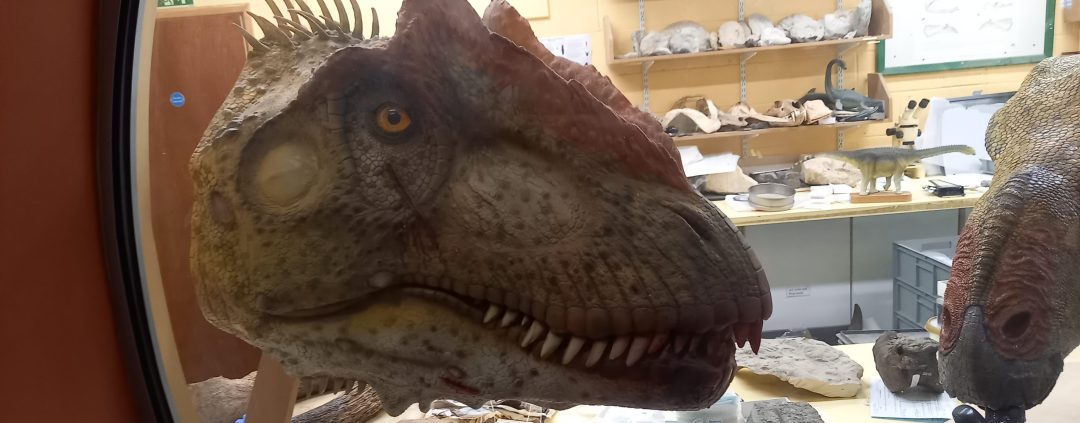
If you found marine reptiles like Pliosaurus carpenteri fascinating wait until you learn more about dinosaurs! Support the Science. Join the Expedition. Explore deep time with every dispatch. Subscribe to The Palaeo Minute newsletter and be part of the fossil journey.

You must be logged in to post a comment.