Keeping the Jurassic Coast’s Legacy Alive. Originally published by the Jurassic Coast Trust in August 2024, my Ambassador blog dives into the fascinating geological and faunal connections between the Jurassic Coast and Montana’s Judith River Formation. Though the Trust has since ceased operations, I have reuploaded this article with fresh images to ensure continued access to these important insights into one of the world’s most remarkable UNESCO World Heritage Sites.
Our Ambassador, James shares about his fieldwork experience in Montana and remarks on the geological and faunal diversity between the Jurassic Coast and Montana.

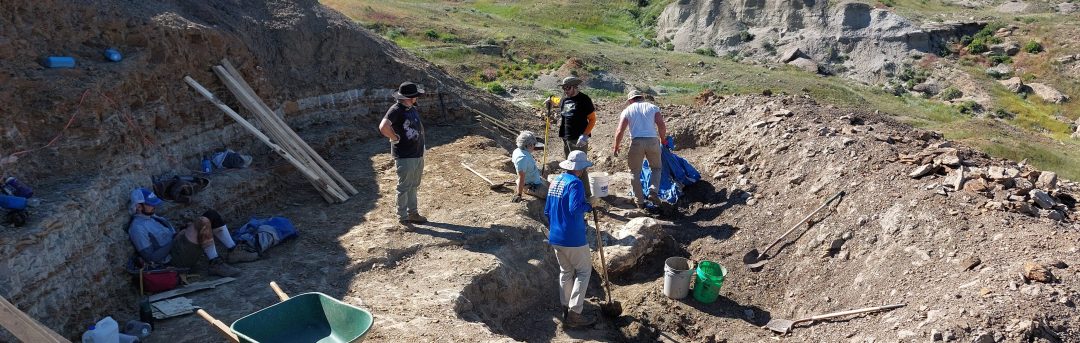
This June I joined the Badlands Dinosaur Museum for two weeks to work in two dinosaur bonebed localities in the Judith River Formation in Montana, USA. Montana has always been one of my top places to visit to do fieldwork and having never visited the US before, I was excited to be visiting the US for the first time and doing fieldwork in the country.
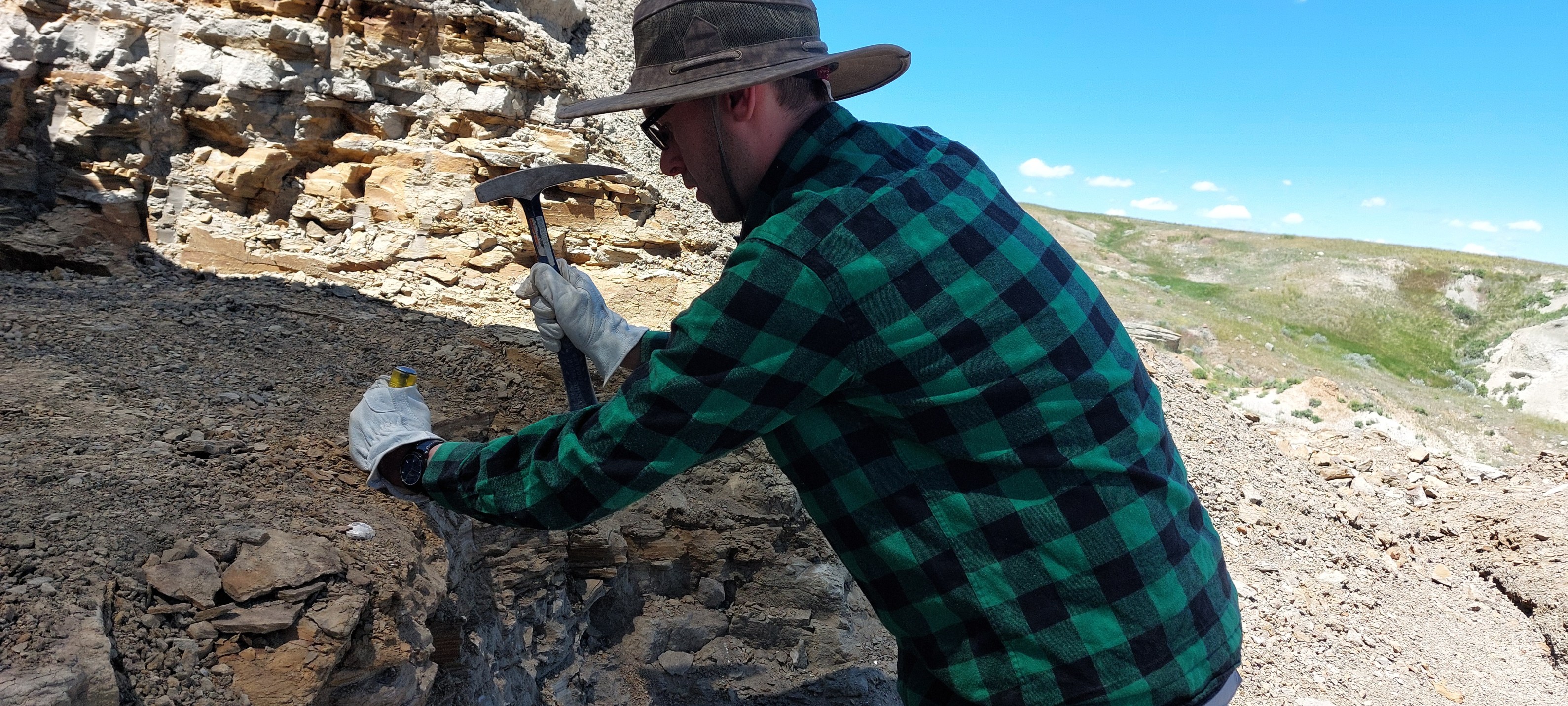
The fieldwork was great; we found a lot of fossil material, covering a variety of species. I excavated very well-preserved Tyrannosaur teeth, Ceratopsian teeth, Hadrosaur tendon and vertebrae, Theropod bone and a big piece of turtle shell.

The fossil diversity of Montana is incredibly varied, covering the geological time of the Late Cretaceous, some 79-75.3 million years ago. Dinosaurs ruled the world during this time and Montana is one of the best places to dig to find dinosaur bone material.

The Jurassic Coast, on the other hand, covers the Triassic, Jurassic, and Cretaceous periods; a much longer timespan, with over 185 million years of geological time recorded. And yet, Montana and the Jurassic Coast have a lot in common. Both localities have very distinct geology, providing a geological timeline and window into the past which is fascinating to see and find.
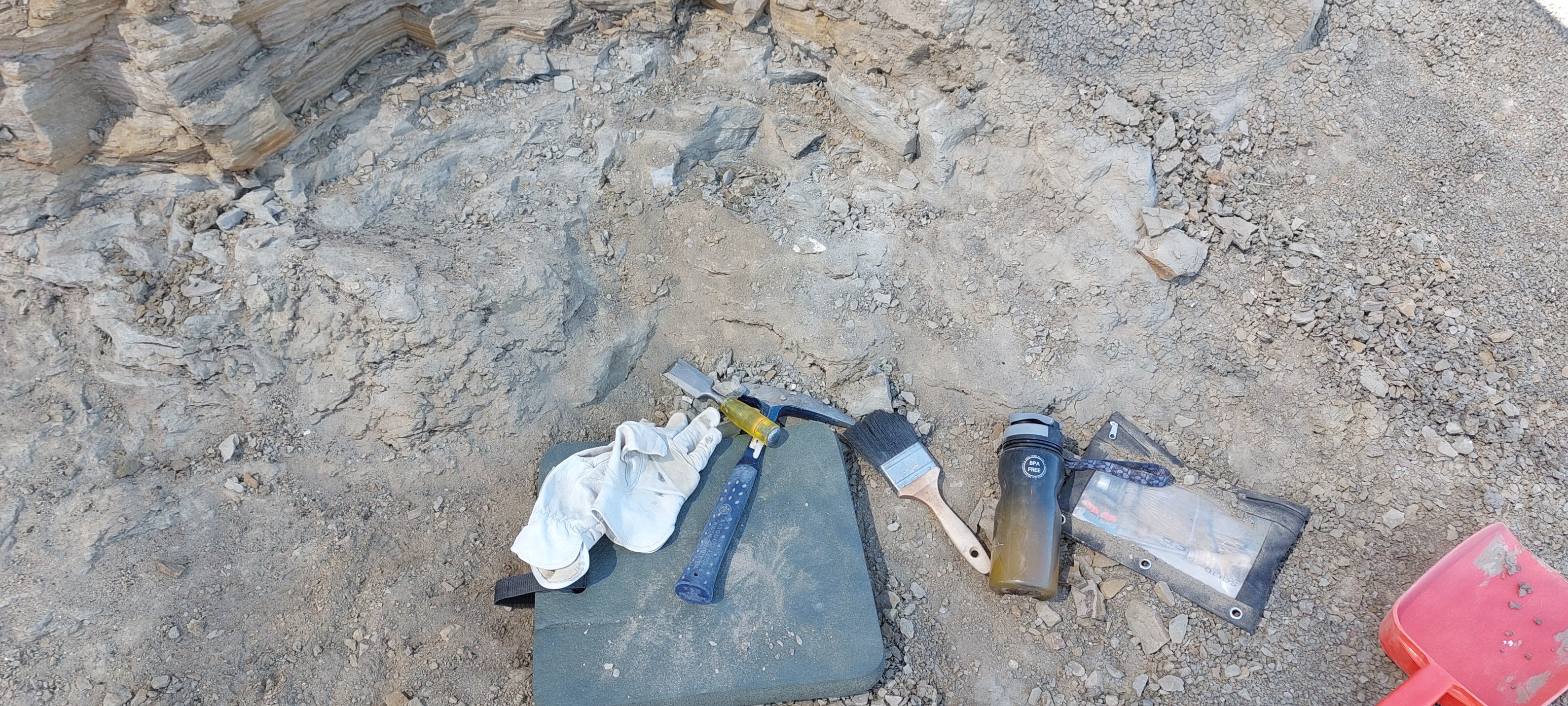
The stratigraphy of the Judith River Formation, Montana, comprises sandstone, siltstone, and mudstone with the formation being once a coastal swampy flood plain. The sedimentary rock in the Judith tends to break and crumble quite easily until you get down to the bonebed layers, which are lot tougher to break through.
Fossil bone material within the Formation and the US at large is normally brown in colour. This colouration is due to the preserved minerals that cover and sometimes replace the properties of the bone.

The palaeoenvironment of the Judith River Formation is extraordinarily rich, providing both articulated and disarticulated bones, teeth, tendons, and vertebrae from a variety of taxa including dinosaurs, crocodiles and sharks/rays.
Dinosaur biodiversity within the formation is also varied, with the tyrannosaurids Daspletosaurus and Gorgosaurus being the top predators of their time. Duck billed dinosaurs like Lambeosaurus and Brachylophosaurus were common alongside horned ceratopsian dinosaurs like the most recently announced Lokiceratops.
Similarly, along the Jurassic Coast, in places such as Lyme Regis and Charmouth, the rock also crumbles with ease with the limestone and shale interbedded layers hosting a wide variety of fossil taxa. Unlike Montana, these specific Jurassic Coast areas provide many examples of marine life, including that of trace imprints of ammonites.
The sedimentary rock in Charmouth for instance is mostly of Early Jurassic strata, comprising of limestones, muds, and clays with the golden Cretaceous layer sitting on top of an unconformity (a gap in the geological record). Unlike the Judith River Formation fossil, bone material at Charmouth and Lyme Regis is normally black/dark grey in colour and brown/black elsewhere along the Jurassic Coast.
The Jurassic Coast formation occurred through deposition of Triassic strata in a terrestrial environment this was then overlain at the bottom of a sea throughout the rest of the Mesozoic. The cliffs of the Jurassic Coast have also been tilted and are continuously eroded by the sea.
Fossils across the Jurassic Coast are quite common and Charmouth in particular, provides a wide variety from large marine reptiles such as pliosaurs, plesiosaurs and ichthyosaur vertebrae to smaller belemnites and pyritised ammonites. Charmouth also has its own Jurassic dinosaur the Scelidosaurus, an armoured ornithischian herbivore that lived 199-192 million years ago.
Trace fossil footprints from Brachiosaurs can also be found in Spyway in Dorset, with over one hundred footprints being identifiable. Whilst limited dinosaur bones have been discovered on the Jurassic Coast, there is evidence that the Jurassic period of Dorset was therefore full of a variety of dinosaur life both big and small.
Both the Judith River Formation and the Jurassic Coast are geologically significant and rich in abundance of past prehistoric life. For a palaeontologist like me it has been fun and interesting to see geological distinctiveness between both the UK and the US.
Understanding the faunal diversity, paleoenvironmental life and geological richness of our local environment is essential for appreciating the landscapes we have around us today and how we can better protect them.
Such education is key to ensuring that World heritage sites like the Jurassic Coast can be shared with the public and protected ensuring its future for generation to come.
Enjoyed this post? Support my science outreach.
You can read the first Ambassador blog article on What the Jurassic Coast Means to Me below.

