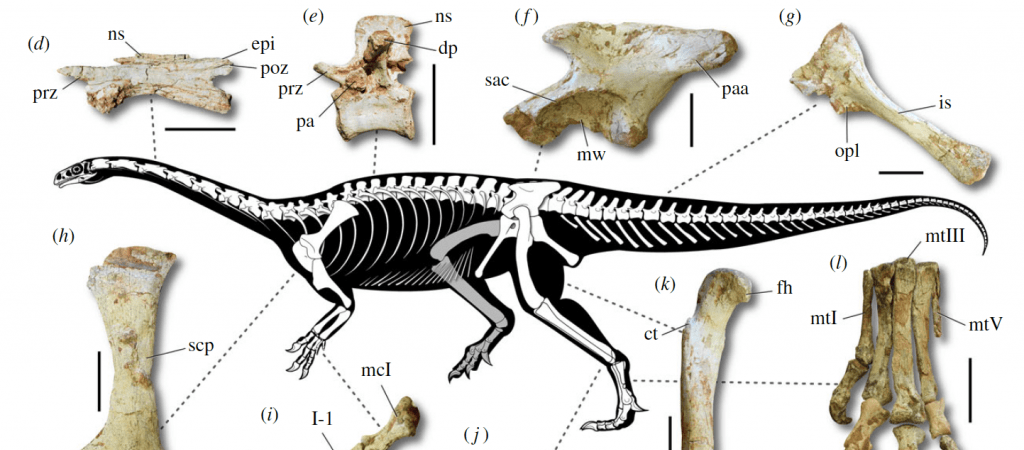
On the 21st of November 2018 research was published in the Journal of The Royal Society about the discovery of a new species of dinosaur named Macrocollum itaquii. In this article I examine this dinosaur discovery and what it means for understanding early dinosaur evolution during the Triassic era.
Palaeontologists in Brazil recently published some really exciting research in Biology Letters on the 21st of November about the discovery of three new sauropodomorph skeletons, which have been identified as a new species of dinosaur named Macrocollum itaquii.
The research about this amazing discovery was picked up by many Science and News websites including Phys.org, Discover Magazine, Independent and the Express.
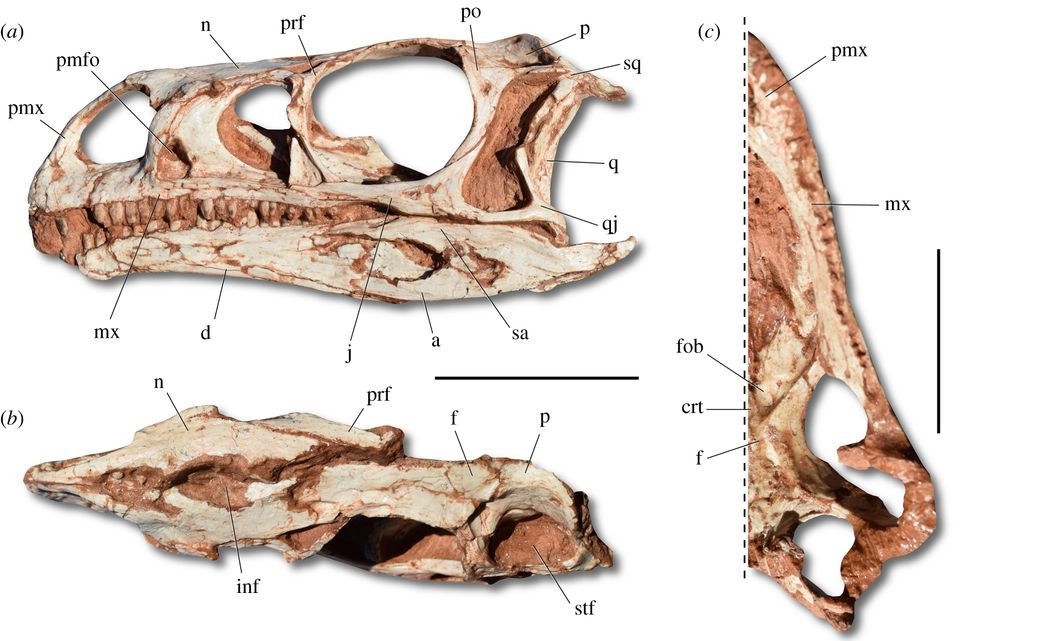
Little is known about sauropodomorph evolution due to the scarcity of well preserved dinosaur fossils and bones from the Triassic period. Which is why the discovery of Macrocollum itaquii is integral, as it is the oldest long-necked dinosaur known to date. It is important not just as a dinosaur in it’s own right but as a gap filler in the early sauropodomorph phylogenetic tree.
Where were the fossils Macrocollum itaquii found?
The three fossilized dinosaur remains (over 225 million years old) were found in the Late Triassic Beds of the Wachholz site near Agudo, Rio Grande do Sul in Brazil, this is part of the upper portion of the Candelária Sequence. Past research by Muller et al. (2015) into the fossil bearing quality of this Brazilian bonebed suggests a fossil locality that has one of the richest most complete sauropodomorph records from the Upper Norian (Upper/Late Triassic).
Some of the palaeontologists involved in the 2015 study were also involved in the most recent research on Macrocollum. The 2018 study noted that Macrocollum was smaller than it’s descendants and that they would have stood around five feet tall, walking on two legs and growing up to 12 feet in length. They would have weighed over 200 pounds and had very long necks, allowing these dinosaurs to reach the highest tips of vegetation such as gymnosperms (Yirka, 2018).
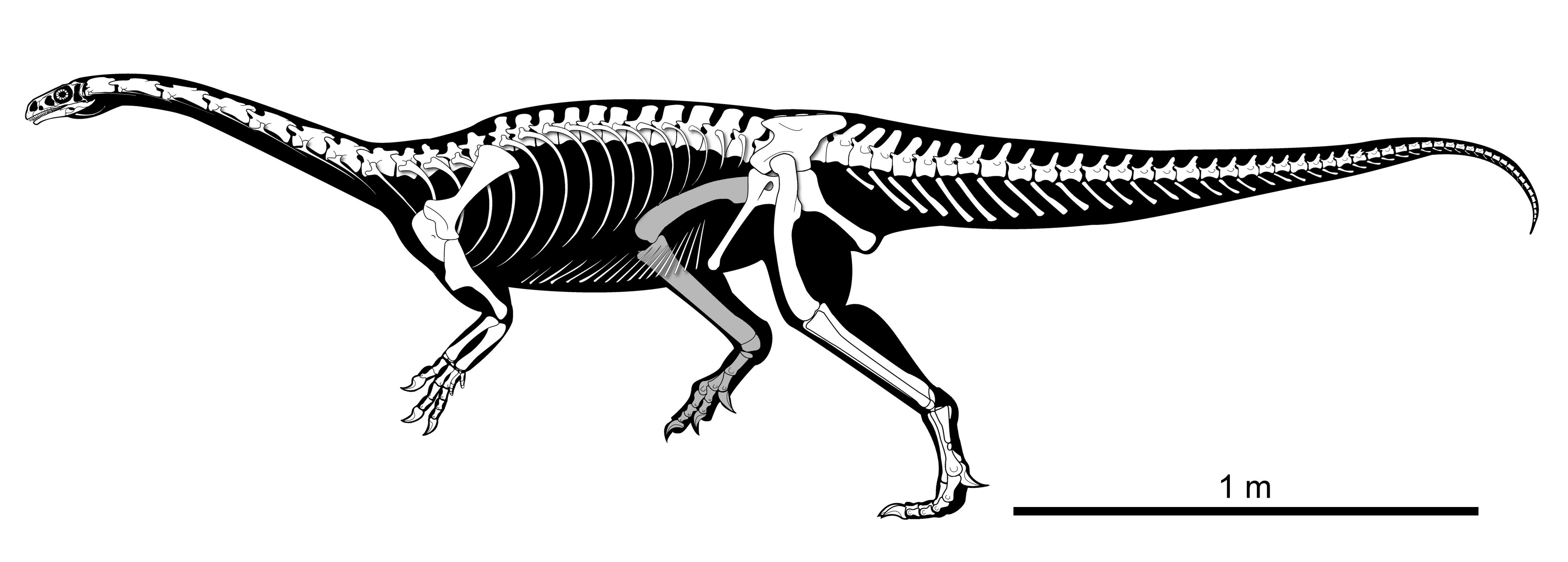
The fossilized remains were also found all together suggesting the earliest evidence for social behaviour within sauropodomorphs. Two of the skeletons were found to be almost complete specimens with the third missing it’s head, with only partial remains of the neck (Tarlach, 2018). The specimens having been found in such close proximity together suggests that Marcocollum lived in groups.
What do these fossil discoveries mean for understanding the Triassic evolution of sauropodomorphs?
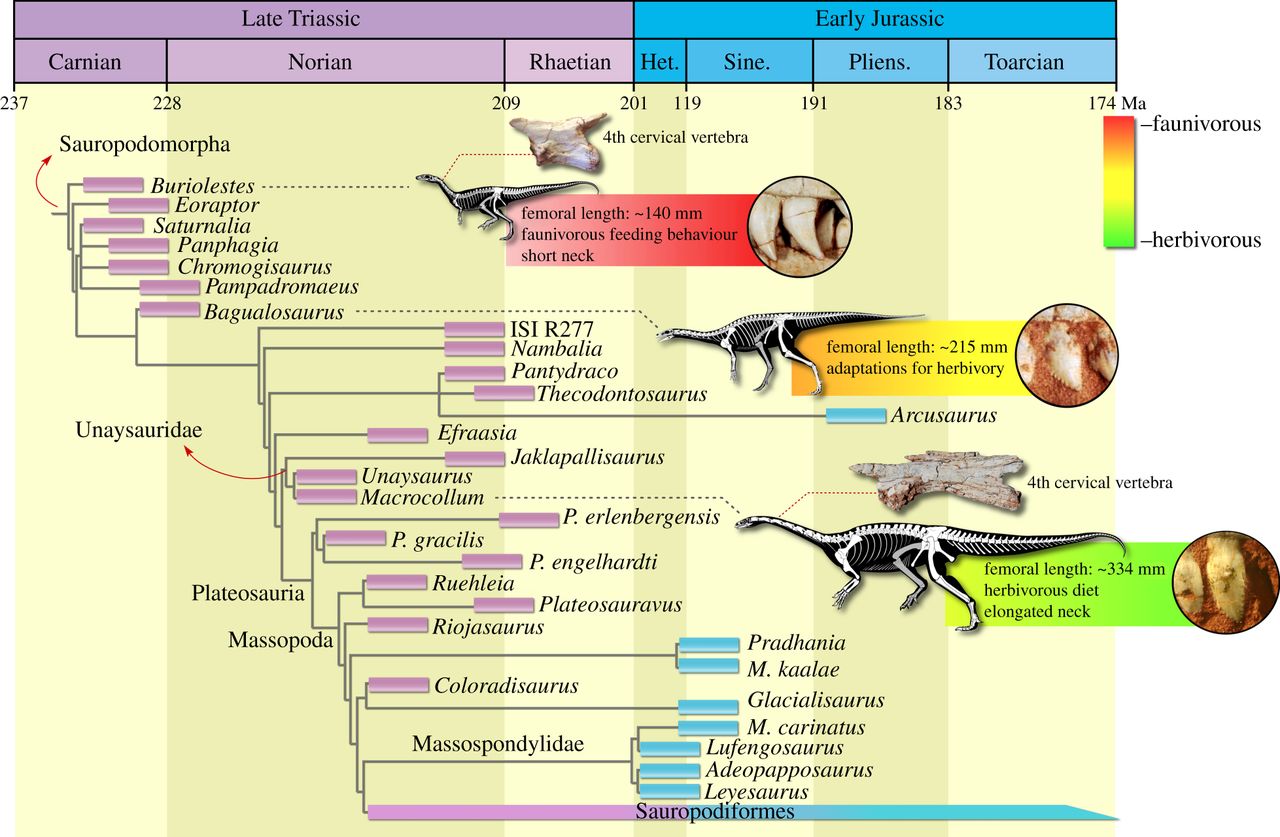
The identification of this dinosaur within the phylogenetic tree is important for many reasons. The fossilized specimens show anatomical changes that have shaped the evolution seen in the already classified sauropodomorphs. They increased their size ratio of 230%, their long necks became more established becoming twice as long as those of basal taxa (Muller et al. 2018).
Such evolutionary evidence of development can help palaeontologists to fill in the blanks of the sauropodomorph phylogenetic family tree increasing our understanding of dinosaur evolution and the evolutionary trends seen during the Triassic era.
I hope you have all enjoyed reading this article. The research that is being undertaken on sauropodomorphs in the Candelaria Sequence is very fascinating and hopefully more sauropodomorph remains will be found in the near future, helping to establish further backstory to these unusual dinosaurs.
References
Tarlach G. (2018) Oldest Long-Necked Dinosaur Found in Brazil, Discover Magazine, Available from: http://blogs.discovermagazine.com/deadthings/2018/11/20/dinosaur-brazil/#.XAF0bfZ2tPZ
Yirka B. (2018) Three ancient skeletons, ancestors of giant dinosaurs, unearthed in Brazil, Phys.org, Available from: https://phys.org/news/2018-11-ancient-skeletons-ancestors-giant-dinosaurs.html


2 thoughts on “Macrocollum itaquii: Uncovering Clues to Early Dinosaur Evolution”