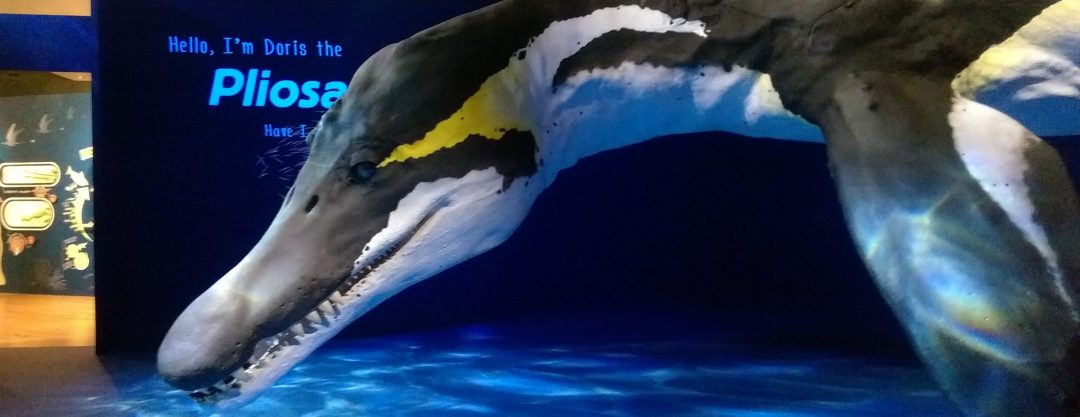
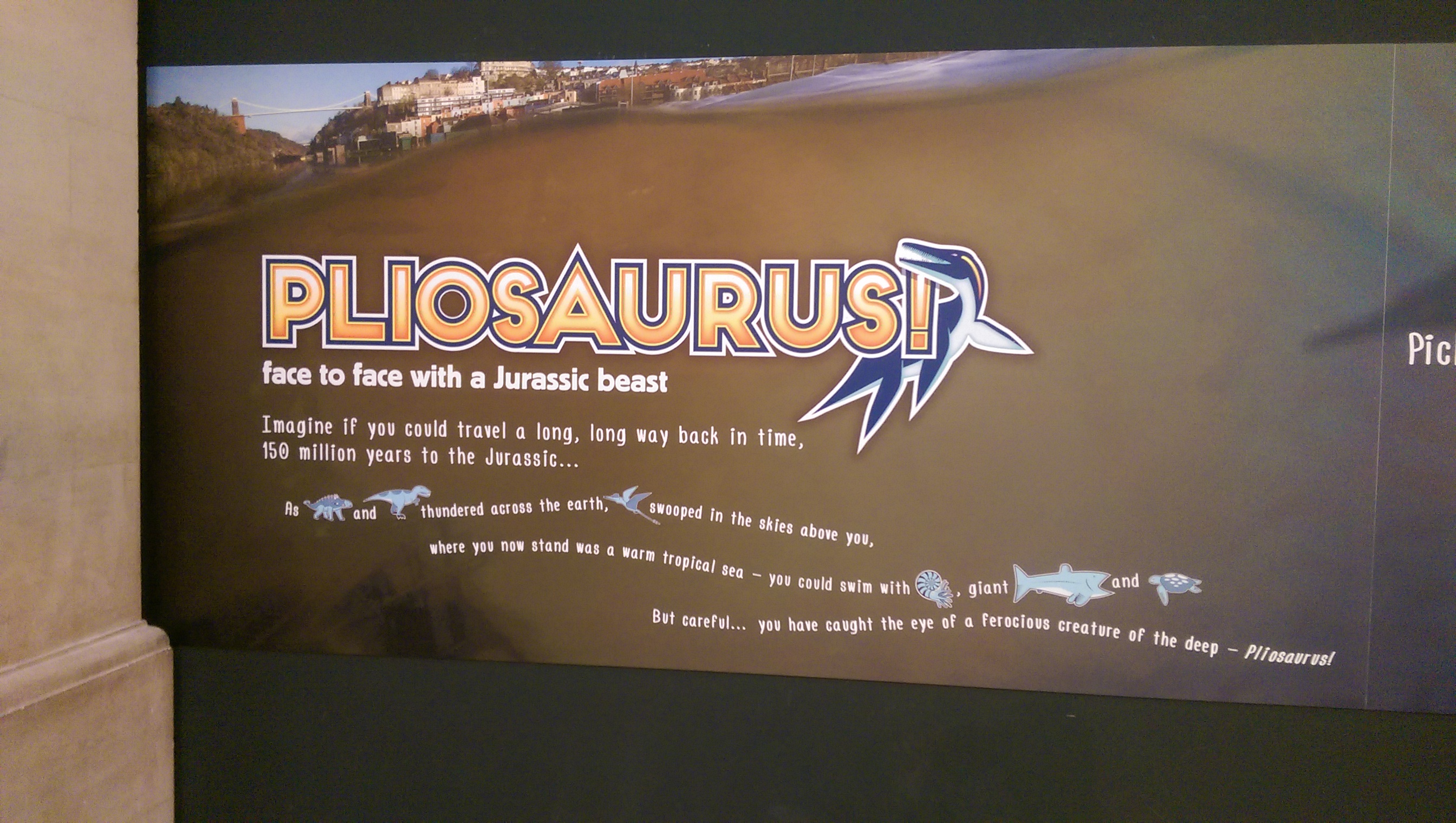
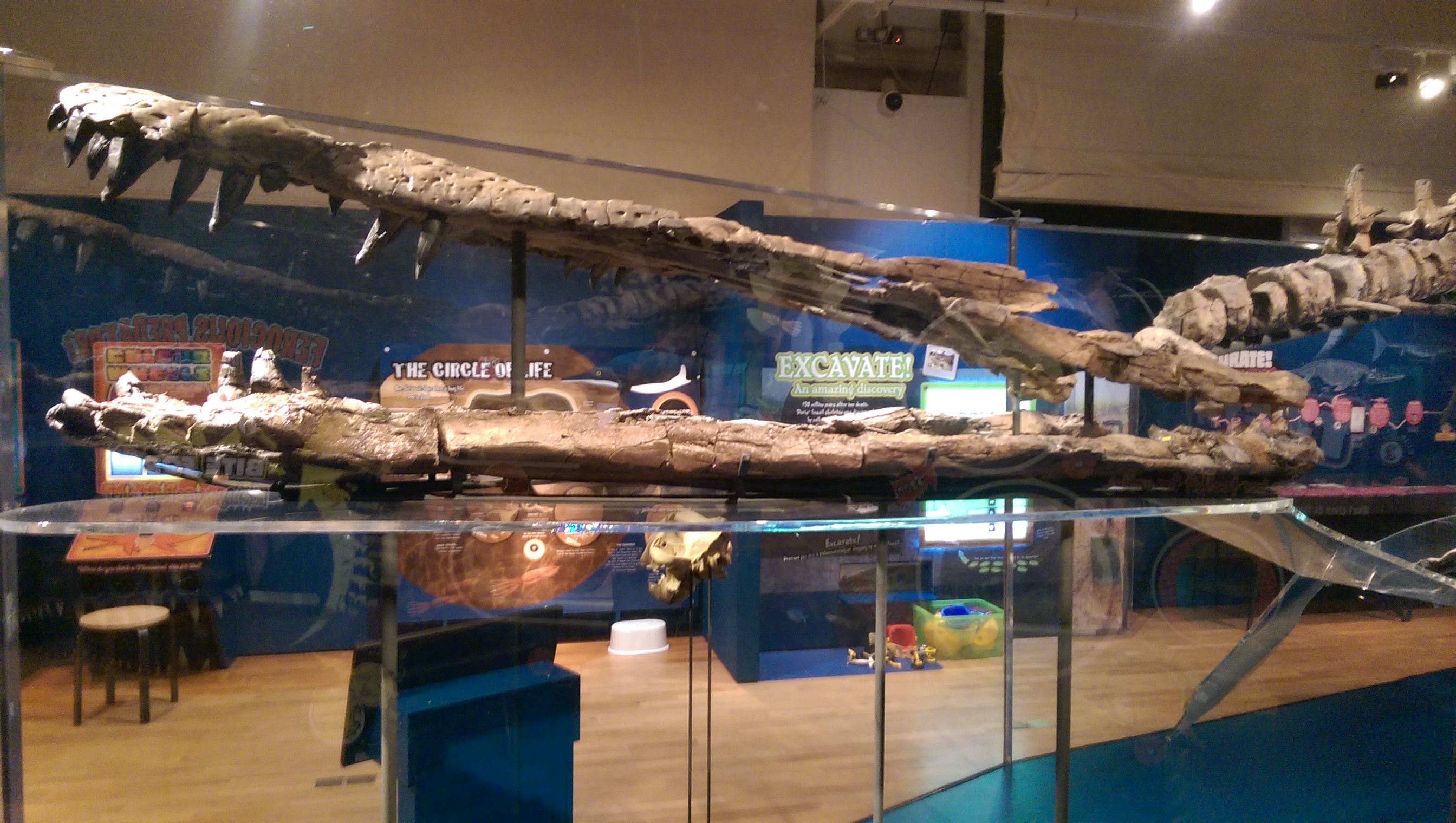
On the 9th December 2017 I started volunteering at Bristol Museum and Art Gallery for their Pliosaurus! Exhibition which ran from June 2017 until the 18th of February 2018. This interactive museum exhibition focused on the 8 metre long fossil of the marine reptile Pliosaurus carpenteri, the only known specimen of its species and a rare example of a relatively complete Pliosaur. In this article I explain more about the fossil, my volunteer role, what I enjoyed about the exhibition and what I think the impact of it has been.
One of the important things you need when developing a career as palaeontologist is experience. I was fortunate that looking online to see what palaeontological and geological activities were going on I came across Bristol Museums Pliosaurus! Exhibition.
I became a fully-fledged volunteer for the exhibition working every Saturday for three months alongside two other volunteers and the museum’s staff. Because I see my future working in vertebrate palaeontology working in a museum getting involved in something like Pliosaurus! was a no brainer and I enjoyed every minute of it!
Background on Pliosaurus carpenteri
Pliosaurus carpenteri was first discovered in a Westbury clay pit in Wiltshire in 1994. This magnificent fossil was discovered by a local fossil hunter, Simon Carpenter. Discovered 7 meters below the Kimmeridge Clay Formation, with the fossil dating back 150 million years ago during the late Jurassic. It was named after Simon the founder who had also been a volunteer at Bristol Museum.
The Pliosaur was named as a new species in 2013, it was found in the same clay pit as another Pliosaurus westburyensis which had been previously discovered back in 1980. As well as Pliosaurus carpenteri this specimen is also on display at Bristol Museum, in the Sea Dragon’s area.
Both specimens were found within 1 metre of each other in the clay formation in different areas making Pliosaurus westburyensis older, so it was surprising that they were both in fact two different species (Pliosaurus Volunteer Handbook, 2017).
Working as a Pliosaurus! volunteer
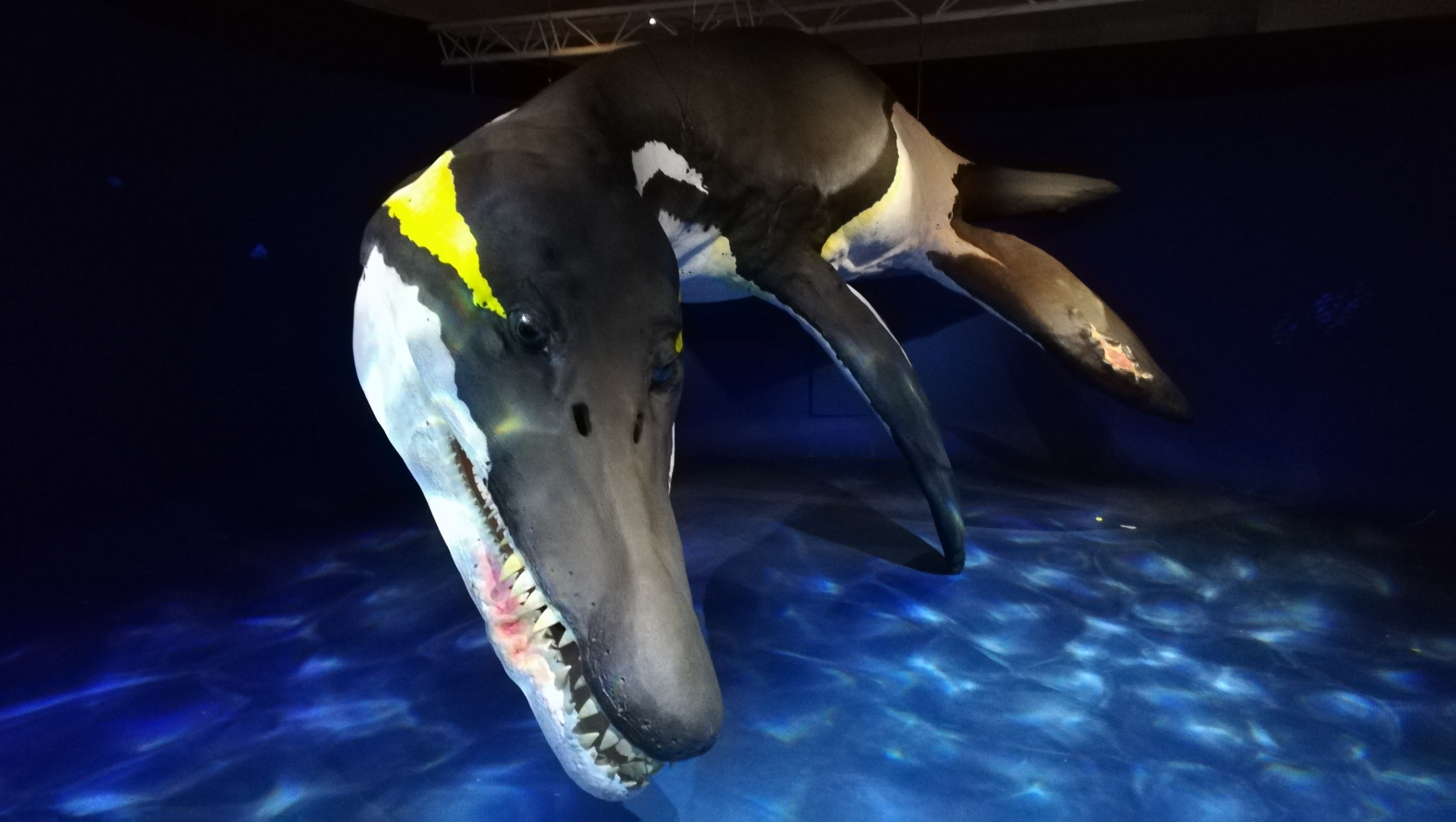
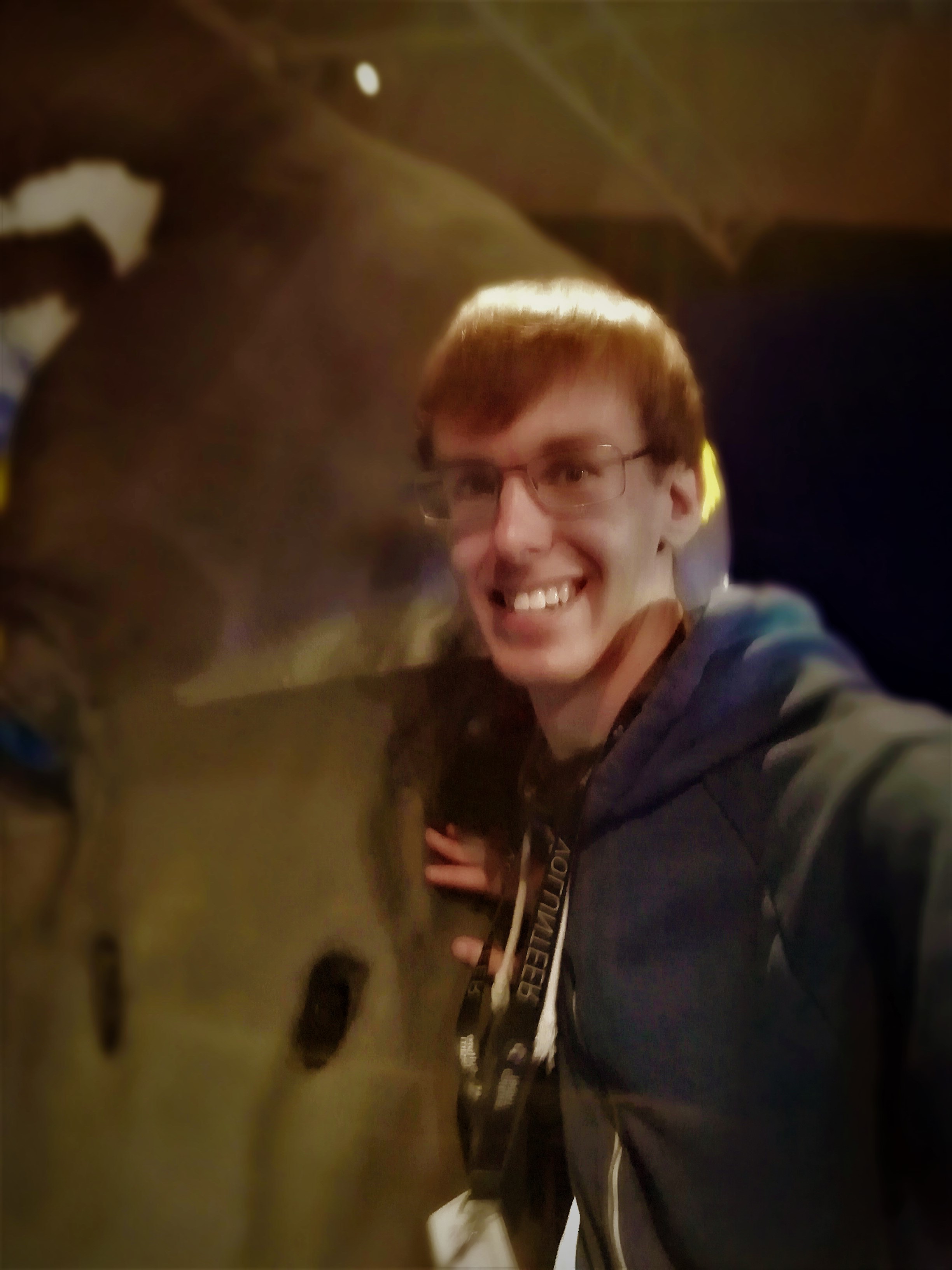
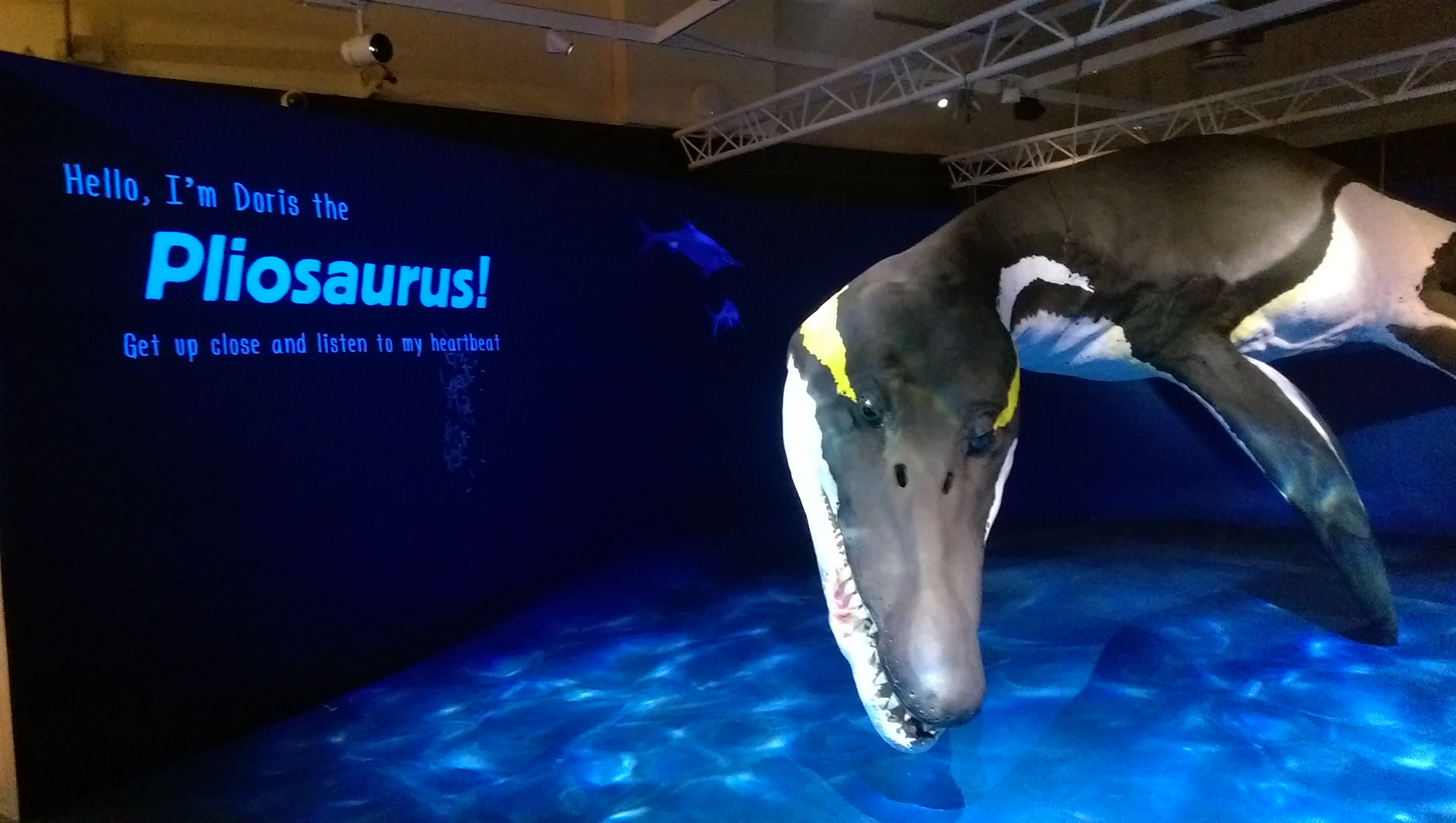
As a Pliosaurus! volunteer my role was to share Bristol museums passion for palaeontology and education (and my own!) through talking with museum visitors about the fossil. This would mostly take place alongside the full-size model of Deadly Doris in the first room of the exhibit where I and the other volunteers would invite children, families, and the elderly to interact with the model, to touch the skin, feel the pulse, and smell the animal’s breath.
This interactivity was to help visitors to think about what life was like in the Jurassic seas of Bristol, 150 million years ago. Getting the public to ask the important palaeontological questions like what did the Pliosaurus carpenteri eat?
What other sea creatures did this marine reptile live with? What did this creature look like? How much did it weigh? I happily helped explain these questions and more, whilst also showing visitors around the different interactive sections of the second half of the exhibit which explored these questions in greater detail.
What I enjoyed about Pliosaurus!
There were many things that stood out to me volunteering for Pliosaurus! Collaborating with great volunteers, how friendly and helpful the Museum staff were. I think the biggest thing for me that made the exhibition was the interactivity of the Pliosaurus! exhibit and how accessible it was for young children.
Seeing the exhibit doors open and children rushing towards the Pliosaurus! model always made me think this is how museum exhibits should be, that they should be interactive, they should allow you to question, and they should leave a lasting impact and the Pliosaurus! definitely did leave an impression.
During the last few weeks of the exhibition, we had many returning families with their children which was great, and this increased over the last weekend. We had many visitors, one of the volunteers told me that a family had travelled all the way from London for the final week the fossil was on display. So, it was great the exhibit had such a good reception and word of mouth from the public.
What has the impact been?
It is too hard to say at the moment what the numbers for the exhibit were as they haven’t been released as of yet, but it was a resounding success. My last day was on the 17th of February on a day when the museum was holding activities around Chinese New Year. I had never seen the museum so busy; it was the perfect day for me to finish my volunteering as we had so many visitors come to learn, interact and see the Pliosaurus! fossil.
Over that weekend a memory wall was put up ‘Memories of Doris’ where visitors could write on post it notes their favourite memories of the exhibition and what the exhibit had meant to them, the impact it had. Many parents and the museum staff thanked me and the other volunteers for our help in sharing more about the fossil. It was a fantastic and worthwhile experience and really helped me to put my passion for palaeontology into practice.
Whilst it is sad the exhibition is over the model of the Pliosaurus has been moved to the back hall of the Museum where it is now hung from the ceiling, so the marine reptile is now one of the first things you see as you enter the back hall. The fossil itself has been moved back down into the Museum collection stores for further study.
Given the impression the Pliosaurus has had at Bristol Museum hopefully it will have inspired the next generation of palaeontologists, I am sure it has given the exhibitions success.
I hope you have found this article an interesting read. I have been waiting to share this on the website for a while, so I am glad I have been able to share my volunteering with you all in detail.
Please do check the Bristol Museum website to see what activities we have coming up. If you’re in the area do pop in to say hello and have a good look around, it’s a great museum to explore and there is always something going on.


Nice article. Seems like you enjoyed your time there.
LikeLike
Thank you. Yes it was really great. I’m looking forward to the new opportunities that are coming up!
LikeLike